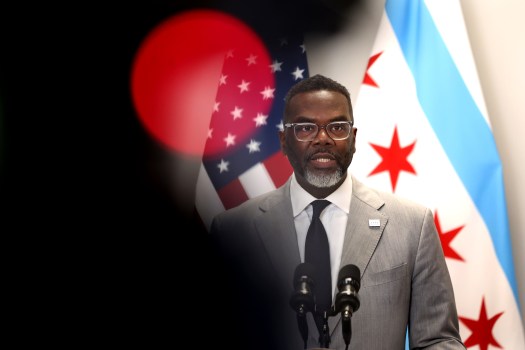
We met this week with Israel’s Midwest consul-general, Elad Strohmayer, a reasoned, plugged-in representative for his country and someone who always has been frank with us. He told us the military bombing of Iran by Israel and the United States enjoyed very wide support among Israeli citizens, regardless of their level of support for any particular Israeli government, and we took him at his word.
The arguments for the military actions in Iran from the Israeli point of view are largely self-evident. Iran has long been a threat to Israel’s security with a profoundly hostile regime openly calling for its eradication. It long has operated through such proxies as Hezbollah in Lebanon, funding their operations on an ongoing basis, even at the expense of its own people. The Israelis, then, have been understandably concerned about Iran’s nuclear enrichment activities and, it is clear, had come to think that there was a clear and present nuclear danger, especially if the Iranian regime were to move its nuclear operations further underground where so-called bunker-busting bombs could not reach them. It seems the Israelis had come to believe that there was only a small window of preventative opportunity and, as the world now knows, President Donald Trump’s administration became similarly convinced. Whether you agree or not, that is all water under the bridge now.
That said, we heard nothing much in our meeting about specific regime change. Merely about creating the conditions for a regime change.
The official Israeli line is that they see the future of Iran as a matter for the people of Iran, however much Israel might hope for a government more sympathetic toward its existence and security. Our visitors of course are cautious and moderate diplomats. Other Israeli officials working outside of our city have referenced in background briefings a more wholesale recalibration of the entire Middle East.
Israel’s actions were driven, we were told, entirely by its security concerns, although that should not be understood as merely direct worries about the Iranian regime but reflecting the far-from-new Israeli concern about the actions of its well-funded proxies. This, of course, explains the widespread internal support. Most reasonable Americans who believe Israel has the right to exist and defend itself, which is not the view of all of the congressional candidates in the coming primaries, should understand that.
But this is also a good place to point out that Israeli and American interests in Iran are not the same. And that the current U.S. president lacks the discipline of purpose of his Israeli partners.
An argument certainly can be made, and indeed was made to us, that American security is similarly compromised by Iran’s nuclear ambitions. But for most Americans, the lack of any clear sense of who or what might replace the decimated old regime, many of whom have now been killed, still makes this look like a reckless war of choice from Trump, or at the very least an action begun on a hope and a prayer.
The negative consequences already are compounding, beginning with the death of American service members and roiling through rising oil prices, a spooked stock market, chaos in typically peaceful cities like Dubai and the likelihood that all of this gets worse, maybe very much worse, before it gets better.
There’s also the matter of China and its designs on Taiwan with some commentators now worrying that there may be yet another window of opportunity opening in the wake of the current conflict, the one jumped through by the Chinese. Another concern is the depletion of U.S. armaments, stressing this nation’s ability to defend America should the war extend to other theaters. China has been thankfully quiet so far. But what that means and how long that lasts has yet to be seen.
There is plenty of reason to worry and, as we noted some days ago, no likelihood that some democratic, people-empowering government will suddenly emerge from the rubble. Trump might brand all of this as a desire to “Make Iran Great Again,” but he hasn’t articulated much beyond that facile slogan. As you can read elsewhere in our Opinion section today, those who love Iran are as consumed by fear of what, and who, will be lost in the fighting as feeling optimistic about the future.

Those who oppose Trump and this war should not wish for it to fail, of course, even though we fully understand the deficit of trust. To our minds, the long-oppressed Iranian people and its U.S.-based diaspora (with many in our area) deserve an empowering outcome, just as Israel deserves security. And only a fool cannot see that the vast majority of Iranians wanted this regime to be removed from their lives.
But alleviating the fear of the Iranian people is not in itself a plan of action. Nor does that happen overnight in a country where mass killings by the government were common.
The reasons to worry are self-evident: Will the new regime look altogether too much like the old regime? Will it (could it?) simply restart the process of acquiring a nuclear weapon in a matter of months? Will Iran (if not also the broader Middle East) be in for a prolonged period of dangerously chaotic power struggles, compounding the misery of the people? Will Trump’s growing flirtations with American boots on the ground risk a quagmire that will swallow American lives and souls similar to the experiences in Afghanistan and Iraq?
We think we understand Israel’s rationale for its actions. But Trump has yet to tell Congress and the American people about his rationale in any meaningful, consistent way.
Submit a letter, of no more than 400 words, to the editor here or email letters@chicagotribune.com.