

An ordinance to restore Chicago’s subminimum wage for tipped workers is headed for a vote on Wednesday, potentially setting up Mayor Brandon Johnson’s signature policy win for City Council’s next veto showdown.
Johnson opponents motioned last week to force a council floor vote on legislation to pause the One Fair Wage policy, passed in 2023 and now in its third year of moving toward full implementation. However, the coalition would need at least 34 votes to override a potential mayoral veto of their ordinance, which seeks to halt the policy that servers be paid the city’s full minimum wage on top of tips starting in July 2028.
The impending clash would be the latest of many between Johnson and an antagonistic council bloc. He has issued two mayoral vetoes already in his first term, after City Hall had gone since 2006 without one.
But one sponsor of the pending legislation to undo the tipped wage credit said the policy must go because it has hurt the restaurant industry and, in turn, its workers.
“It’s been detrimental in my community,” Northwest Side Ald. Samantha Nugent, 39th, told the Tribune. “I’ve had several restaurants close down, and I constantly have restaurateurs calling and coming into the office saying they just can’t get it done. … I’ve heard from servers, when the tip credit changed in Chicago, their hours were cut.”
Asked about the possibility of a veto Monday, Johnson spokesperson Griffin Krueger did not answer directly, but stood firmly behind the ordinance.
“Mayor Johnson is committed to protecting the peace of mind and stability which has been granted to tipped workers through this ordinance and stands shoulder to shoulder with hard-working Chicagoans as they seek dignity, security, and opportunity in the workplace,” Krueger said in a statement.

Under the old law, tipped workers were paid 60% of the minimum wage rate, but if a tipped worker’s wages with the addition of tips did not equal at least the full minimum wage, the employer had to make up the difference.
The final 36-10 vote to pass One Fair Wage came amid a series of progressive wins for the mayor that summer, and made Chicago at that time the largest American city to require tipped employees make a base salary of at least the full minimum wage, which is now $16.60.
The mayor and Ald. Jessie Fuentes, the council’s chief sponsor for the 2023 ordinance, billed it as a labor achievement that most benefits Black and Latino workers, who they say have suffered from tipping culture being a driver of income inequality. Johnson, who often mentions that the adoption of tipping in the U.S. is rooted in slavery, reaffirmed his support last summer as the restaurant lobby upped its attacks on One Fair Wage.
“We’re not going back to the days where the government believed that some workers deserve less,” Johnson said last June. “Over the next several years, we’re going to continue to raise the wages of workers.”
Fuentes argued the raises for tipped workers were only more needed in a weakened economy, even if labor costs are “what we can control in this moment” as tariffs raise food costs and hurt the industry.
“We have a workforce that is depending on these wages, these wage increases, who have prepared for these wage increases,” she said. Asked about a veto, she said she expects the mayor to remain “very committed” to the raises.

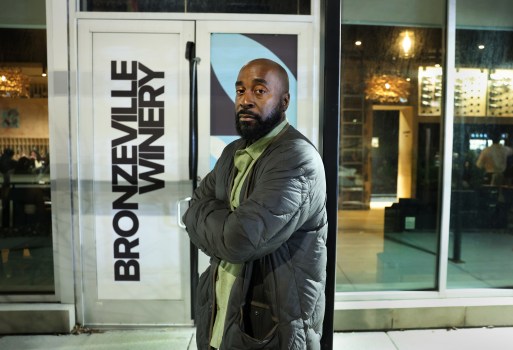
Eric Williams, owner of the Bronzeville Winery, said the idea does not work in practice.
He emailed Johnson’s chief of staff Cristina Pacione-Zayas last year saying the majority of his business’s revenue loss in 2024 was tied to One Fair Wage, which has had “the opposite impact” on workers. Later that year, he also said he was meeting with the council’s Black Caucus and formed a group of Black restaurant owners to discuss this and other issues in the industry.
“The reality is you are going to destroy restaurants in the city. The ones who (employ) black employees,” Williams wrote to Pacione-Zayas.
Williams, also owner of The Silver Room in Hyde Park, added that his winery’s servers easily exceed minimum wage with gratuities included, but paying them the full $7-per-hour hike would be unsustainable. And when businesses like his fail, retail corridors like the strip of Bronzeville where he opened up shop will bear the brunt of such closures, he said.
“If you look at the nice sit-down restaurants in our neighborhoods, we don’t have a ton,” Williams told the Tribune. “Maybe if I was in a more centrally located neighborhood, things might be a little bit busier for us, but we did it in Cottage Grove to change the face of Cottage Grove.”
But to Raeghn Draper, a bartender at Avondale’s Consignment Lounge, a halt to the subminimum wage’s elimination “would mean another layer of the thin protections workers have is gone.”
Draper’s co-workers were shocked in recent days to learn of the sudden effort to overturn the wage increases, the Chicago restaurant industry veteran said. The effort may have the support of powerful restaurant industry lobbying groups, but it is not supported by the less-wealthy tipped workers, many of whom are people of color and women, Draper argued.
“People understand whether you work in restaurants or not, that coming after low-wage workers’ wages is unacceptable,” said Draper, who is an organizer with One Fair Wage coalition and co-founded the restaurant worker advocacy and mutual aid group Chicago Hospitality Accountability and Advocacy Database.
Draper challenged the data shared by restaurant groups painting a picture of an industry struggling to pay the increased wages. It’s the same strategy owner-backed groups have tried in other cities and states where subminimum wages have been challenged, they argued.
“There’s still a booming restaurant industry with new restaurants. There’s new restaurant jobs. People are still receiving tips,” Draper said. “This is to protect their power and their profit.”

Restaurant owners pin a laundry list of woes on the increased wages, according to a survey of 300 owners carried out by the Illinois Restaurant Association. Nearly 7 in 10 owners said they cut hours because of the wage increase, while 62% said they reduced staff sizes. A majority also said they had delayed hiring because of the raise, while 84% credited it with increased menu prices.
But the coalition backing the pay raises cites data that paints a contrasting picture. Nearly 1,600 new retail food establishments have been licensed in the city since the ordinance went into effect, including over 1,000 last year, and restaurant license renewal rates rose last year, according to One Fair Wage.
Johnson’s administration argued in its statement “there is no definitive evidence” that the ordinance has led to decreased hiring or restaurant closures.
Karen Proesel, co-owner of the City’s Edge restaurant that, as the name suggests, sits on the border of Chicago and Niles, said increased labor costs have already led to servers’ hours being cut.
“We’re a small little business, and we have to scrap to make every bit count,” Proesel said. “For the surrounding suburbs, I mean, they can play off of that like, ‘Come to us.’ … That’s evident with some of the storefronts that we have in our community that we have (vacant). People aren’t running to open a small business.”