
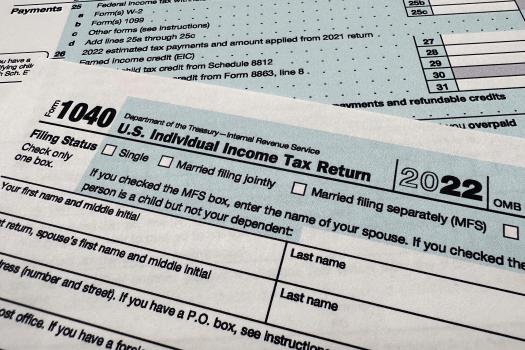

Have you filed your taxes yet? If not, with the April 15 deadline to file less than a month away you better get busy. Make sure you take advantage of key tax law changes that could benefit you, south suburban-based tax preparers and other experts say.
“There are a lot of tax-related changes taxpayers need to know about this year, especially those who are 65 plus, bought a new car in 2025, earned tip money, have overtime pay, and more,” said Felecia Stevenson, franchise owner of six Jackson Hewitt Tax Service sites in the south suburbs. “These taxpayers will see new deductions, and they can be complicated.”
Among key changes is the increase in the standard deduction to $15,750 from $15,000 for single individuals and to $31,500 from $30,000 for married couples, said Andrew Lautz, director of tax policy at the Bipartisan Policy Center, a Washington-based think tank and advocacy group. The larger standard deduction will cut taxes by between $75 and $278 for single taxpayers and between $150 and $555 for married taxpayers depending on their tax bracket, according to the organization.
“This change will benefit the most people filing this year because 85 to 90% of all taxpayers take the standard deduction,” Lautz said.
There is an expanded deduction for people ages 65 and older — now $6,000 for single individuals and $12,000 for married couples filing jointly. The deduction begins to phase out for seniors with income above $75,000 filing as single individuals and for married seniors with income above $150,000 filing jointly, said Lautz.
The previous smaller deduction is still in place. That is $2,000 if you are single and not a surviving spouse and $3,200 if married filing jointly and both seniors are eligible, he said. So, for example, a single senior who is not a surviving spouse would get an $8,000 deduction — $2,000 from under the previous deduction plus the new $6,000 deduction, Lautz explained.
If you bought a car in 2025, you could be eligible for a new deduction worth up to $10,000 for automotive loan interest, said Stevenson. It must be for a new vehicle, for personal use not business use and final assembly of the vehicle must have taken place in the United States, Lautz explained. You can’t deduct the principal on the loan, only the interest, he noted, adding this deduction starts to phase out for single taxpayers making above $100,000 and for married couples making above $200,000.
To determine if a vehicle is eligible, the Internal Revenue Service goes by the vehicle identification number, said Kirby Ashley, an enrolled agent and owner of Park Forest-based Kirby Ashley & Associates LLC, a 34-year-old tax services business.

For those working in jobs where they receive tips, they may be able to take advantage of the new deduction for tip money worth up to $25,000, he said. This is among the larger tax cuts for a smaller universe of people, said Lautz.
“You have to be in an eligible occupation which includes waiters, waitresses, bartenders, hairdressers, most of the occupations that you would expect to receive tips, and like the senior deduction, it phases out for higher earners,” Lautz said.
The phase out starts at more than $150,000 in income for single taxpayers and more than $300,000 for married couples.
Another big change affects those who receive overtime pay, said Stevenson. They could be eligible for a new deduction worth up to $12,500 for single individuals and up to $25,000 for a married couple filing jointly.
“There are a lot of terms and conditions on this one,” said Lautz. “It’s not just any overtime. It has to be Federal Labor Standards Act-eligible overtime.”
That means federal overtime law applies, so if a state mandates overtime pay above and beyond what the federal law requires, that state-mandated overtime pay is probably not eligible, just the federal pay overtime, he explained.
Another caveat is the federal law “generally requires time-and-a-half pay above certain hours,” Lautz said. “This new deduction is for the half bonus pay that you receive in overtime, not for the entire time.”
The phase out with this deduction starts with income of more than $150,000 for single individuals and more than $300,000 for married couples filing jointly.
Other key changes:
- The child tax credit, which increased to $2,200 per child from $2,000 per child.
- A higher cap on state and local tax deductions, which increased to $40,000 from $10,000.
What will all these changes mean for taxpayers? The Bipartisan Policy Center says the new senior, tips, overtime and state and local tax deductions each individually will cut taxes anywhere from hundreds to thousands of dollars for those eligible. It estimates that in 2026:
- 24 million taxpayers will claim the senior deduction, with an average tax cut of around $1,000.
- 5 million taxpayers will claim the tips deduction, with an average tax cut of about $1,400.
- 17 million taxpayers will claim the overtime deduction, with an average tax cut of around $1,400.
- The larger child tax credit will cut taxes by up to $200 per child.
Given all the changes, do-it-yourselfers might want to consider working with a tax professional this year, professionals note.
“A trained experienced tax pro can both help you get the maximum benefit from the new rules and also prevent you from making an error and leaving money off your tax refund, or worse doing it totally wrong and claiming something not yours and getting the possible interest of the IRS,” Stevenson said.
But whether you work with a tax professional or not, take the process seriously. It’s likely the single largest financial transaction you do each and every year, said Stevenson.

“There should be no guesstimating or estimating,” she said. “It should be accurate. If someone is missing a document, they should immediately reach out to the appropriate parties because it will be required to file a complete tax return. Just because someone can’t locate a W-2 doesn’t mean they should file their tax return without this information.”
Double check the information you’re listing for Social Security numbers, wages and the numbers for your bank account, and verify the financial institution’s routing and account numbers that you entered on the return to make sure the numbers are accurate, she added.
Don’t leave money on the table, professionals advise. Ashley said among misperceptions people have is assuming adult children living with them can no longer be claimed as dependents. You may be able to claim them as qualifying relatives.
“If they didn’t have any income, and they are living in your house eating your food, using your lights, gas and phone, that’s a dependent,” Ashley said. “Age doesn’t matter. What matters is income.”
To claim adult children as qualifying relatives, generally you must provide more than half of your qualifying relative’s total support, experts say.
Ashley says newlyweds are sometimes confused as to whether they should file as individuals or married couples. Your filing status is whatever you are on the last day of the year. So, if on Dec. 31, 2025 you were married, you are considered married for the entire year, and if you were single Dec. 31, 2025, you are considered single for the entire year, he said.
Married filing jointly is the most common filing status for married couples, said Stevenson, noting this status has the highest standard deduction, the lowest taxes and is best in most cases.
Francine Knowles at Fknowles.writer@gmail.com is a freelance columnist for the Daily Southtown.