
During a court hearing in February, Judge Jessica Colon-Sayre told the attorneys arguing before her that she was just going to be blunt.
“I’m going to tell you, this whole thing is messy,” Colon-Sayre said. “I’m just being honest, it is so messy.”
The judge was speaking about a conflict that arose between defense attorneys representing alleged victims of police torture seeking to overturn their murder cases and the special prosecutors defending the convictions in place of the Cook County state’s attorney’s office: The special prosecutors were appointed by a judge to handle the cases because former State’s Attorney Kim Foxx recused her office to avoid an appearance of impropriety. But in a recent development, those special prosecutors have been contracted to perform work for the same prosecutor’s office that stepped aside, appointed by State’s Attorney Eileen O’Neill Burke to handle other post-conviction matters.
“It really just kind of lends the stereotype to Cook County, which I don’t think any of us want here,” attorney Jennifer Bonjean told Colon-Sayre, a Will County judge hearing the case in Joliet because of the conflict.
Burke and the special prosecutors on the case maintain that there is no conflict with the work, with Burke’s office saying that it appointed outside counsel on some post-conviction matters because “these important and time-consuming cases require additional resources and in light of the staffing shortages inherited by this administration.”
In the wake of the torture legacy of former Chicago Police Cmdr. Jon Burge – as well as alleged torture and misconduct by other detectives who came after him — some old murder cases have been given new life in Cook County court, with defendants arguing that they are innocent and seeking to overturn convictions. Some of the cases – which can involve allegations of misconduct by police or prosecutors or connections to current prosecutors and judges — have been kicked to outside judges and prosecutors because of conflicts or simply just the perception of a possible conflict or appearance of impropriety.
In those cases, judges appoint special prosecutors, often private attorneys, though the statute requires them to first attempt to seek public prosecutors. The power is immense and the job can be lucrative: They are standing in for Burke, making decisions on what arguments to pursue, whether to try or drop a case and what to investigate, while filing petitions for attorney fees that are approved by a judge.
But these special prosecutor appointments have at times been challenged and criticized by attorneys representing the defendants.
“There is value in there being a public prosecutor because they are then answerable to the people and there is a check on their power,” said Karl Leonard, an attorney who represents a client whose case is being handled by outside prosecutors. “We’ve created this system here where this is zero oversight and a massive financial incentive to drag things out.”

Illinois law provides for two types of outside prosecutors: special prosecutors appointed by a judge because the state’s attorney’s office has a legal conflict or parties are seeking to avoid the appearance of impropriety.
Separately, top prosecutors in Illinois can outsource work to outside lawyers or firms because the office lacks the capacity or expertise to handle the matter. Unlike judicially appointed prosecutors, these special assistant state’s attorneys still report to the county’s elected prosecutor.
A Tribune review of hundreds of pages of court documents found that in some cases, attempts to mitigate perceptions of impropriety by removing the Cook County state’s attorney’s office has led to thorny new problems, resulting in years of litigation, including a fight over a special prosecutor that wound its way to the Illinois Supreme Court.
Attorneys challenging the appointments have raised issues about a lack of transparency in how special prosecutor arrangements come about as well as insufficient oversight and guardrails over the work, which the taxpayer foots the bill for.
On the other side though, special prosecutors have argued that defense attorneys seeking to spike them from the case are “prosecutor shopping,” hoping for a more favorable opponent in the courtroom.
“There is nothing they want more than for you to send these cases back to the Cook County state’s attorney’s office to the overworked and understaffed post-conviction unit,” special prosecutor Maria McCarthy argued to Colon-Sayre.

And Robert Milan, who has served as a special prosecutor since 2017 prosecuting 51 cases, said in written responses to Tribune questions that re-prosecuting “decades old murder cases has been extremely challenging.”
“My goal as Special Prosecutor is to do justice on each case to the best of my ability and move these cases through the system as expeditiously as possible,” he wrote. “I believe we are accomplishing these goals.”
In a statement to the Tribune, a spokeswoman for Chief Judge Charles Beach said that the matter is currently under review by the new chief judge “like many other administrative policies and practices.”
Before attorneys are appointed, a conflict assessment is conducted, and fee petitions are reviewed by judges in accordance with the law, the statement said.
‘An appearance of patronage’
In 2025, Burke’s office appointed outside lawyers from two firms to represent the state as special assistant state’s attorneys in seven post-conviction cases in which the defendants are alleging they were wrongfully convicted, according to Burke’s office and a review of appointment letters obtained in a Freedom of Information Act request.

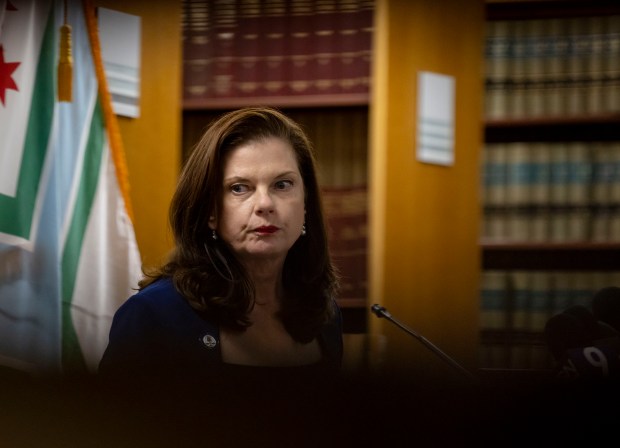
Though appointments by the Cook County top prosecutor for outside counsel is common in civil cases, it is more unusual in criminal cases, according to a review of two years of records.
By contrast, Foxx’s administration did not outsource any post-conviction work in 2024, according to a review of the records.
In a statement on the appointments, Burke’s office said post-conviction cases require significant time and resources.
“The CCSAO maintains there is no conflict of interest in McCarthy and (Fabio) Valentini serving as SASAs in unrelated post-conviction matters. In every case, the attorneys represent the same client: the People of the State of Illinois. Under the previous administration, the State’s Attorney sought recusal voluntarily – not under the statute reserved for doing so out of a conflict,” the statement said. “Under Illinois law, State’s Attorneys have broad discretion to appoint Special Prosecutors for any reason they deem fit.”
But this new use of outside appointments for post-conviction work has posed an unusual dispute for Colon-Sayre to untangle.
The Will County judge is hearing multiple post-conviction cases in which defendants have alleged they were tortured by former CPD Detective Kriston Kato because Kato is married to a sitting Cook County Judge, Mary Margaret Brosnahan, who oversees criminal cases at the Leighton Criminal Court Building. Foxx also stepped away from the cases because her prosecutors appear before Brosnahan every day.
One such matter is that of Kevin Murray, whose case was beset by an unusual nexus of corruption in that at least three people involved ultimately landed in trouble themselves: the trial judge was Thomas Maloney, who was arrested for taking bribes to fix cases in the infamous Operation Greylord case, a detective who investigated his case is now a convicted sex offender, and his first attorney was also convicted of a misdemeanor tax issue.
“If ever there was a case where there’s a need for it to be fully fair and appear for it to be fully fair, it’s Kevin Murray’s,” his attorney, Leonard, told Colon-Sayre.
Leonard was referencing the fact that McCarthy and her partners are serving as both Burke-appointed special assistant state’s attorneys in some cases, while also serving as judicially appointed special prosecutors in others – handling the matters in lieu of Burke because of Foxx’s determination that the office should avoid an appearance of impropriety.
Leonard and Bonjean have told the judge they are concerned that the work McCarthy’s firm is doing for Burke was not disclosed to them or the judge, which they said is representative of a pattern of opaqueness that has dogged the case.
They pointed out that the appointments of former Cook County assistant state’s attorneys McCarthy and her partners, Valentini and Alan Spellberg, were made under seal by former Will County Judge Dave Carlson, outside of the public eye with even the defendants not given access.
“When you are putting money in the mix too, it does raise very serious public interest concerns,” Bonjean argued. “There’s a great deal of billing going on and I would think the system would want to ensure there isn’t an appearance of patronage going on.”

McCarthy, though, answering written questions from the Tribune, said she was not involved in the original prosecutions of the cases she is handling and noted that Foxx stepped aside voluntarily and did not cite any conflict of interest.
“Moreover, there is nothing improper with lawyers in private practice working on multiple cases for different entities as long as there is no actual conflict of interest,” she wrote.
Questions about bills
In the Kato cases before Colon-Sayre, as well as in other cases involving judge-appointed special prosecutors, disputes at times have touched on money.
During the occasionally fiery hearing in February, Colon-Sayre said there were “serious disparities” in the bills submitted to her for approval by special prosecutors on different cases.
“I’m not making any sort of allegation that something inappropriate is happening, but my name is now on these petitions for fees,” the judge said. “That’s a separate issue I’m going to have to start looking into.”
And though the overall amount billed is a matter of public record, the detailed fee requests broken out by work is – somewhat unusually – under seal and not a matter of public record. In other special prosecutor cases, the attorneys publicly filed hour-by-hour accounts of their billing.
To date, county records show that McCarthy’s firm has billed more than $776,000, though she notes that the fees encompass work by multiple attorneys over four years.
For her part, McCarthy told the Tribune in written answers to questions from the Tribune that the detailed billing records are sealed because they include attorney work product. She also said, in regards to the disparities referenced by Colon-Sayre, that case work can vary in length and complexity. She said her cases before Colon-Sayre have involved numerous litigated motions.
“For me to be adequately prepared for the hearing, I need to have as much information as I can for every single one of those cases or I’m not doing my job,” McCarthy told Colon-Sayre.
Back in 2002, former Cook County Judge Paul Biebel found that former Cook County State’s Attorney Richard Devine had a conflict of interest in investigating allegations against Burge because his former law firm had represented Burge when he was in private practice, setting off a complicated string of litigation in ensuing years about who should or shouldn’t handle those cases.
In subsequent years, as allegations of torture spread beyond Burge and his crew, special prosecutors were assigned to additional cases.
One motion challenging a special prosecutor appointment noted the enduring impact of Burge on the court system for decades, writing: “it is increasingly apparent that the aftershocks of the Burge scandal will continue to rock Illinois’ criminal legal system.”
By 2025, there were around 16 pending cases handled by judge-appointed special prosecutors, with the cases assigned to five different attorneys or groups of attorneys, according to a review of records from the Cook County Board of Commissioners.
Last year, the attorneys collectively billed more than $773,000 for work on the cases, according to the records. Many of the cases have multiple attorneys working on them, and in at least one case, funds were approved for a consulting firm.
Over time, one group of special prosecutors has billed more than $9 million, though Milan said that work includes 70 cases going back to 2009, including work done by Milan’s predecessor as special prosecutor and other attorneys hired to assist. The work is billed through the O’Rourke & Moody law firm, which handles the administrative tasks.
“The work has included numerous investigations, numerous prosecutions of (Illinois Torture Inquiry and Relief Commission) hearings and post-conviction hearings, plea negotiations, trials and appeals to the Appellate Court and Supreme Court of Illinois,” Milan wrote.
The hourly rates are guided by law, but some attorneys have pointed out that there is little oversight on the scope of the work performed or the length of time. Milan, though, said he “agreed to accept a reduced hourly rate for our lawyers of $200/hour.”
‘Is anybody having oversight?’
On Nov. 20, 2018, former presiding judge of the Criminal Division LeRoy Martin Jr. signed a handwritten order appointing a special prosecutor to hear the post-conviction case of Abdul Muhammad.
In a scrawl, it said: “motion to appt. spc pros granted.”
Appointed to the case was Milan, formerly the second-in-command to Devine and a candidate for Cook County state’s attorney.
But the bare-bones order is in many ways emblematic of complaints about special prosecutors from defense attorneys: It contains no additional information and does not even name Milan as the special prosecutor.
Attorneys on cases prosecuted by outside counsel told the Tribune the public has access to very little information regarding how judges arrived at the decision to appoint a specific prosecutor. And special prosecutors often hire other attorneys to help, but the attorneys say they are often left in the dark about who the people are until they appear in a courtroom, without knowledge about whether the attorneys were scrutinized for the same type of conflicts or perceptions of impropriety that means the Cook County state’s attorney’s office is not handling the case.
In one example from Muhammad’s case, his attorney, Candace Gorman, argued in a motion that Milan hired an attorney that had no apparent criminal justice experience. The attorney, Martin Doyle, had contributed to a campaign fund for Milan’s state’s attorney race, according to records from the Illinois State Board of Elections.
“It leads to this whole question about what the oversight is,” said Gorman. “Is anybody having oversight over (Milan) besides the individual judges who have a full caseload?”
Milan, though, in answering a question about it from the Tribune, said Doyle “is a highly respected lawyer and has been practicing law for 37 years. Although he currently specializes in futures and securities litigation, he has criminal law experience. Prior to the pending case you reference, he assisted me on four other significant investigations.”
Milan was appointed to Muhammad’s case at Gorman’s request because the detective Muhammad was accusing of torture also worked as an investigator with the state’s attorney’s office.
But only after his appointment did Gorman learn, she said, that Milan has a long history in that same office, including as head of the Felony Review Unit that filed charges against her client.
Gorman challenged Milan’s appointment, arguing that her client was alleging misconduct on behalf of police, as well as prosecutors that Milan oversaw.
“As head of felony review, Mr. Milan supervised the very attorneys that Mr. Muhammad claims acted in concert with the torture detectives in framing him and violating his constitutional rights,” Gorman argued in a brief for the Illinois Supreme Court.
In response, the attorney general’s office, which handled the appeal, argued that Gorman could not show that Milan was actually involved in Muhammad’s prosecution.
Milan told the Tribune that prior to his 2017 appointment, he was “asked to address any potential conflict of interest issues related to my service in the CCSAO.”
“I retained an ethics expert who completed a report that concluded I had no conflict of interest,” he wrote.
In the end, the state’s high court agreed with Milan and the AG’s office. The justices found that the “mere fact Milan was in a supervisory role at the Cook County State’s Attorney’s Office” did not amount to an actual conflict of interest.
Justice P. Scott Neville, though, in a dissenting opinion wrote that if Muhammad successfully overturned his conviction, he could potentially include Milan in a lawsuit over the wrongful conviction.
Leonard, whose client has challenged McCarthy as the special prosecutor assigned to the case, said the Supreme Court decision highlights a need for more information.
“Muhammad talks about how (defendants) need to show that there’s a conflict, but we are unable to show whether there is a conflict or not because all of this is happening in secret,” he said. “This stuff should not be happening behind closed doors.”