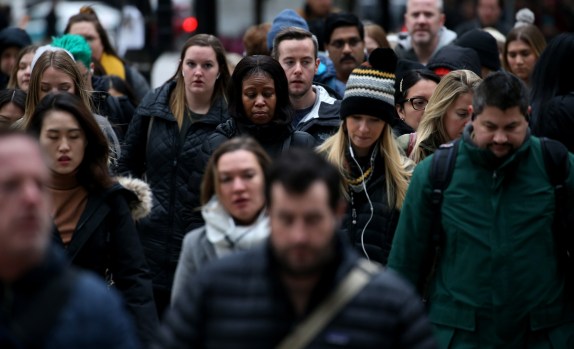

For the past few years, Chicago’s downtown debate has focused on one question: When will workers come back?
That is a worthwhile goal. Office vacancy in the Loop remains high, and many buildings are still operating far below their pre-pandemic occupancy. Some recovery will happen, and we should continue encouraging it.
But the idea that downtown will simply return to the way it looked in 2019 is increasingly unrealistic.
Great cities don’t wait for the past. They build what comes next.
Cities around the world are already showing what that looks like. Montreal leaned into winter with festivals that draw huge crowds during the coldest months. Vienna’s Christmas markets stretch across multiple plazas and streets. Melbourne revitalized its center by activating small laneways with cafes, art and nightlife. New York transformed Bryant Park from a troubled public space into one of the busiest urban parks in America through constant programming and seasonal markets.
These cities did not wait for old patterns to return. They redesigned downtown for how people live now.
Chicago should do the same.
Chicago’s Loop remains one of the most extraordinary urban places in the world. The architecture, the river, the transit network and the cultural institutions are unmatched. But downtown can no longer depend primarily on people who are required to be there for work.
The next chapter of the Loop has to be about people choosing to be there.
We also have to be honest about our constraints. Chicago faces serious fiscal challenges, and we are not in a position to solve downtown’s future with massive new spending. That means the answer isn’t large new construction projects. It’s creativity — and making better use of the extraordinary assets we already have.
The first step is embracing something we often treat as a disadvantage: winter.
Chicago already hosts the Christkindlmarket in Daley Plaza, one of the city’s most beloved traditions. But the concept should expand beyond a single plaza that is often too crowded. Additional markets, lighting and winter programming across nearby streets could encourage visitors to explore multiple blocks rather than visiting one location and leaving. Why shouldn’t we host the nation’s premier winter markets?
Cities across Europe have shown that winter can become one of downtown’s most vibrant seasons when it is designed well.
Second, downtown Chicago needs more life after 5 p.m.
Today, the Loop often empties when the workday ends. That pattern made sense when downtown was primarily an office district. It makes far less sense in a hybrid-work world.
Chicago should establish a “Loop Nights” program — predictable evening programming from Thursday through Saturday featuring music, food markets, public art and neighborhood festivals. One place to start would be rethinking our restrictions on food carts. Chicago is famous for its neighborhood food culture, yet we make it illegal for vendors to prepare food on a cart. How about, for a few nights a month, we invite some of the best neighborhood restaurants and vendors to pop up in carts in the Loop? Maybe accompanied by a small concert a la those that sprouted organically during pandemic times?
Cities that recovered fastest after the pandemic did something simple: They gave people reasons to come downtown at night.
And when more people are present, safety improves. Well-lit streets, active storefronts and steady foot traffic create environments where people feel comfortable spending time.
Third, Chicago should unlock one of its most unique assets: its alleys.
Few cities in the world have a network like Chicago’s. Instead of treating alleys only as service corridors, the city should pilot programs allowing cafes, small bars and art installations in select locations.
With lighting, murals and seating, these spaces could become hidden destinations — the kind of discovery that makes cities memorable. Melbourne’s laneways helped transform its downtown economy, and cities such as Tokyo show how small, tucked-away spaces can become vibrant destinations.
Chicago’s alleys could do the same.
Fourth, we should make downtown easier for small businesses to experiment.
Too many storefronts sit empty while entrepreneurs struggle with permits and costs. Chicago should create a fast-track pop-up permit allowing temporary retail, restaurants and cultural spaces to open in weeks rather than months. This would turn vacant storefronts into laboratories for new businesses instead of symbols of decline.
None of these ideas require reinventing Chicago. They require something simpler: connecting what already works and making downtown a place where people gather, not just a place where they work.
The Loop will always be the economic heart of Chicago. But its future will depend just as much on families visiting for the day, friends meeting for dinner, tourists exploring the riverfront and neighbors coming downtown for events.
For too long, we have been waiting for the old downtown to return.
Chicago shouldn’t wait. It should start building the next one.
Liam Stanton is a lifelong Chicagoan, small business owner and founder of The Chicago Style Project, a neighborhood advocacy group. He is running to be the 58th mayor of Chicago.
Submit a letter, of no more than 400 words, to the editor here or email letters@chicagotribune.com.