
With the proliferation of power-hungry data centers driving up the cost of electricity, the Illinois Commerce Commission approved a proposal by ComEd requiring increased deposits from developers to protect ratepayers against multimillion-dollar projects that don’t come to full fruition.
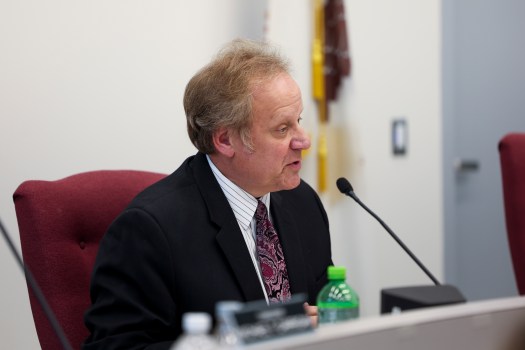
The new tariff provisions are “an important first step” to addressing the impacts of large demand project applicants and customers (LDPAC) on the grid, ICC Chairman Doug Scott said during the ruling Thursday.
The modifications include requiring scaled-up application deposits starting at $1 million per data center project, as well as larger deposit requirements – often in the tens of millions of dollars – for infrastructure buildout such as new substations and transmission connections.
Large demand projects currently carry a flat $1 million application deposit to begin the necessary engineering studies. Under the approved tariff changes, large load projects – 50 megawatts and above – add onto the initial $1 million deposit by an additional $500,000 for every 100 megawatt increment above 200 megawatts.
Another approved tariff change is to the so-called Rider DE – the cost of distribution system extensions required to get new and expanded services on the grid. Previously, the rider required a deposit for the connection cost of hooking up new projects. Now, ComEd will also require deposits covering the infrastructure costs of building new substations for data centers, which will likely run in the tens of millions of dollars per project, according to ComEd.
Under the provisions of the order, the data center developers would get most of the deposit money back within 10 years if the project gets built and operates at the projected demand. ComEd would keep the deposits for projects that fall short to make other ratepayers whole for the cost of excess infrastructure buildout.
In the proposal, ComEd asserted the tariff revisions would “prevent the most significant cost-shifting risks and better ensure that commercially viable projects move forward expeditiously,” the utility said.
ComEd said in its proposal it has experienced “an unprecedented surge” in applications from new customers with exceptionally large service requests. The trend began in 2019 and has “accelerated at an exponential pace,” the utility said.
There are currently about 100 large load projects in the developmental pipeline, most of which are for data centers, Max Leichtman, director of economic development for ComEd, told the Tribune Thursday.
To put that in context, those 100 project applications represent approximately 35,000 megawatts of demand. That means if those data center projects come to fruition, it would more than double peak electricity demand for ComEd over the next 15 years, Leichtman said.
ComEd customers have seen electricity supply charges skyrocket in recent years, in large part due to increased demand from data centers. Last summer, some reported triple-digit increases in their electricity bills due to the supply rate costs and high demand during a heat wave.
In January, ComEd filed a $15.3 billion, four-year grid plan with the ICC to meet projected increased electricity demand among its 4.1 million customers across northern Illinois. While ComEd will not file a rate request reflecting the grid plan until next year, it is projected to increase residential customer delivery charges by about $3 per month starting in 2028, the utility said.
The supply charge generally represents about half the monthly bill and does not benefit ComEd, which makes its profit on the delivery charges.
PJM Interconnection manages the electricity supply grid for 13 states, including ComEd’s 4.1 million customers in northern Illinois. In July, an annual capacity auction for expected reserve electricity needed during peak demand jumped 22% to a then-record $329.17 per Megawatt-day, meaning even higher supply prices for ComEd and its customers beginning in June 2026.
Those supply charges could go up even more down the road after PJM released the results of a new auction, setting the capacity price at a record $333.44 per Megawatt-day beginning in June 2027.
In an October report, the Independent Market Monitor for PJM concluded that “data center load growth is the primary reason” for capacity market conditions, including high electricity prices.
In addition to the approved tariff modifications, ComEd has introduced a new initiative approved by the Federal Energy Regulatory Commission to ensure data centers – not residential customers – carry the load for costs associated with getting their projects on the electrical grid.
In January, ComEd announced the first set of Transmission Security Agreements with eight large-load customers requiring a “firm financial commitment” from developers of projects at 50 megawatts or above – whether they get built or not. ComEd projects the eight agreements will prevent existing customers from bearing responsibility for more than $2 billion in transmission charges over a 10-year period.
All eight of the inaugural Transmission Service Agreements are for data centers in the ComEd developmental pipeline that are anticipated to come online between 2028 and 2029, Leichtman said.
Beyond tariff modifications, the commission ordered staff to begin an investigation in April to develop new policies to protect ComEd ratepayers from excessive costs associated with large load projects, with an order addressing the issue expected within eight months.
“The Commission’s decision to launch a formal, time-bound investigation makes clear it is taking these challenges seriously,” Brad Klein, managing attorney for the Environmental Law and Policy Center, said in a statement. “We appreciate its urgency and look forward to participating in that process. Requiring data centers to bring their own clean energy and grid solutions to the table is a big part of how we address the remaining challenges the Commission identified.”
rchannick@chicagotribune.com