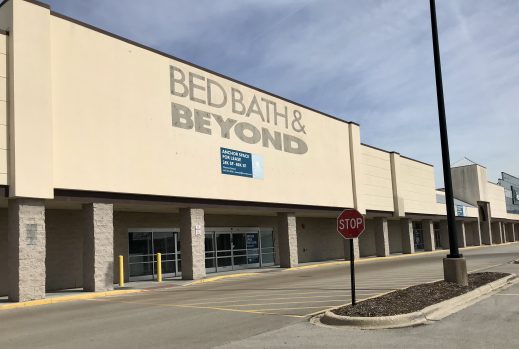


A 262-unit townhouse/rowhouse development is being proposed for the Naperville site on which the now-rejected Karis Critical data center was to be built.
Property owner/developer Franklin 1960 Lucent Lane LLC is seeking to rezone the 35-acre parcel near Warrenville and Naperville roads, part of the former Alcatel-Lucent site, from office, research and light industry to medium-density multifamily use.
Franklin has partnered on the project with Pulte Homes, which built the adjacent Naper Commons subdivision. As proposed, the development at 1960 Lucent Lane, just south of the Nokia campus, would have a density of about 7.8 acres per unit.

The residential development, presented at the Naperville City Council meeting Wednesday night, comes in the wake of a months-long battle over building a data center on the site.
Karis Critical argued that the center was consistent with the I-88 corridor’s historic research and industry use, but neighboring property owners and other opponents said they believed it would be detrimental to residents’ health and quality of life. The council rejected the plan in January.
“As disappointed as we were with the decision on the data center proposal, the property owner’s number one priority has always been and continues to be, now more urgently than ever, to put this property to its highest and best use under the city zoning regulations,” attorney Peter Friedman told the council Wednesday.
The Franklin team “took to heart the council’s sentiments and the residents’ sentiments” and shifted their focus to residential development, Friedman said.
“To put it bluntly, we simply do not have the luxury of another failed zoning entitlement process, and the time and expense that that would entail,” he said.
Initial feedback from the city’s Transportation, Engineering and Development department was that it would better combine the residential development with the “office and research nature” of the I-88 corridor. Adding an apartment complex near the roadway would serve as a transition between the townhomes and offices in the area, staff said in comments.

Overall, council members were supportive of the plan and suggested everything from adding amenities to including affordable housing options.
“I appreciate the process and where we’re at right now,” Councilman Patrick Kelly said. “This is what the neighborhood was looking for — the surrounding communities and the majority of the council — so I think we’re on a good path here. It’s been a long path even before the data center, the conversations with warehouses, other kinds of use.”
Mayor Scott Wehrli said that while he was not completely on board with staff’s suggestion for an apartment building. He would like to see something in the front of the development that signals to people as they enter the corridor that “this is a very special place,” he said.
“The I-88 corridor, obviously, is something we’ve been talking about here for the last couple years, specific to all the opportunities we have in that area, how important it is for our community to make it really have a comeback, and the potential we have over the next several decades to really rejuvenate that part of our local economy,” Wehrli said.
Councilman Ian Holzhauer suggested a street naming program for this and future projects highlighting Naperville’s history. While the program would not be mandatory, it would help people recognize the “contributions across civic, cultural and professional life” of earlier Naperville residents, he said.
Some neighbors who previously opposed the data center also voiced support for the residential development and added suggestions of their own.
“Small cafe, neighborhood retail or community-oriented space could enhance livability, reduce short car trips and contribute to a more connected environment for our residents,” said Clara Lambert, a Danada Woods resident. “Doesn’t have to be large scale or commercially heavy, but just intentionally designed to serve the immediate (area) and fit seamlessly into the residential character.”
cstein@chicagotribune.com