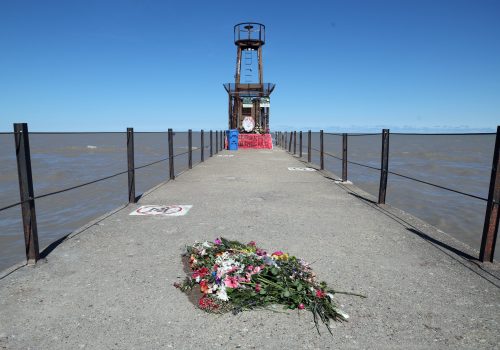
Around 1 a.m. on Thursday, Loyola University freshman Sheridan Gorman was out with friends at Tobey Prinz Beach near the school’s campus on Chicago’s Far North Side. A masked gunman shot once into the group, striking Gorman in the head and killing her, according to Chicago police. No motive was immediately apparent.
Loyola’s lively Rogers Park campus is in shock, and the grieving family of the 18-year-old assuredly is as well. That lakefront spot at Pratt Boulevard where the shooting occurred is popular with Loyola students, so we’re sure many students today are wondering how safe they are when exploring the rich Rogers Park neighborhood beyond the confines of the campus.
For young people attending college in Chicago, part of the appeal of doing so is the chance to experience the city itself — visiting unfamiliar neighborhoods, going to museums and other cultural attractions, eating at great restaurants, sunbathing on the shores of Lake Michigan.
Gorman came to Chicago to attend Loyola in the fall from Yorktown Heights, a Westchester County, New York, suburb of New York City, according to an Instagram post.
Deaths due to violent crime always are a tragedy, of course, and we mourn every one that happens here. But when the life of someone who comes to Chicago from out of state to get a college education is taken in this manner, the reverberations are felt beyond the suffering experienced by family and friends.
It’s not news that Chicago has a national public relations problem when it comes to public safety. There are productive steps the Chicago Police Department, the business community and a refocused and reinvigorated Cook County state’s attorney’s office have taken and are doing to make Chicago safer, which is reflected in lower rates of violent crime over the past year or so.
But Chicago’s numbers of shootings and other gun crimes remain unacceptably high and its national reputation as a dangerous city persists.
For all of Chicago’s challenges these days, a bright spot for the city remains its abundance of excellent colleges and universities. The University of Chicago and Northwestern University boast the highest of national (indeed, of international) reputations, but institutions like Loyola, DePaul University, the University of Illinois Chicago and Chicago State University are draws for those outside of the city as well. All of them are invaluable anchors for Chicago.
When an incident this awful happens at any of our universities, the concerning ripple effect is that parents of future collegians will bypass Chicago in favor of places they feel confident their kids will be safe. Given demographic trends and a greater percentage of teenagers opting for post-high school options other than college, the competition among colleges and universities for students is as cutthroat as we can remember. This is why schools like DePaul University have been laying off adjunct faculty and experiencing painful cuts.
Administrators at the universities themselves understand this dynamic better than anyone else. In Hyde Park on the city’s South Side, the University of Chicago has invested heavily in augmenting security not just on campus but throughout the neighborhood. In addition to having one of the nation’s largest private police departments, which has existed for decades, the university has security cars roving throughout the neighborhood at all hours, as well as individual security personnel stationed at street corners to serve as a deterrent.
The creation of the influential University of Chicago Crime Lab itself was inspired after the shooting death in 2007 of doctoral student Amadou Cisse, a native of Senegal. In the intellectually rigorous spirit of Chicago, the university not only took practical steps to make Hyde Park safer, it acted to try to find broadly applicable strategies to make all of Chicago safer.
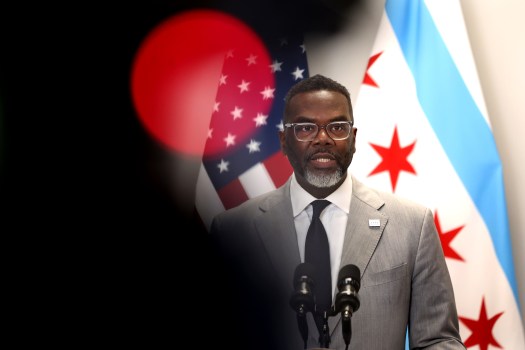
After the killing of Sheridan Gorman, city officials, police and even university leaders should not get defensive or try to minimize what happened by emphasizing how Chicago is performing better statistically in terms of public safety. Instead, Mayor Brandon Johnson’s administration should vow to redouble its efforts to ensure that violent crime is rare and that, when it does happen, the perpetrators are caught and pay the price.
Submit a letter, of no more than 400 words, to the editor here or email letters@chicagotribune.com.