Workers and passengers on the Chicago Transit Authority have been assaulted at rates at least double those of comparable public transit systems around the country, according to a Tribune analysis of federal data.
The analysis comes as the Trump administration has accused the CTA of doing too little to address violent crime on mass transit, in another front of the political war between the feds and leaders in deep blue Illinois.
In 2024, the most recent year with complete data, the CTA reported passenger assaults at a rate up to five times as high as those of comparable mass transit systems, when adjusting each system for the volume of ridership. Passengers were more likely to be assaulted on the CTA than the mass transit systems in New York, Los Angeles, Boston, Philadelphia and Washington, D.C., according to the analysis.
Chicago saw a jump in the passenger assault rate during the pandemic, like other major systems. But as ridership bounced back, most other comparable systems generally saw a drop in assault rates. Chicago didn’t — instead seeing its rate steadily rise through 2024. Reports of passenger assaults began dropping in 2025, although not enough data has been released for last year to compute complete, comparable rates among the systems.
Available data also shows that CTA workers were assaulted more frequently than workers at peer agencies, at rates anywhere from double to six times the rates of comparable transit systems, according to a Tribune analysis of data the agencies report to the federal government.
The Federal Transit Administration, citing its own analysis of CTA customer and worker assault data, threatened in December to withhold up to $50 million in federal funding from the agency.
Last week it backed off that threat, saying it didn’t plan to withhold funds from the CTA for now. But it redirected its attention to the Illinois Department of Transportation — which has some authority over the CTA’s rail system — saying it had failed to protect transit passengers and workers in Chicago.
Critics have slammed the threat-laden back-and-forth as political theater on the part of President Donald Trump’s administration, which has repeatedly targeted Democratic-led cities and states for scrutiny and funding cuts. That included Gov. JB Pritzker calling the IDOT investigation a “sham” on social media last week. The Trump administration has said it’s promoting “accountability” and “fix(ing) the messes Pritzker won’t.”
The Tribune analysis found that — for sure — the CTA’s safety figures have been troubling for years, before and after the pandemic, and even after adjusting for the different ridership volumes of comparable mass transit agencies. And certain types of violent crime are up on the CTA, including aggravated batteries and sexual assaults, according to Chicago police data.
Still, recent Chicago crime statistics show a more nuanced picture. Overall incidents of serious crime on the CTA are down over the last two years on the portion of the system within city limits.
Assaults on the CTA
The Tribune’s analysis looked at assaults on workers and passengers that are included among the “major safety and security events” that mass transit agencies are required to report to the FTA. The analysis compared the number of assaults with ridership volume on public transit systems in Chicago and five other comparable systems.
The CTA’s passenger assault rate exceeded those of comparable agencies. In 2024, the CTA reported 20.7 rider assaults per 100 million passenger miles, while its peer agencies all reported rates of assaults against riders ranging from 4 to 9.5 assaults per 100 million miles.
Even before the pandemic, Chicago led that list of major transit systems in its rate of passenger assaults, but the gap widened after the pandemic.
New York City’s system, for example, reported nearly 1½ times the number of passenger assaults than Chicago in 2024 but roughly 7½ times Chicago’s volume of ridership.

For sure, the odds of a passenger assault were still low on the CTA — fewer than 21 incidents per 100 million miles traveled by riders. But those odds were still higher than New York, which reported roughly 4 incidents per 100 million miles traveled.
When asked about the results of the Tribune analysis, the CTA cautioned that it can be difficult to compare the major mass transit agencies. The agency also initially questioned some of the Tribune’s findings. The Tribune provided the CTA more detail to clarify how it arrived at its figures and invited the CTA to respond to the analysis further. The CTA declined.
The CTA also reported worker assaults at a rate significantly higher than its peer agencies in recent years, the Tribune analysis of data reported to the FTA shows.
The CTA had 6.9 worker assaults per 100 million passenger miles in 2024, the most recent year for which full data is available. Mass transit agencies in New York, Boston, Washington, D.C., Philadelphia and Los Angeles all reported worker assaults at a rate of 1.0 to 3.5 per 100 million miles traveled on their systems.
When asked about the Tribune analysis, the CTA suggested that compared with some other cities, Chicago has more aggressive policies on when to transport someone to the hospital, which could lead to more assaults reported. One threshold for reporting a worker assault as a “major” event is if a worker is transported to a hospital.
“It is important to note that the (National Transit Database) data for each agency is not an apple-to-apples comparison,” CTA spokesperson Catherine Hosinski said in an email. “There are several variables that impact what is captured in the data that each agency submits, as well as how they interpret what is required for submission.”
The agency also did not respond to additional questions about any research it did to assess its worker assault rate compared with other places, after adjusting for any transport policy differences. But it did release an additional statement that said the agency was “laser-focused on addressing the critically important issue of protecting CTA workers” and was focused on using “sophisticated, targeted strategies” to address the issue.
The CTA’s rates of both worker and passenger assaults significantly exceed its peer agencies’ in 2023, too.
Comparing agencies can be tricky. Each agency has different mixes of rail and bus operations that travel through different types of neighborhoods with differing levels of crime. Mass transit systems in Boston and Philadelphia also include commuter rail, while in some other regions, commuter rail is operated by separate agencies. And an agency may not always report every incident as it should, making more diligent agencies look worse.
And some statistics can be misleading, as well.
In a December directive to the CTA, the FTA said customer assaults jumped 150% in just five years. And while the Tribune analysis did find a 146% jump in assaults, that doesn’t take into account the dramatic shifts in ridership over the pandemic.
With ridership plummeting during the pandemic, then picking back up in recent years, it’s not necessarily unusual that assault figures would have been low in 2020 and risen since then. In fact, during that same period, New York’s and Los Angeles’ major transit systems saw even bigger jumps in raw numbers.
There is also a bright spot in the most recent data for the CTA. While the FTA lacks data for all of 2025, it has enough for an analysis of 12-month periods based on federal fiscal years, which run from October through September. And, if the figures are adjusted to federal fiscal years, to incorporate more recent data, they show the CTA saw a recent drop in passenger assaults in the most recently completed federal fiscal year.
The CTA has cited more recent drops in systemwide crime following a law enforcement surge it began in December at the behest of the feds.
Assaults against transit workers fell 25% in January and 29% in February when compared with the six-month average leading up to the December law enforcement boost, the CTA said earlier this month.
Riders check cellphones as they ride a CTA bus in Chicago on March 4, 2026. (Antonio Perez/Chicago Tribune)The agency also said that crime systemwide had dropped 9% when comparing the period since the start of the security surge through the end of February with the same period the previous year. Violent crime on buses was down 19% during the same period, the CTA said.
None of those recent reported drops would be reflected yet in the FTA data.
Can the feds withhold funds?
Peter Rogoff, who led the FTA under President Barack Obama, said that when the FTA first sought — and Congress approved — the authority to regulate safety on urban transit systems like the CTA, discussions at the time centered around safety issues like train crashes.
At the time, Rogoff said, he didn’t think anyone was thinking about safety as being related to crime.
But that doesn’t mean the FTA couldn’t consider crime when exercising its regulatory authority over mass transit systems like the CTA, Rogoff said.
Although federal judges have shot down many of the Trump administration’s attempts to withhold federal funding from blue states, experts say the government does appear to have the authority to withhold funds from transit systems because of safety and security issues.
Federal law allows the government to withhold up to 25% of Urbanized Area Formula grant funding from any recipient “that does not comply with Federal law with respect to the safety of the public transportation system.”
Those are the funds — up to $50 million — the feds had threatened to withhold from the CTA before backing off last week.
All of the agencies included in the Tribune’s analysis have received attention from U.S. Transportation Secretary Sean Duffy regarding safety concerns, most of which are crime-related, on their systems.
The U.S. Department of Transportation first sent a letter about safety to the CTA in September, asking the agency to lay out its “plans to reduce crime and fare evasion” — or risk the loss of federal funds.
The CTA defended its crime-fighting practices in a response to Duffy on Oct. 3 — the same day the feds separately froze about $2 billion in federal grant money for the agency’s Red Line Extension, citing its diversity practices in contracting.
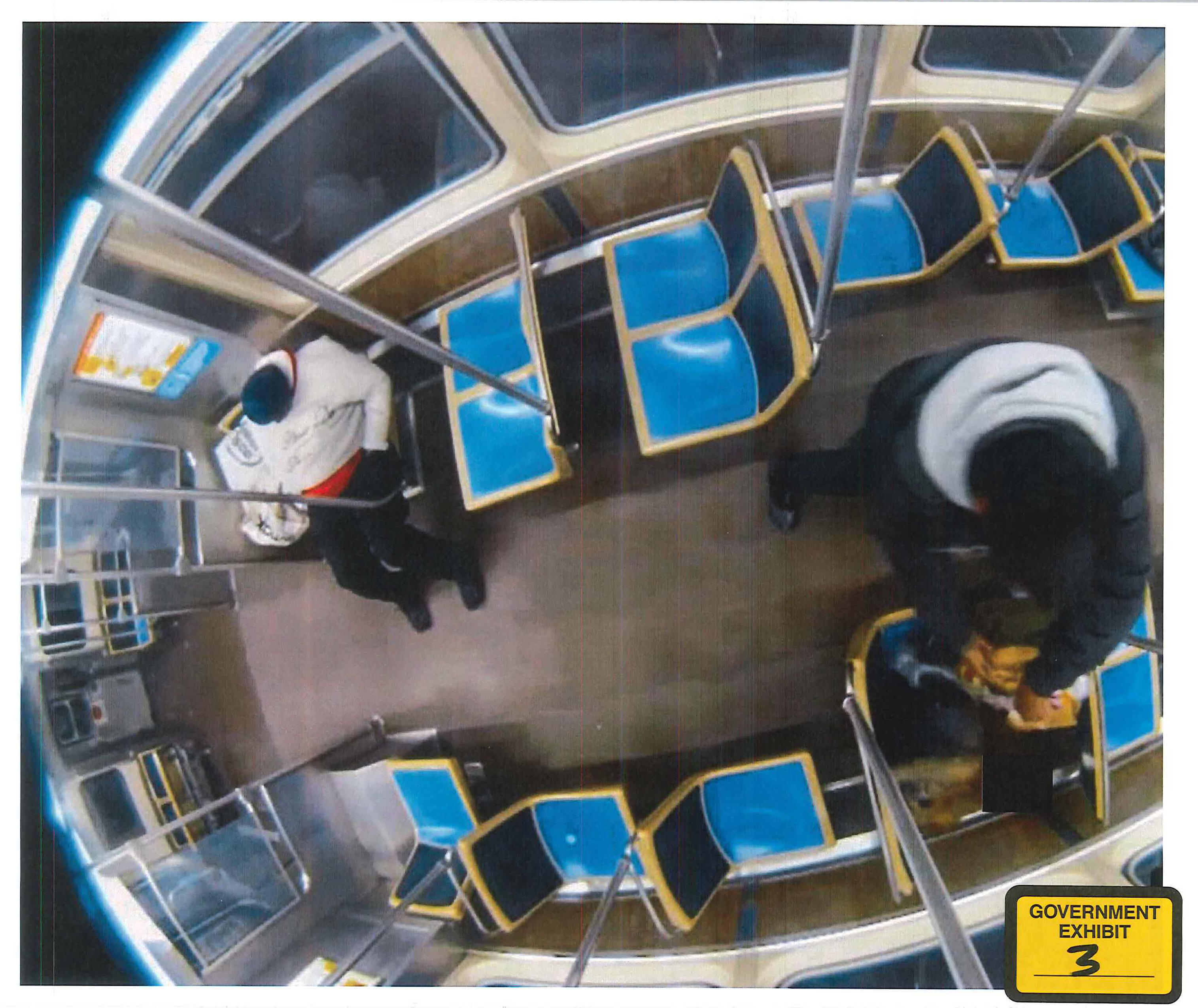
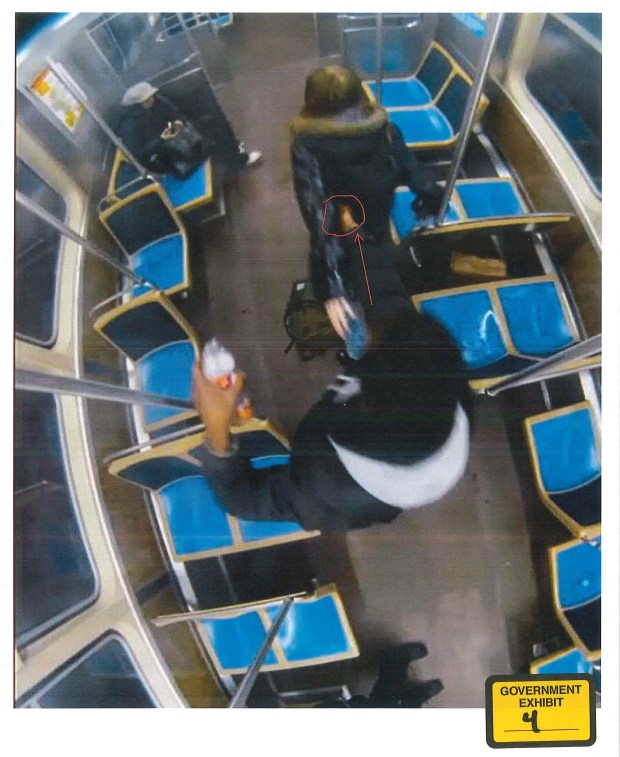
Six weeks later, a 26-year-old woman riding the Blue Line downtown was doused in gasoline and lit on fire in an attack that appeared to be completely random.
The man accused of the attack, Lawrence Reed, had a lengthy criminal history.
Duffy seized on the Blue Line attack, posting about it on social media.
“Blue cities cannot allow another Iryna Zarutska to happen,” he wrote on X, referring to a woman killed in another apparently random public transit attack in North Carolina.




A few weeks later, the FTA issued the special directive to the CTA, giving it just one week to formulate a plan to significantly reduce assaults “for each of the next six months.”
The plan the CTA submitted called for boosting the number of hours the Chicago Police Department spends patrollingby 30%.
But the CTA’s plan — which the Tribune obtained via a Freedom of Information Act request — targeted no decreases in customer assaults or in major transit worker assaults for the first quarter of this year.
The FTA rejected that plan as “materially deficient.”
The CTA responded with a new security plan earlier this month that it said will boost policing hours on the system by 75% overall. Cook County sheriff’s officers will patrol the CTA’s rail system and the Chicago Police Department will also boost the staffing hours provided by CPD officers.
“As the vast majority of (federally) reportable crimes reviewed occurred along a few dozen locations and corridors, the law enforcement and security surge strategically targets the specific areas where physical assaults against transit workers are most likely to occur,” the plan said.
That plan appeared to satisfy the FTA, at least for now. The FTA will not withhold federal funds from the CTA “at this time,” the agency said in a letter to acting CTA President Nora Leerhsen last week.

But the FTA did say it reserves the right to withhold those funds “without further notice” if the CTA doesn’t fulfill its commitments laid out in its new plan.
And just as the FTA appeared to take some pressure off the CTA, federal regulators turned their attention to IDOT..
The federal agency is calling on IDOT to take steps like conducting on-site safety inspections and reviewing CTA’s in-house hazard assessments. The FTA has not explicitly threatened to withhold funds from IDOT.
The new federal directive doesn’t mention crime, and appears largely focused on IDOT’s traditional role of overseeing rail safety from an infrastructure and accident perspective, a point emphasized by the governor’s office.
But a politically inflected news release from the FTA announcing the crackdown did touch on crime, with the feds taking credit for public safety improvements on other transit systems around the country.
And Duffy used the opportunity to take aim at Pritzker and unnamed “state leaders,” saying they “should be embarrassed for the chaos they’ve allowed on Chicago’s subways, buses, and rail lines.”
Transit insiders have struggled for months to reconcile skepticism about the Trump administration’s motives — stemming in part from the administration’s broad practice of suddenly withholding or threatening to withhold funds from blue cities and states — with their own concerns about CTA violence.
At a CTA board meeting last year, board member Roberto Requejo said he wasn’t happy with the state of public safety on the CTA, but also said he found it “very hard” to “reconcile that the same federal government that is terrorizing, abusing and kidnapping” Chicago residents was “the same federal government that shows concern about crime and violence in transit.”
When it comes to the feds’ audit of IDOT, Rogoff, the Obama-era FTA administrator, described the results as “not pretty.”
For instance, the FTA found that IDOT had left $21 million in federal funding unobligated and unspent between 2017 and 2025.
But Rogoff also questioned whether the FTA was applying its enforcement authority evenly throughout the country.
“There’s clearly … a pattern here as it relates to governors and mayors that are not aligned with the president’s program and them being subjected to heightened federal scrutiny,” he said. “But again, if I were a rider on the CTA, I would care less about the politics and more about the performance of the agency.”
This story – and the accompanying charts – has been updated to reflect additional assaults reported by SEPTA on its commuter rail system. The story has also been updated to note that assault and passenger-mileage statistics for Boston and Philadelphia include their respective regions’ commuter rail systems.