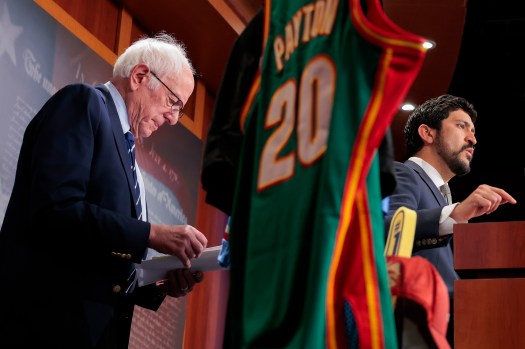

An electric utility affordability bill will impact Hoosiers the most from this year’s legislative session, said State Sen. Rodney Pol. said State Sen. Rodney Pol during a Saturday town hall held at Portage City Hall.
After signing House Enrolled Act 1002 into law, Gov. Mike Braun called the bill “a major reform designed to modernize how Indiana regulates electric utilities,” in a statement.
“Utility rates are too high, and my actions stand up for ratepayers on appointments to the regulatory commission, bring new power to the grid and overhaul how utilities are regulated to lower Hoosiers’ bills is starting to pay off. There is still more to do, but these early successes and recognition on the national stage are proof that our energy affordability strategy is delivering results for Hoosiers,” Braun said.
Pol, D-Chesterton, said the legislature has passed multiple bills since 2002 that have led to the rise in Hoosiers’ utility bills. Pol gave a highlight of the major utility bills, but said there were likely other bills that had contributed to the cost.
In 2002, the legislature passed Senate Enrolled Act 29 that allowed utilities to charge ratepayers for a power plant as it is under construction and before it generates electricity, he said.
Senate Enrolled Act 251, which the legislature passed in 2011, allowed electric utilities to charge customers for the cost of federally mandated compliance projects. Two years later, the legislature created a tracker that allowed utilities to charge customers for the cost of improving transmission, distribution and storage systems, Pol said.

In 2017, the legislature passed Senate Enrolled Act 309, which ended net metering in Indiana. That bill ended the financial incentive for Hoosiers to install solar panels on their roofs, Pol said.
Under Senate Enrolled Act 271, which was signed into law in 2022, utilities could charge customers for small modular reactor plants while under construction and before the plants created electricity, Pol said.
In 2023, House Enrolled Act 1420 blocked competitive bidding on transmission projects, which likely increased the project cost and ratepayer bills, Pol said. Fast forward to the 2026 legislative session, Pol said the legislature passed House Enrolled Act 1002 to address utility affordability.
Pol said the bill does four things: allows for levelized billing for low-income accounts; prohibits a utility from ending a service if there is a forecasted heat index of 95 degrees; establishes performance-based rate making; and requires investor-owned electric utilities to establish and help fund assistance programs for low-income customers.
The levelized billing portion of the bill was a way to “pacify” residents because it doesn’t lower the total cost of the bill, Pol said.
“At the end of the day, you’re still paying the same amount,” Pol said.
The heat provision was “a good one,” because it’s a health hazard, Pol said. The performance-based rate making will ensure that utility companies follow specific metrics to ensure the utility rate is affordable, he said.

“When you talk about affordability, unless you’re actually looking at the specific data and how that will apply, you could have a utility that could make the case that … you’re going to pay less eventually. That doesn’t help people that are retired right now,” Pol said.
The help fund assistance program for low-income customers “puts more teeth” into existing programs aimed to help with utility rates, Pol said.
Utilities are a necessity, Pol said, and the legislature tends to view utility companies as corporations instead of something that needs to be subsidized, “because it’s a necessity of life.”
In the Senate, Democrats proposed a few amendments to House Enrolled Act 1002, including eliminating sales tax on utilities, requiring utilities to offer standard payment plans, and establishing a table to break down costs, including each tariff rate component, Pol said.
Another amendment Senate Democrats proposed was that if a homeowner could provide medical proof that the utility is medically necessary, like refrigerating medication, then a utility company can’t shut down the service, Pol said.
Pol said a Republican senator told him after the voice vote on the medical proof amendment, which failed, that she voted in favor of the amendment because she knows people who need utilities for medical reasons.
Beyond utility affordability, the legislature passed two bills to bring a ballot measure in November where voters can decide if the state constitution should be amended to allow judges to deny bail if the defendant poses a substantial risk to someone else or the community. Pol said the two bills have a good intention but could lead to innocent people being jailed until their trial.
The legislature passed a bill to prohibit ranked choice voting, even though Indiana doesn’t have ranked choice voting, Pol said.
Pol said his bill adding Porter and LaPorte counties to the Indiana Crime Guns Task Force passed both chambers this session. The legislature also approved a bill to define grooming and expand restrictions on sex offenders.
The legislature also passed a strict immigration bill that requires local law enforcement, public schools, universities and local governments to cooperate with ICE or be sued for $10,000 per violation, he said.
Martha Rae, a Valparaiso resident, said as part of her job, she works with children in Northwest Indiana and that officials with the inspector’s general office have been going to preschools to take pictures of students’ birth certificates.
“It’s already happening in our state,” Rae said.
akukulka@post-trib.com