Gregory Bovino has only a few regrets.
“I wish I’d caught even more illegal aliens,” he said in a recent interview. “I mean, we went as hard as we could, but there’s always a creative and innovative solution to catching even more.”
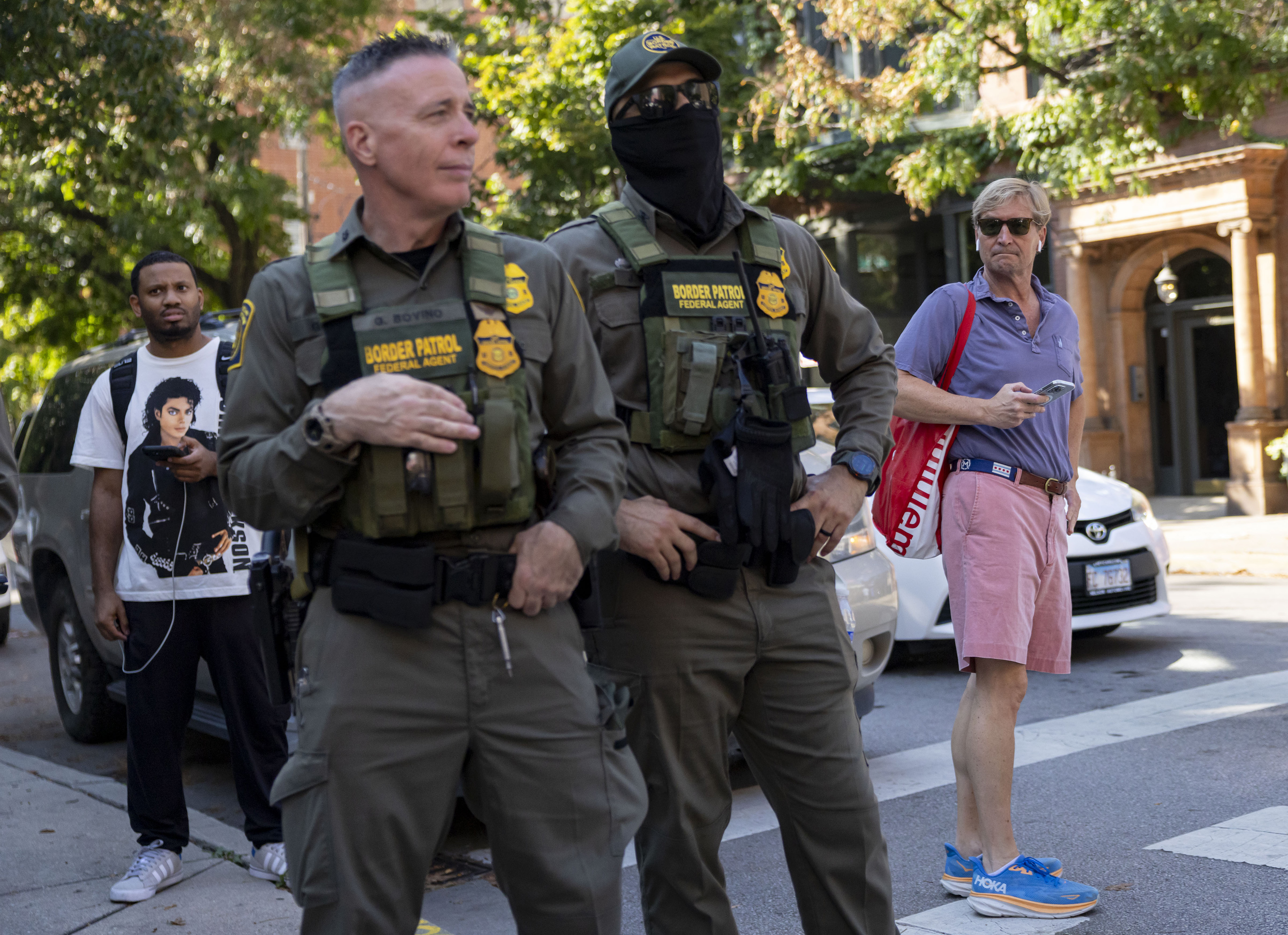
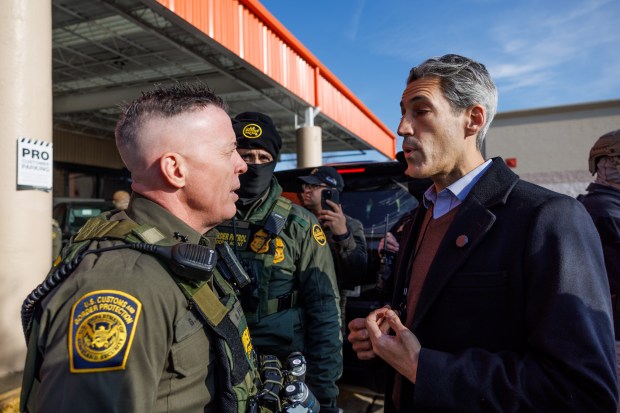
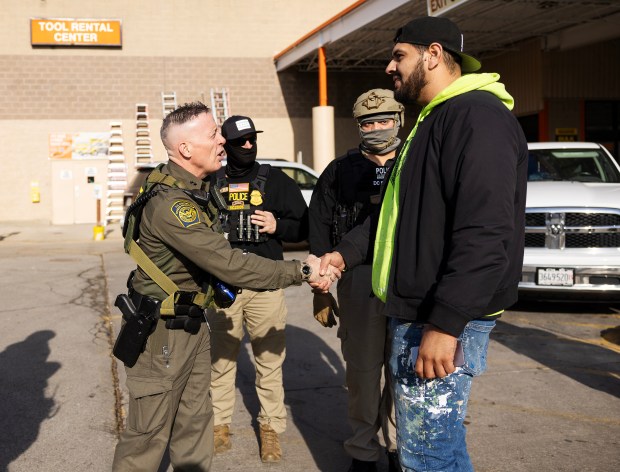
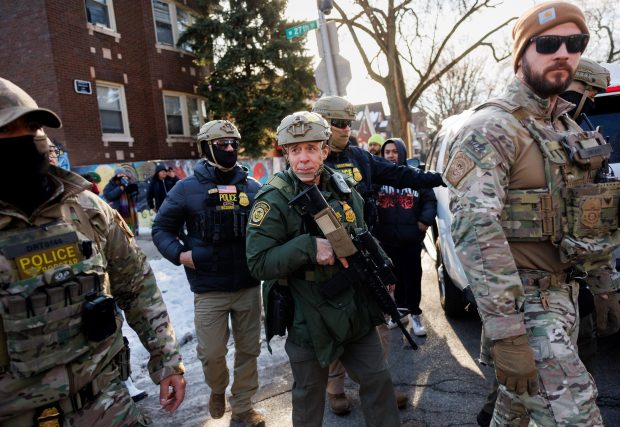
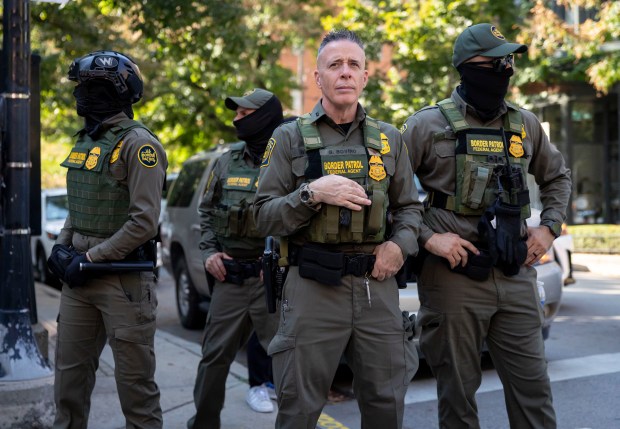
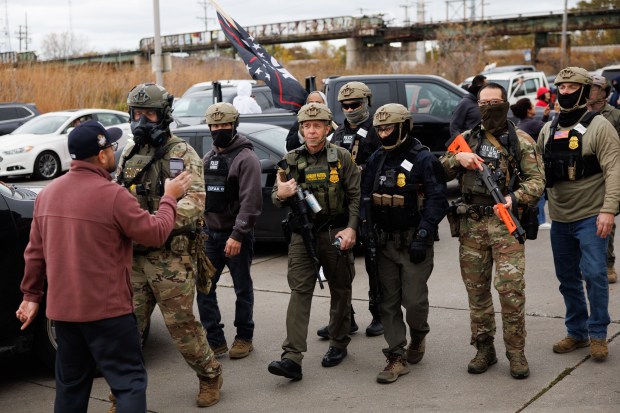
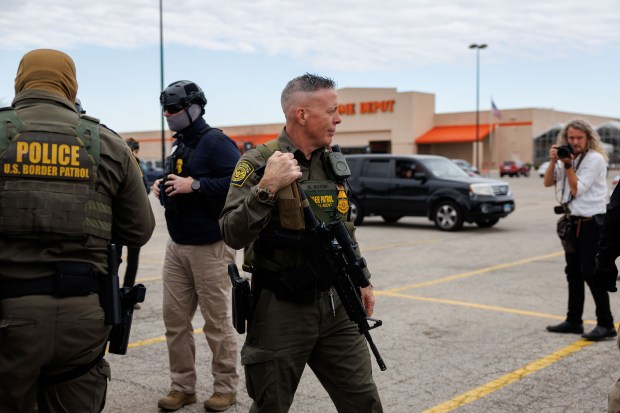
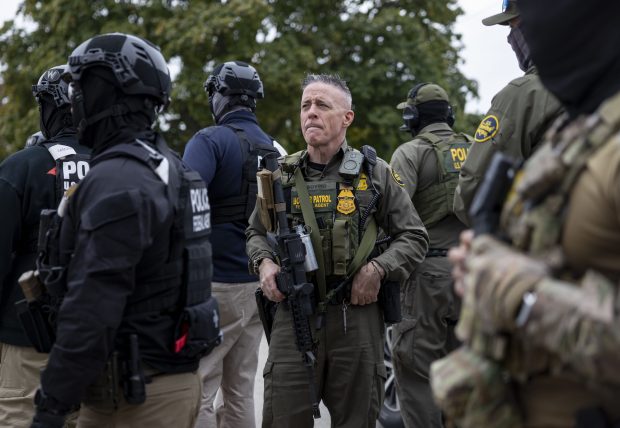
Until January, Bovino was the pugnacious face of the Trump administration’s mass deportation campaign. As federal agents moved to suppress protests in city after city, Bovino was often at the center of the scrum, personally lobbing tear gas into crowds and authorizing his team to operate with aggression.
He had risen from relative obscurity, but Bovino was built for the moment. He had long harbored hard-line, even radical views on immigration, and said he had a plan to deport 100 million people. And he had a long-standing reputation within the Border Patrol for his eagerness to test the law in service of those views, according to interviews with current and former colleagues and previously unreported documents.
The administration handed the mid-level Border Patrol leader a highly irregular position that allowed him to leapfrog the usual chain of command and report directly to the secretary of homeland security, Kristi Noem.
But Bovino’s fall was abrupt. The legally contested and chaotic crackdowns he led resulted in the killing of two American citizens by federal agents in Minneapolis. Protests against the government’s immigration enforcement campaign intensified, and polls showed a broad public backlash. The administration pulled the plug on him.
Even President Donald Trump distanced himself, calling for a “softer touch” and saying Bovino was “a pretty out-there kind of guy.”
This week, Bovino is officially retiring.
To some of the colleagues he clashed with over his career, Bovino’s trajectory was predictable. While popular with direct subordinates for his bold and unapologetic leadership, six current and former homeland security officials described him as a chronic institutional headache whose theatricality, combativeness and disregard for rules and protocol sometimes alienated even those who generally shared his politics. Some of the officials spoke on condition of anonymity because the department had not authorized them to speak to the news media.


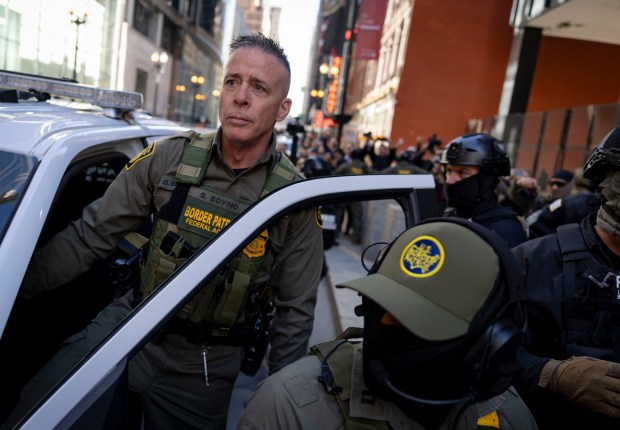
The White House and U.S. Customs and Border Protection did not respond to requests for comment.
In several recent interviews with The New York Times, Bovino lashed out at many of his superiors, calling them “status quo” bureaucrats who prioritized intelligence-led arrests over the “turn and burn” tactics he championed.
Bovino’s actions left a trail of litigation, condemnations from local politicians and accusations of discrimination and unconstitutional conduct.
And, yes, he has a few regrets. But he does not think he went too far. He thinks he did not go far enough.
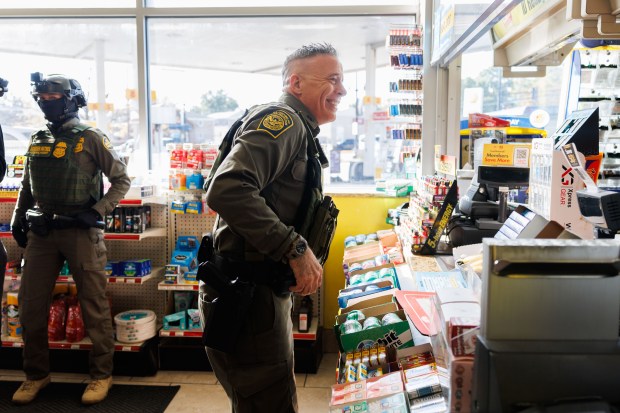
“We wanted total border domination,” Bovino said one recent morning at Burgers and Beer, a sports bar and restaurant in El Centro, California.
He relished politically incorrect language. Barack Obama was “Hussein”; migrants attempting to cross the border during the pandemic were “walking zombies.” This rhetoric is part of what made Bovino such a singular character, the embodiment of Trump-era immigration enforcement. Over the past year, Bovino was caught on camera denigrating protesters and encouraging force. At one point, he told agents in Los Angeles to “arrest as many people that touch you as you want.”
By the end of his national tour, one official said, Bovino was deliberately seeking out confrontations to get content for social media.
Bovino said he had a master plan that was in motion before his exile back to El Centro. It would have neutralized protesters, he said, and made it possible to deport 100 million people.
That is a goal that the Department of Homeland Security has widely promoted, although it’s nearly 10 times the estimated number of people in the country illegally. It is also more than a quarter of the entire U.S. population.
Bovino said he had been combative since his childhood growing up in North Carolina.
After joining the Border Patrol in 1996, Bovino’s first assignment was in El Centro, where he said he immediately dedicated himself to one goal: “Catch as many illegal aliens as you possibly can.” Over the next 15 years he popped up all over the American West, in Washington, D.C., and as far away as Africa and Australia.
How Gregory Bovino became a face of Donald Trump’s mass deportations and ended his career
He concluded that interior immigration enforcement was inextricably linked to “total immigration domination” and that his methods were sound — if only there were a White House that would let him run.
He said he began training teams to execute “consensual encounters,” a controversial tactic of casually approaching individuals at gas stations and transit hubs, then asking about their immigration status. By basing these stops on “articulable facts,” Bovino exploited a legal gray area that allowed agents to question people without the reasonable suspicion required for a formal detention.
After he was assigned to lead the New Orleans sector in 2018, Bovino solidified what he viewed as his all-encompassing approach to enforcement, which would one day draw the admiration of the Trump administration.
Teresa Pedregon, a veteran Border Patrol employee who is now retired, said that in their first meeting in New Orleans, Bovino referred to immigrants in the country illegally as “filth” and “trash.” Under his leadership, she said, the sector shifted from intelligence-driven operations to those consensual encounters.
“It was all about numbers for Bovino,” she said.
Pedregon was one of four agency employees who sued DHS, alleging discriminatory hiring practices in New Orleans. The lawsuits claimed that Bovino gave preferential treatment to less qualified white and male agents.
Previously unreported legal documents show that Bovino admitted he had referred to people in the country illegally as “scum,” “trash,” and “filth” while giving a speech to his agents. He said that at the time, he had been referring to criminals such as child rapists, but he also refused to back down. “All illegal aliens are criminals,” he said.
The cases were ultimately settled, and the legal dispute did not hurt his career. Instead, Bovino got a promotion, and returned to El Centro as sector chief in 2020.
Bovino said he had anticipated that Trump would win reelection in 2020 and give him an empowering mandate. Instead, he got President Joe Biden and a pandemic. He and his department made the best of it, Bovino said, defying orders from headquarters to prioritize the rapid processing and release of migrants.
A report published by the Project On Government Oversight, which analyzed federal data from 2022 to 2025, found that Bovino’s sector used force more frequently relative to its apprehensions than others in the agency.
Bovino felt his team was ignored by colleagues to avoid validating his methods. Why did no one ask him for his “secret sauce,” he wondered? He began to speak out.
Bovino said he had discovered the power of social media in New Orleans, after clashing with the city’s mayor and realizing he could speak directly to the public, even if it caused internal reprimand. “I got yelled at a whole lot and got in trouble a whole lot, and didn’t care,” he said.
In 2023, he was disciplined for social media posts and for congressional testimony, which he said earned him a formal counseling session and a brief reassignment to headquarters. He said he believed he would have been fired if Republican lawmakers hadn’t intervened.
But four former DHS officials pushed back on Bovino’s narrative of these years. They said it wasn’t that colleagues were jealous as much as they resented his bragging, and they said his statistical successes were the result of geography, not just strategy. While Bovino framed past disciplinary issues as political battles, they said in reality he was singled out for unprofessionalism.
“He had no trouble putting himself out there as better than the others and doing that in front of them,” said Chris Magnus, who served as commissioner of Customs and Border Protection from 2021 to 2022. “It struck me as particularly unprofessional, disturbing and frankly, obnoxious, how he interacted with both his colleagues and his subordinates.”
On Jan. 7, 2025, 13 days before Trump’s second inauguration, dozens of Border Patrol agents from El Centro began an operation 300 miles north, in Kern County. Using unmarked vehicles, agents roved through agricultural hubs and day-laborer gathering sites, arresting 78 people in three days.
Bovino said the raids were targeted at criminals, but agents didn’t know the criminal or immigration history of most of the people they arrested, according to a judge’s ruling in a lawsuit filed by the American Civil Liberties Union.
The sweep drew the attention of the White House and other federal agencies, Bovino said. When the Trump administration began its immigration crackdown in Los Angeles in June, Bovino was soon put in charge.
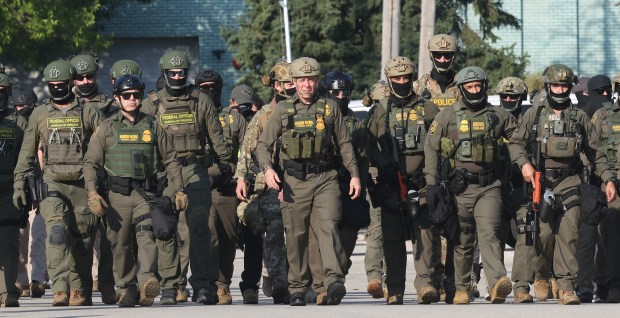
In Los Angeles, federal agents deployed flash-bang grenades and tear gas against protesters. In Chicago, agents in military uniforms rappelled from a Black Hawk helicopter into an apartment complex as part of a campaign that resulted in the shooting of a U.S. citizen and the wrongful detention of others. In Minneapolis, an increasingly chaotic operation reached its violent end with the deaths of Renée Good and Alex Pretti.
For months, the administration had praised Bovino for his aggressive raids.
When the Minneapolis fallout shuttered Bovino’s operation, the unit was disappointed, said one member of his team, who spoke on the condition of anonymity because of a ban on homeland security agents speaking to the media. Two members of the unit said Bovino was a beloved leader who was as accessible as he was fierce and that morale on the team had been at an all-time high.
One official said Bovino had devolved from a quirky but useful disruptive force into a liability.
The friction was palpable in the field. In Chicago, when his unit rounded up families with young children, local Immigration and Customs Enforcement officials balked and said they lacked the facilities to hold minors. Bovino said he was overriding them.
One DHS official said some agents filed formal complaints about their time working with Bovino, alleging that they were instructed to engage in blatant racial profiling and the indiscriminate use of munitions against nonviolent targets. Bovino said he was unaware of any formal complaints.
Bovino had also recently learned that he faced an internal investigation for making disparaging remarks about a Jewish prosecutor in Minnesota taking time off for Shabbat — a probe he said he was outraged to learn about not from his superiors, but from reporting in the Times. He called the accusations unfounded and said they were “made by troglodytes.”
Still, as he looked back on the past year, Bovino had some praise. He called Trump the most effective president he had ever served under: “We got a lot of kudos from the Trumpster,” he said, transmitted via Corey Lewandowski, the controversial senior adviser to Noem.
This article originally appeared in The New York Times.