
Following a presentation and questioning on Northern Indiana Public Service Company, LLC’s affordability, the head of the Indiana Utility Regulatory Commission said work still needs to be done.
“The outrage is real,” IURC Chairman Andy Zay said Tuesday. “I’m not even sure we’ve gotten close to the heart of it today, and that’s a problem.”

NIPSCO was one of five Indiana utilities, on Tuesday, that participated in an IURC investigative inquiry into the state’s energy affordability crisis. During the investigative inquiry, each utility had up to 20 minutes to present on various topics, including how usage and rates lead to bills, the impact of growth on affordability, and short-term steps that can increase bill transparency and rising energy costs.
During NIPSCO’s presentation, President and COO Vince Parisi spoke about the utility’s reach, bill transparency, rising energy costs, energy assistance programs, customer usage and potential impact of growth on affordability.
“Customer affordability is obviously a critical thing for us across Indiana, certainly at NIPSCO, and really just across the nation,” Parisi said.
Following each presentation, IURC members and Indiana Utility Consumer Counselor Abby Gray had 40 minutes to ask utility representatives questions about their presentations and billing.

“Hundreds, if not thousands, of ratepayers have contacted our office in the last several weeks,” Gray said. “I greatly appreciate you taking the time to share your concerns with us.”
In addition to NIPSCO, AES Indiana, CenterPoint Energy, Duke Energy and Indiana Michigan Power Company also presented during the inquiry. The meeting took place from 8:45 a.m. to 3 p.m. at the PNC Center in Indianapolis, and it was streamed on the IURC’s website.
The Tuesday inquiry didn’t have a public comment period. Instead, the IURC will host 10 listening sessions statewide, Zay said, where the public can voice concerns about their energy bills.
The IURC will host two listening sessions in Northwest Indiana, including one at the La Porte Civic Auditorium from 6 to 8 p.m. Thursday. The second will be at the Gary Public Library’s Roma K. Ivey Community Room from 5:30 to 7:30 p.m. April 13.
“I’ve always felt that every bill tells a story, and the rates we set aren’t just abstract numbers,” Zay said. “They have real impacts on everyday households and businesses. It’s important, and we cannot have these conversations without making sure that the voices, experiences and perspectives of everyday Hoosiers are included.”
On Tuesday, Parisi told IURC members that NIPSCO serves about 500,000 electric customers and about 900,000 natural gas customers in Indiana’s northern 32 counties. NIPSCO is the largest natural gas distribution company and second largest electric distribution company in the state.
Each October, NIPSCO sends a projection to customers to see the utility’s expected winter bills. The utility projected a 16% increase between 2025 and 2026, Parisi said.
“Folks typically aren’t thinking about their winter heating bill in October, so that’s something we have to look at to make sure that information’s getting out at the right time for our customers to respond,” Parisi said.
Since customers have been concerned with bill transparency, NIPSCO has created two explanation documents for electric and gas bills, Parisi said. The company has hosted multiple listening sessions to help customers better understand their bills, he said, and the utility plans to do more before bills rise in either the winter or summer.
NIPSCO also has billing detail worksheets available to help customers, Parisi said. He also talked about the utility’s various energy assistance programs that can help those struggling with bills, and how the NISPCO GenCo model will ensure that customers don’t foot the costs of data centers in Northwest Indiana.
Commissioner Anthony Swinger asked Parisi what actions NIPSCO takes to make sure that customers have access to the billing detail worksheets.
“We did bring these with us when we had our open houses, so customers could take those with them,” Parisi said. “We do mailers, and that’s another place where we can send them out to customers directly. … We do have them on our website, … and they can find them both in the bills section as well as the financial support system.”
Indiana’s utility costs are lower than other states in the Great Lakes region, Parisi said Tuesday. The U.S. Energy Information Administration, in December 2025, found the same data, with Indiana’s electricity prices lower than Illinois, Michigan, Ohio and Wisconsin.
The Citizens Action Coalition, in a July 2025 report, found that electric utility bills have increased more than $28 per month statewide, or 17.5%. NIPSCO residential customers were hit hardest, with about a $50 per month, or 26.7% increase, in one year.
During the 2026 Indiana legislative session, both the House and Senate passed House Enrolled Act 1002 to tackle energy affordability. The legislation allows residential ratepayers to be placed on budget billing plans on July 1, and utilities will be prohibited from disconnecting low-income customers’ electrical service during periods with extreme heat warnings. House Enrolled Act 1002 also ties utility profits to performance metrics, including affordability and service restoration, and utilities will use a three-year rate plan.
On Tuesday, Parisi said the legislation will have multiple impacts on NIPSCO, and it will allow for a predictable, multi-year rate plan structure that is more stable for customers and supports long-term planning. The changes will also allow for more efficient planning of investments and minimize the frequency of rate case filings.
“The investments that we make are performance-based with respect to our system, but they’ll be driven even more to ensure the reliability and resiliency of our system,” Parisi said. “Those are some of the benefits that we’ll see from (House Enrolled Act) 1002.”
State Rep. Randy Novak, D-Michigan City, said in a Tuesday statement that he’s thankful for the IURC’s actions, especially after the legislative session, when he heard from “countless constituents” about rising utility costs.
“However, this investigative inquiry and listening session series cannot be the end of the conversation,” Novak said. “The average NIPSCO customer has seen their utility bill jump roughly 26% over the past year. They need action taken right now to ensure their utility bills don’t get further out of control. I look forward to working with the IURC and my colleagues in the Indiana General Assembly to ensure the fight continues on behalf of Hoosiers.”
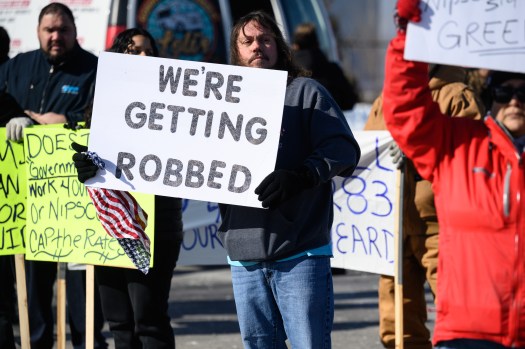
Commissioners asked Parisi about NIPSCO’s gas delivery charges, which residents have expressed outrage over and has been the topic of multiple protests regionally. Northwest Indiana residents have been concerned that delivery charges on bills are often higher than their usage prices, according to Post-Tribune archives.
“Our (bill) system is 30 years old,” Parisi said. “It’s very difficult for us to get the level of detail that ultimately we need to really provide our customers with what they’re looking for right now … which is just more explanation of what’s in there.”
According to NIPSCO, delivery charges cover the cost of “safely and reliably operating and maintaining” the system that brings natural gas to customers, and it varies based on how much gas they use. Colder temperatures mean higher gas usage, which makes the delivery portion of the bill higher.
Delivery charges go toward maintaining 18,100 of distribution pipelines, 720 miles of transmission pipelines, responding to service calls and ensuring service for its customers.
Commissioners encouraged Parisi and NIPSCO to look for ways to make the delivery charges more clear to customers.
“We need to get (the system) upgraded so we can ultimately provide more information and more flexibility for our customers,” Parisi said. “It’ll be over the next three to four years, and it takes a bit of time to ultimately put it in place.”