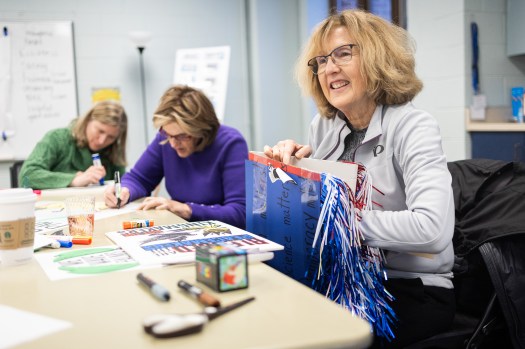

When Archdeacon Michael Choquette joins fellow demonstrators at the upcoming “No Kings” protest in Grant Park this weekend, he intends to wear a clerical collar to send a message that “Christ is in the world.”
“And as a church, we should be out there too,” said Choquette of the Episcopal Diocese of Chicago. “I see it as standing in solidarity with our brothers and sisters who find themselves living in fear and living in uncertainty.”
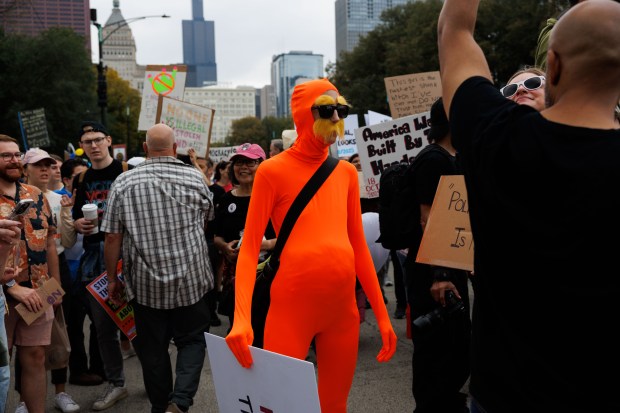
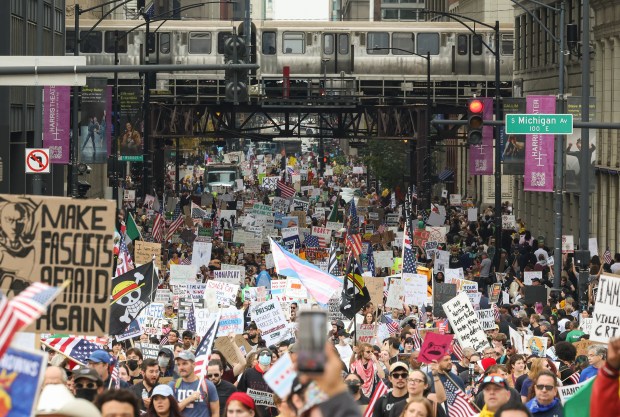
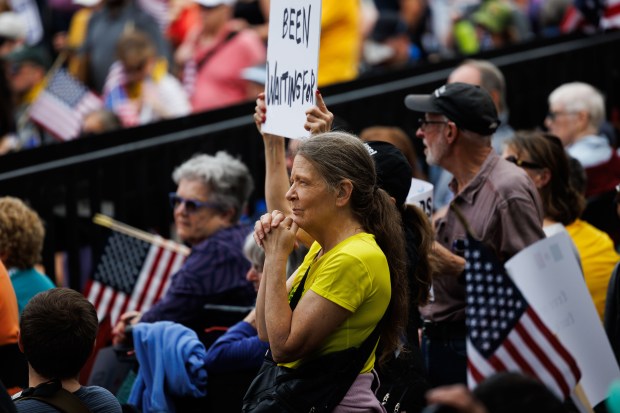
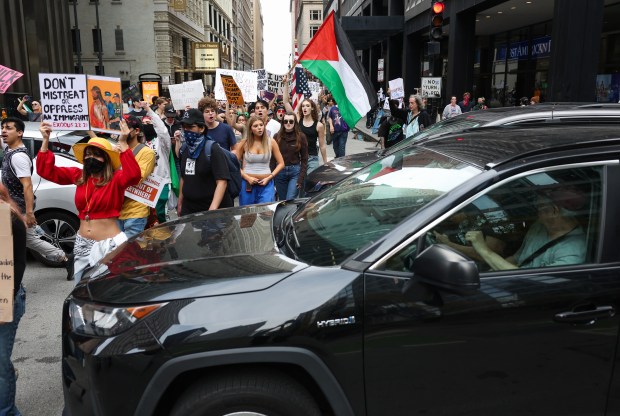
A diverse array of religious leaders and clergy from across the Chicago area plan to take part in the return of “No Kings” protests — what has become an iconic collection of marches and demonstrations against the Trump administration held locally as well as around the globe.
They say their faith compels them to do so.
“As United Methodists, we believe that our faithful witness is fundamentally public,” said the Rev. Abby Holcombe of Urban Village Church-West and River Forest United Methodist Church. “We advocate for compassion, justice and peace.”
The pastor, who plans to attend a “No Kings” event in west suburban Oak Park, added that the federal government “terrorizes our neighbors, has committed violent acts in other countries and has repeatedly demonstrated a way of ruling that is antithetical to the kingdom of God.”
“I expect there will be tons of United Methodists at the ‘No Kings’ protest,” she added.
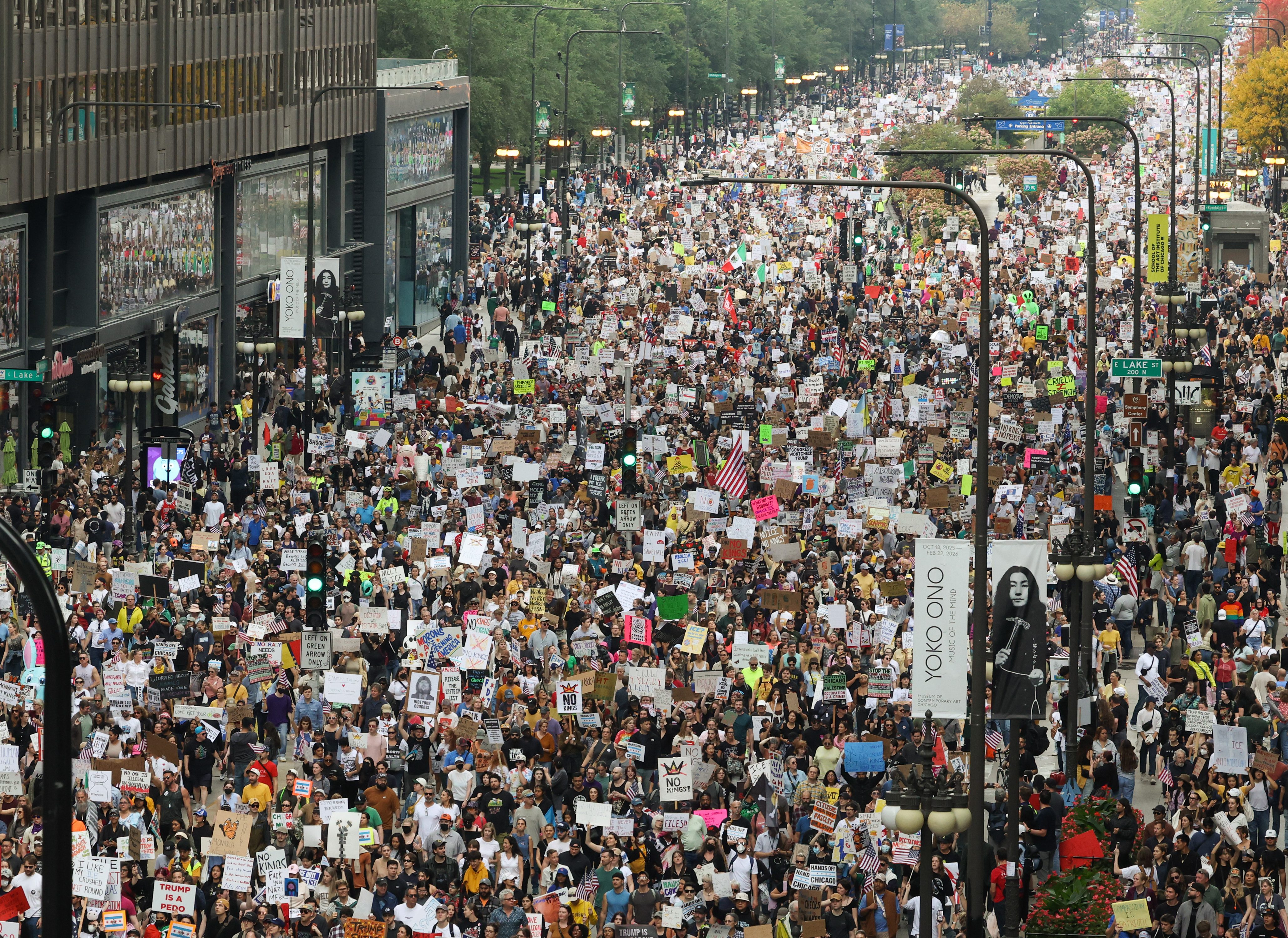
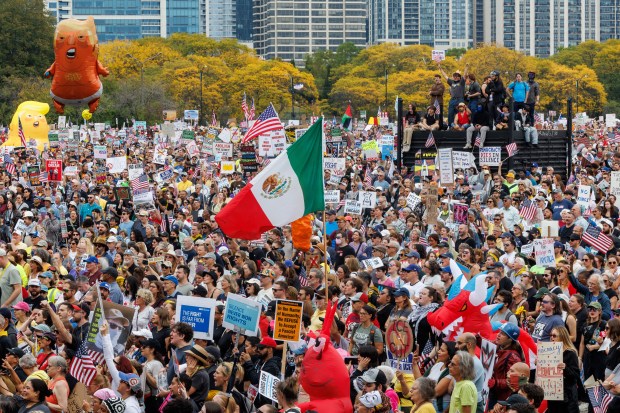
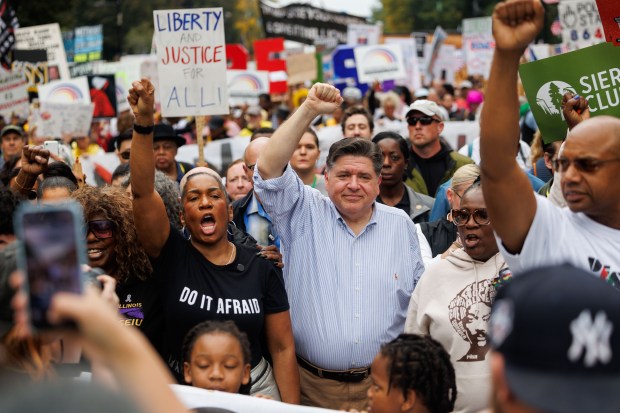
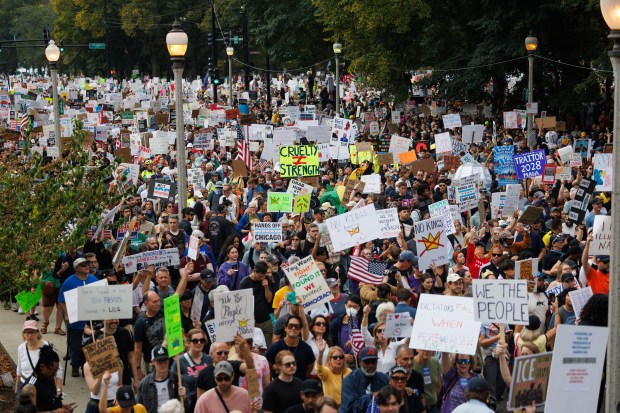
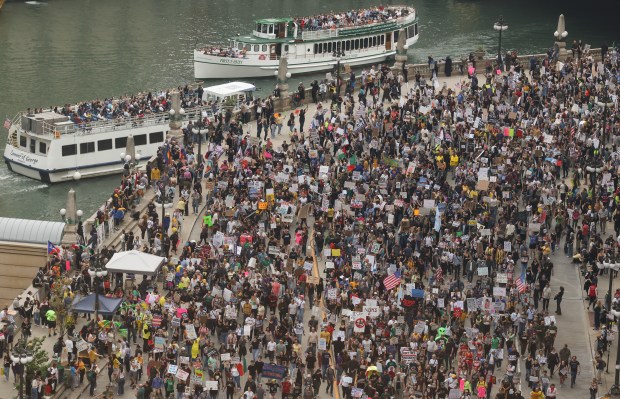
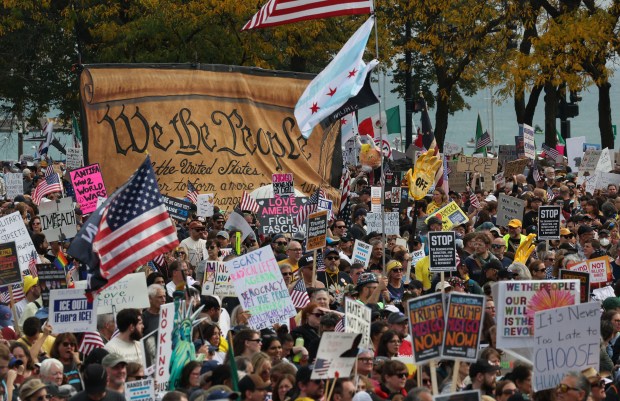
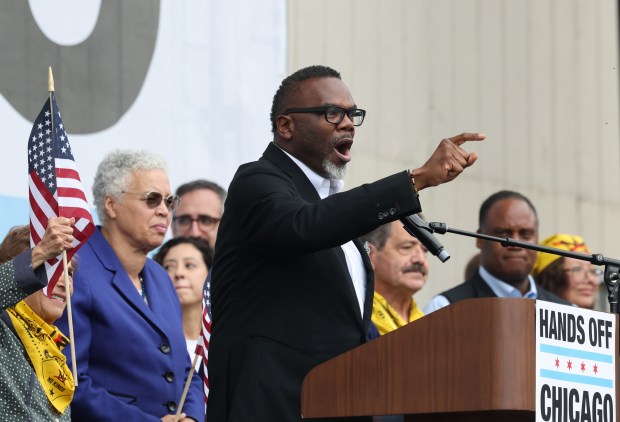
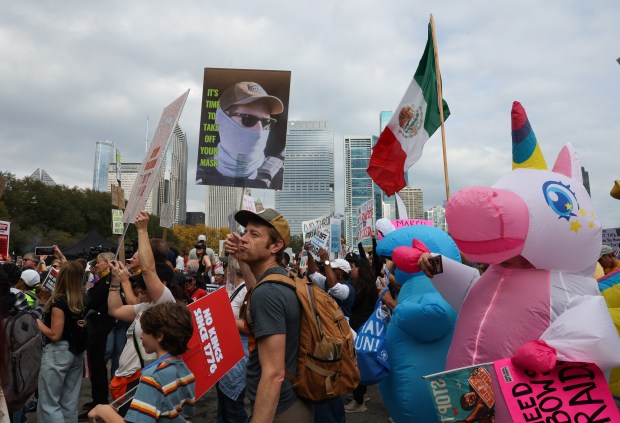
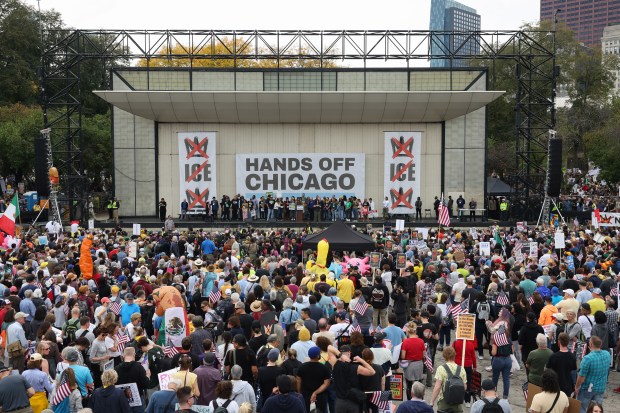
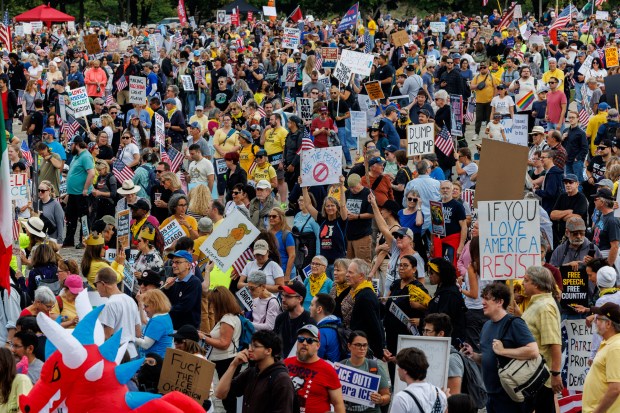
The main Chicago “No Kings” event at Grant Park is set to kick off at 1:30 p.m. Saturday. Organizers say it will feature music, a rally and a march.
“As the atrocities from the Trump regime have grown, so has our resistance in Chicago and across the country,” the event website states. “Help us show the nation and the world that Chicago is united in opposing the illegal, cruel, and destructive attacks against our neighbors, our communities and our democracy.”
The demonstration is organized by Indivisible Chicago Alliance, the Chicago Federation of Labor, Equality Illinois, the Illinois Coalition for Immigrant and Refugee Rights, Personal PAC, Sierra Club Illinois, the American Civil Liberties Union of Illinois and other organizations.
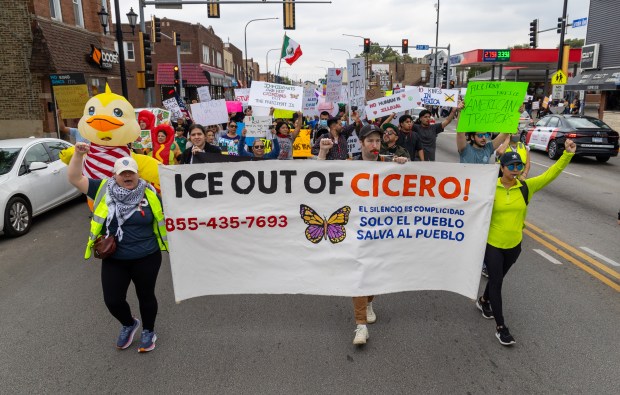
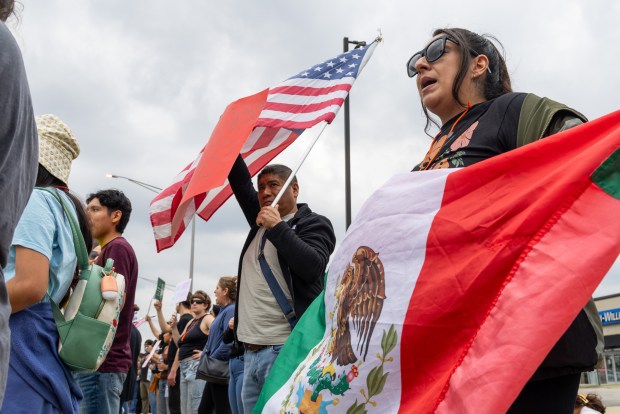
Dozens of “No Kings” demonstrations are scheduled across the city and suburbs as well, held in concert with a slew of similar events around the nation and some international protests.
Previous “No Kings” rallies in June and October have drawn millions of supporters nationwide.
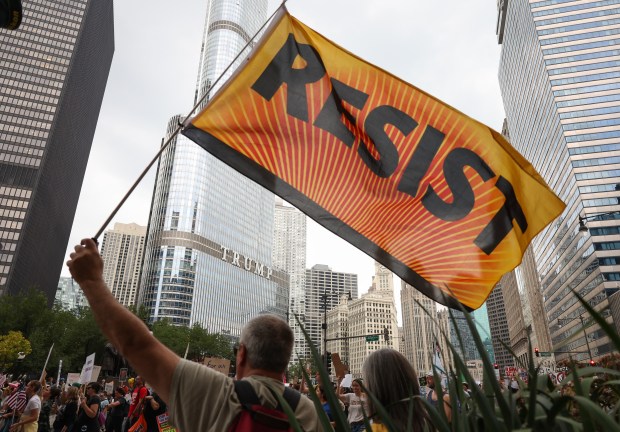
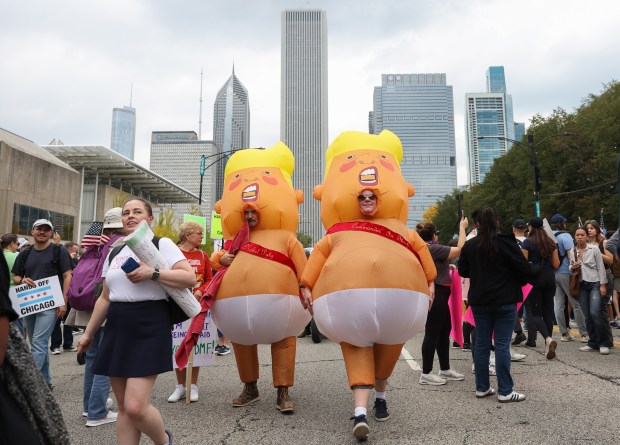
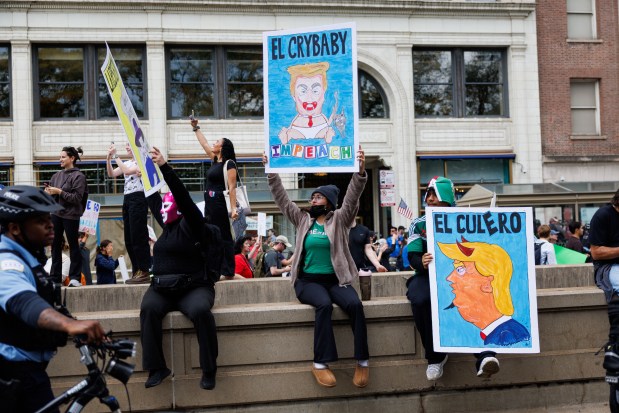
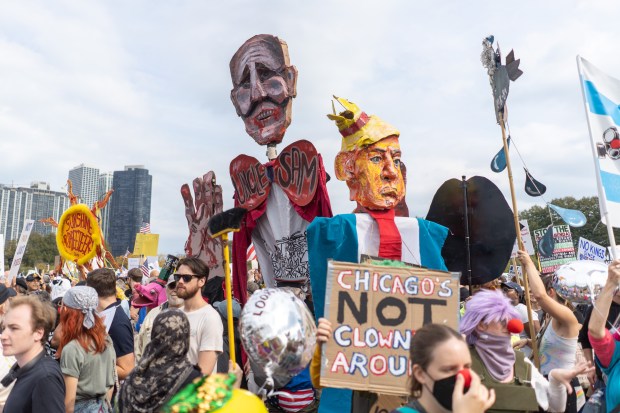
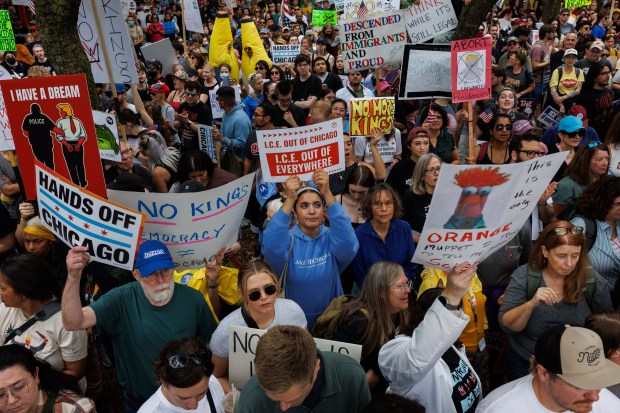
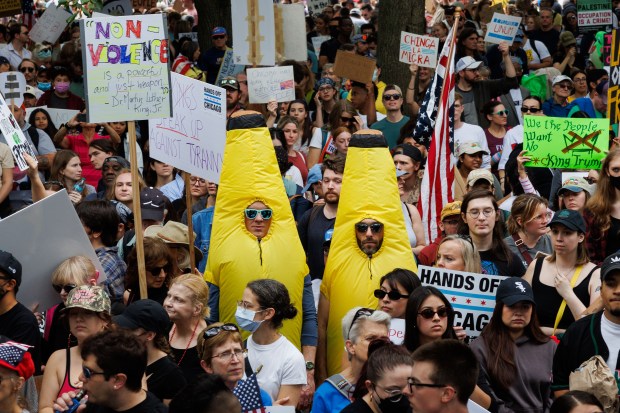
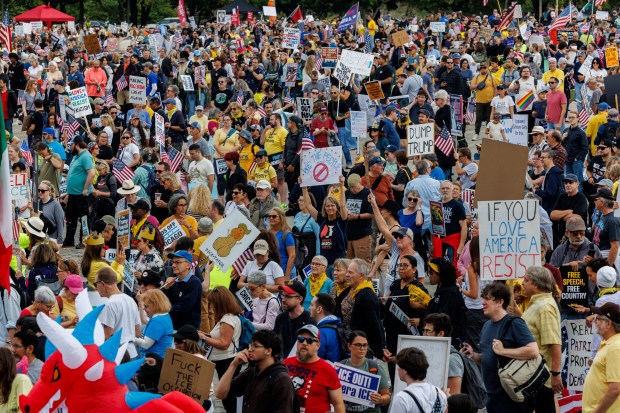
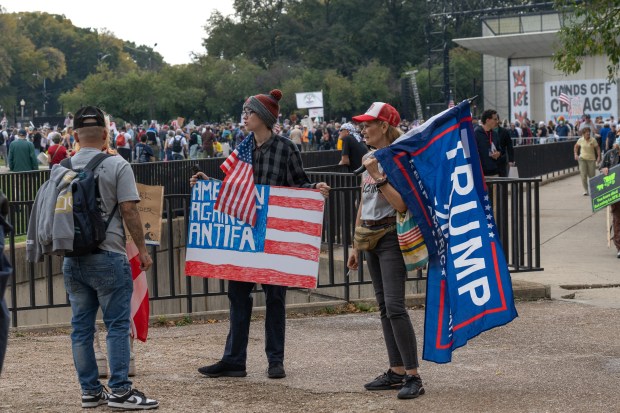
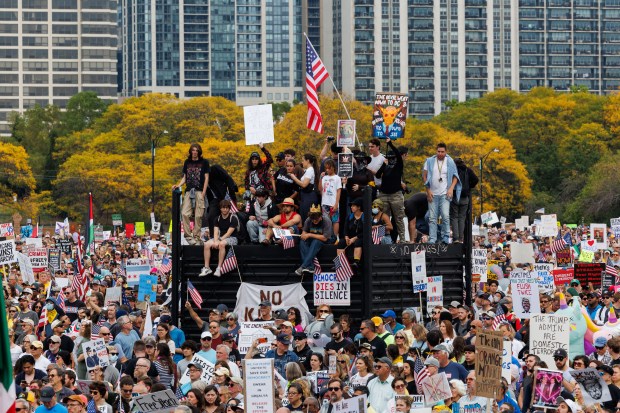
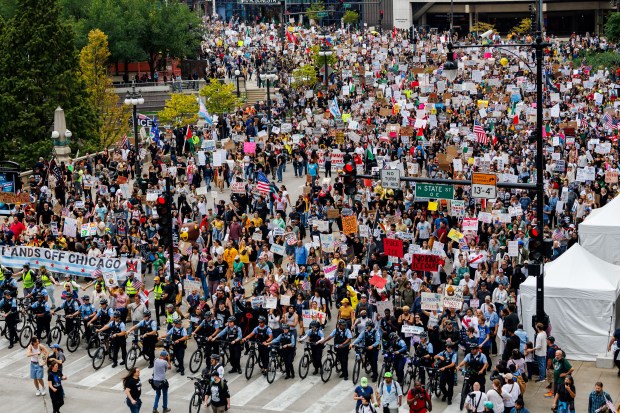
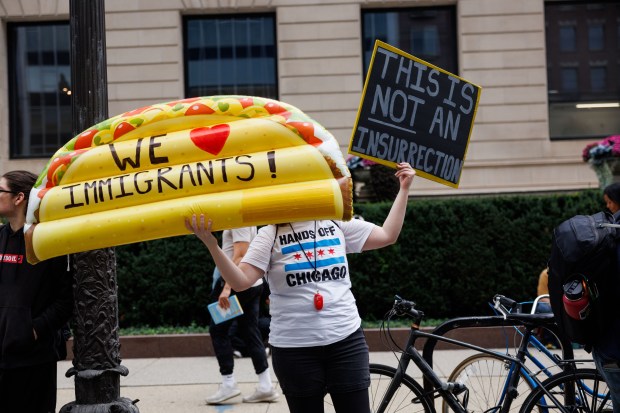
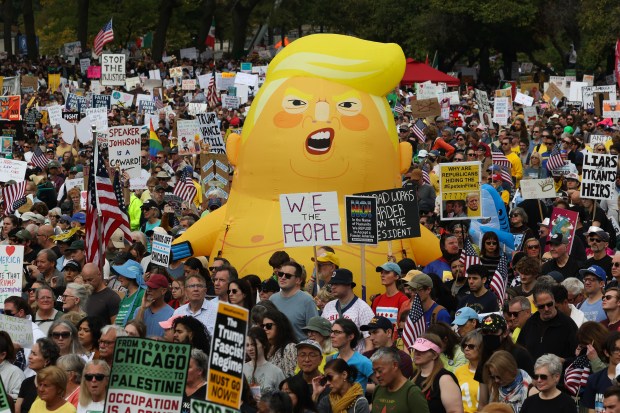
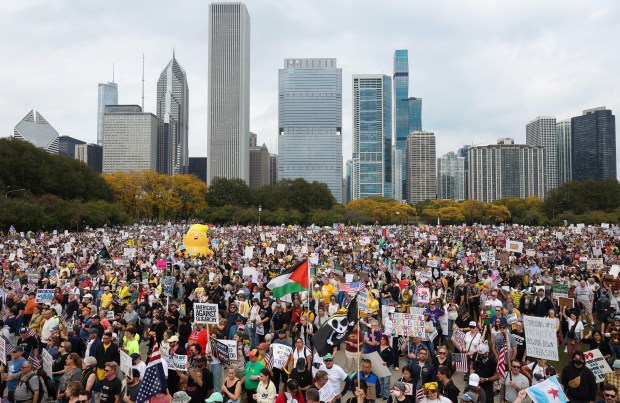
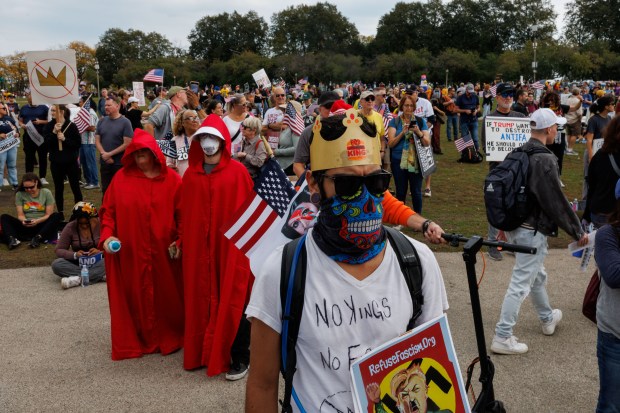
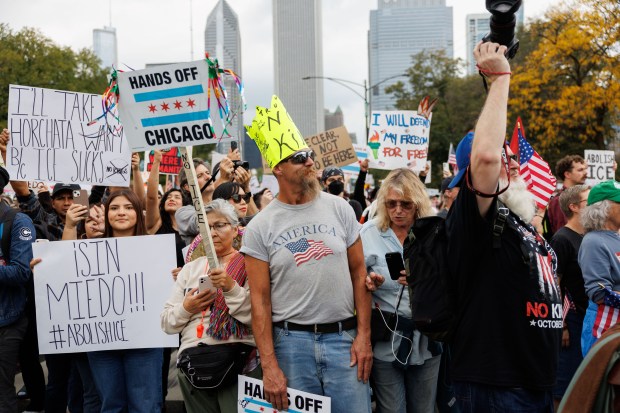
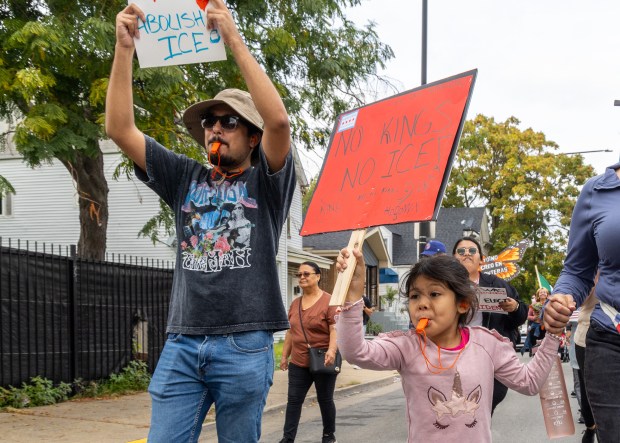
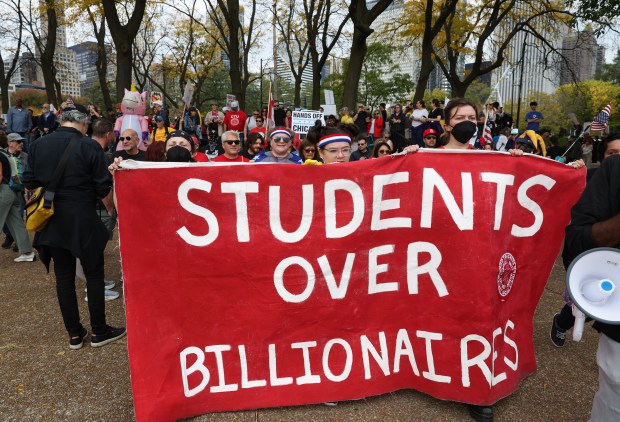
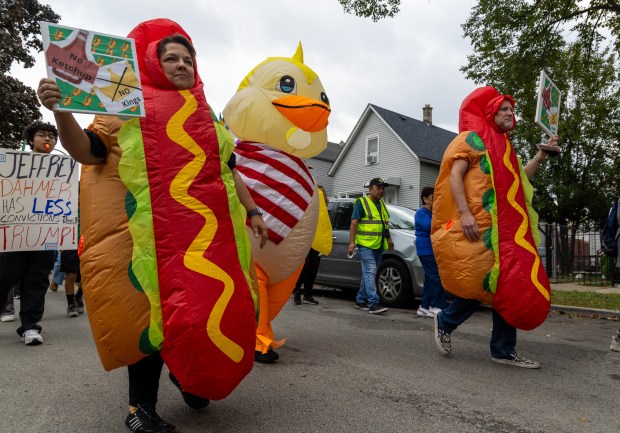
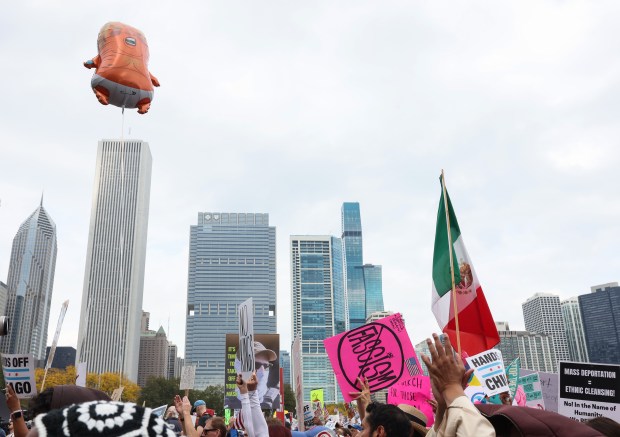
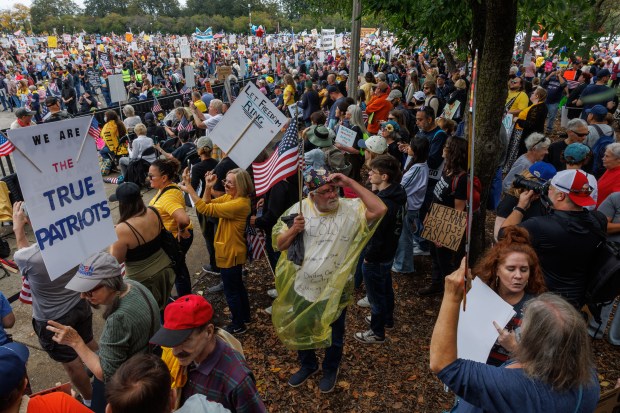
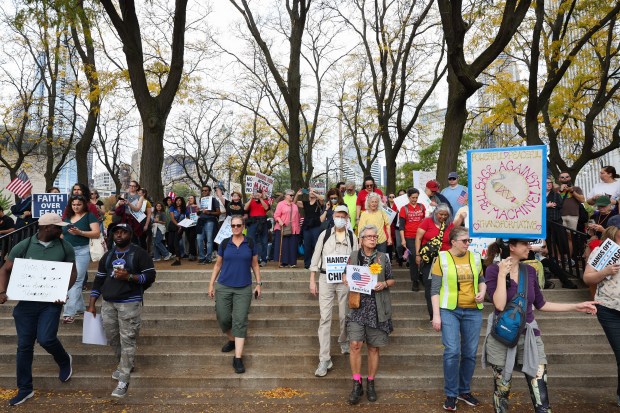
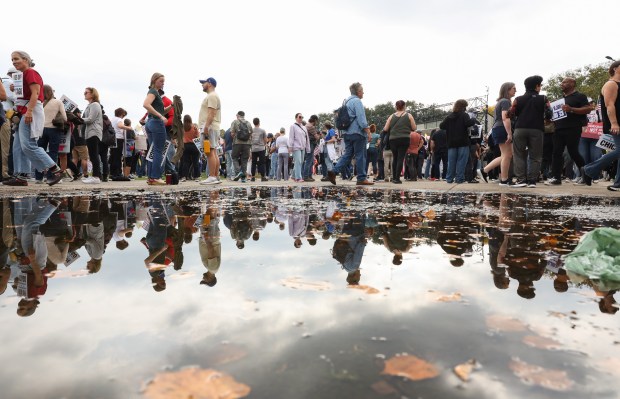
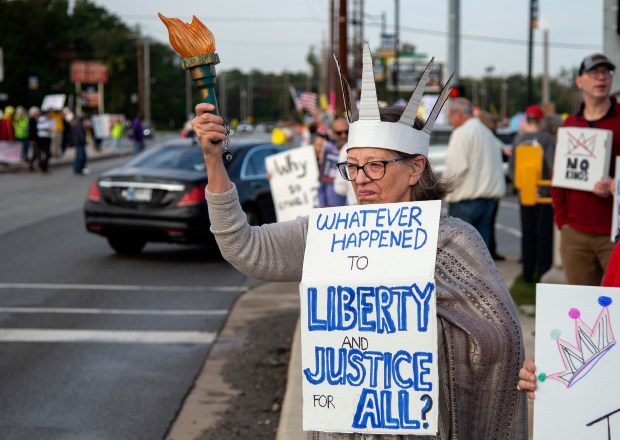
The president has called this recurring protest of his administration “a joke.” Trump supporters have labeled “No Kings” events “un-American.”
But organizers say challenging the administration through protest is inherently patriotic.
“We are exercising the fundamental rights of Americans. We are showing we are far more dedicated to the ideals of America than Trump and his MAGA allies,” said Kathy Tholin, board chair of Indivisible Alliance Chicago. “There is nothing more American than standing up against authoritarianism.”
And for many religious leaders, participation in this movement is inherently rooted in their theology and spirituality.
“My faith teaches me that power belongs to the divine and to God. And that no human leader is above accountability,” said the Rev. Juan Pablo Herrera of Urban Village Church in Wicker Park.
The pastor said he and other congregants are gearing up to attend the “No Kings” rally in Grant Park and the church plans to tie parts of its Palm Sunday worship service the next day to themes derived from the protest.
“In my Christian faith, as a follower of Jesus, I try to relate to some of the things he did,” the pastor added. “And he was someone who consistently challenged the systems of power that harmed people on the margins.”
Countering the Christian right
This is in stark contrast to many high-profile conservative clergy who have favored the president, including prominent evangelist the Rev. Franklin Graham, the Rev. Paula White-Cain — who was appointed last year to lead the White House Faith Office — and U.S. Ambassador to Israel Mike Huckabee, a Baptist minister.
During the presidential campaign, Graham routinely praised Trump, depicting him as a champion of religious liberty and an advocate for Christianity at the Republican National Convention in Milwaukee.
“I’m grateful and thankful for what he did as the 45th president of the United States,” declared the son of famed Rev. Billy Graham. “And I know that as the 47th president, he will keep his word to the American people to make America great once again.”
Yet clergy voices against the Trump administration have been mounting since the start of his second term, with many galvanizing around the federal government’s harsh immigration crackdown, which has included mass detentions, deportations and turbulent protests in the Chicago area as well as across the country.
A diverse group of faith leaders have been protesting at the Immigration and Customs Enforcement Facility in west suburban Broadview. Local Christians have battled Homeland Security officials for the right to bring Holy Communion to detainees inside.
More than 250 local Christian clergy signed an October 2025 letter denouncing the actions of immigration agents titled “Jesus is Being Teargassed at Broadview.”
Chicago native Pope Leo XIV also condemned the nation’s recent treatment of migrants. Then the pontiff earlier this month urged a ceasefire in the Middle East amid recent U.S.- and Israel-led strikes in Iran, rebuking the “atrocious violence” there, according to Vatican News.
Locally, the Rev. Elisabeth Pynn Himmelman cited the Trump administration’s anti-immigration siege in the Chicago area, dubbed Operation Midway Blitz, as a primary motivator for protesting this weekend at a “No Kings” event in Naperville.

But the pastor at Our Saviour’s Lutheran Church in Naperville listed a litany of other grievances against the Trump administration, including changes to SNAP benefits, the freezing of foreign aid, targeting of LGBTQ+ rights and a rollback of diversity, equity and inclusion initiatives.
The pastor says protesting injustice is part of her calling and job description.
“In the Evangelical Lutheran Church in America, we have a constitution that says rostered ministers — meaning ordained clergy — shall speak publicly to the world in solidarity with the poor and oppressed, calling for justice and proclaiming God’s love for the world,” she added. “So part of my work as a pastor is inherently to speak up.”
Hindu, Muslim, Christian witness
During the last “No Kings” demonstrations in October, faith leaders dotted the crowds as participants as well as speakers at protests around the nation.
In New York, Hindus for Human Rights Executive Director Sunita Viswanath offered a Hindu prayer and reflection before joining the “No Kings” march to Times Square.
“As a Hindu of conscience, as an American and as an Indian, with my eyes open and my heart awake, I say a resounding ‘no’ to the growing tide of authoritarianism here, there and everywhere, from Delhi to Washington,” Viswanath had said.
In Cincinnati, “No Kings” rally speakers included Imam Ayman Soliman, a former children’s hospital chaplain and Egyptian immigrant who was detained by immigration officials in July after his asylum status was revoked in June.
Soliman was released from an Ohio jail in September after the U.S. Department of Homeland Security abruptly withdrew its case against him.
“I’m not a politician. I was invited to share my experience because it talks and speaks for many, many people who are unlawfully and unjustly detained,” the Muslim cleric told the crowd. “Simply, they said we are deporting those who are here illegally, the undocumented. I was legal from day one. I was documented from day one. I did everything right. Yet I was detained for 73 days at the Butler County Jail. So that is not true. They told us they were detaining and deporting the criminals and I have zero criminal record.”
At a “No Kings” rally in Dallas, a group of interfaith clergy took to the podium, some bearing signs reading, “Revolutionary love is the call of our times” and “Jesus would be at this protest.”
Historical traditions
As for Chicago’s upcoming “No Kings” events, Rabbi Steven Philp said he and a group from his North Side synagogue Mishkan Chicago plan to gather for singing and prayer on Saturday before heading to Grant Park, “making it a spiritual experience.”
“We see this as holy action, so we integrate it into our Shabbat practice,” he said, referencing the traditional Jewish day of rest, which begins on Friday at sunset and ends after nightfall Saturday.

While the “No Kings” rallies are centered on current events, the rabbi said intertwining theology with demonstration and public witness isn’t a modern concept.
“There’s a very beautiful idea that ancient rabbis talk about, that you should never build a synagogue or prayer space that doesn’t have windows,” he said. “The idea being that what we do inside — what we learn, what we pray about, what we discuss in our community — should both be affected by what’s happening in the world outside and be something we carry with us into the world outside.”
Even the title “No Kings” can have deep theological resonance, said William Cavanaugh, professor of Catholic studies at DePaul University.
“If you’re a Christian, you do have a king and that king is Jesus,” he said. “That puts anybody who claims to be a king in direct opposition with Jesus.”
Cavanaugh noted that the “No Kings” protests in October happened to fall shortly before the 100th anniversary of the Catholic Feast of Christ the King; the celebration was instituted in 1925 by Pope Pius XI to counter a rise in global threats of nationalism, communism and totalitarianism, most notably the fascist regime of Benito Mussolini in Italy.
The pontiff did so to affirm that Christ, not any dictator or nation state, was the one true king.
Protests can be empowering for those who draw courage from collective action with like-minded folks, said Cavanaugh, the author of many books including “The Uses of Idolatry” and “Migrations of the Holy: God, State and the Political Meaning of the Church.”
“If you’re coming at it from the point of view of faith, there’s something hopeful and prayerful about it too,” the Catholic theologian added. “There’s a vision for a different kind of present and a different kind of future. We’re trying to claim a kind of world that God wants for us.”
The Associated Press contributed.