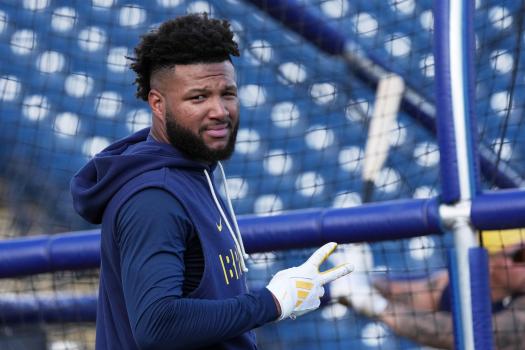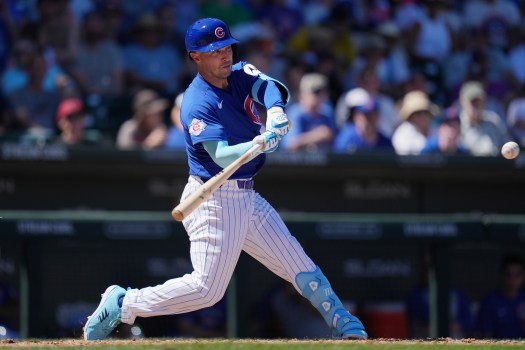

Days before leaving Chicago Cubs camp for the World Baseball Classic, Alex Bregman emerged from the indoor batting cages at the team’s new performance center in Mesa, Ariz.
Bregman’s daily, methodical routine quickly captured his new teammates’ attention. His cage work is always purposeful. No wasted time or movements. Every day, the Cubs’ third baseman looks for a way to get even just a smidge better. Bregman’s track record as a winner, leader and detail-oriented worker was exactly what the Cubs wanted, finding the right fit with a five-year, $175 million deal in January and an organization looking to build on last year’s success.
As the Cubs open the season Thursday against the Washington Nationals at Wrigley Field, Bregman’s performance and fit in the lineup could be what the organization needs to push them into a deep October run.
“Clearly, he’s very bright — when you talk to him, he’s obsessed with hitting and he knows what he needs to be successful,” president of baseball operations Jed Hoyer said to the Tribune. “And he’s constantly hunting for that. But it’s a wonderfully obsessive approach to hitting. He loves to think about hitting and it’s pretty contagious.”
For as much as Bregman has his sights set on winning a third World Series title in a career built in Houston that detoured to Boston last year, it always comes back to the minutiae and the work when few might be watching. Bregman loves breaking down hitting and possesses a deep understanding of what he needs to do to be his best as a hitter. It’s the type of approach that some of his Cubs teammates could learn from. And, more broadly, it’s knowing who he is as a hitter and the “why” behind the numbers he produces.
“For me, it’s always started with swing decisions and swinging at strikes, taking balls, but not only just swinging at strikes, but swinging pitches that I can drive,” Bregman told the Tribune. “I feel like that’s the foundation of it. … I don’t have goals numbers-wise. My goals are more like, can I swing at good pitches to hit and then can I make contact out in front?”

Swing decisions are two-pronged: mechanics and approach. A hitter must put their body in a good position to see and react to a pitch while also relying on pregame preparation to study an opposing pitcher and understand how they might try to expose their own weaknesses at the plate. Bregman knows he needs to put balls in the air pull-side for his best power production.
“I’ve always made contact, but it’s a blessing and a curse because if you swing at a bad pitch, you’re putting them in play as well,” Bregman said. “So my best seasons in the big leagues, I’ve swung the least, and that’s me knowing the fact that if I swing, it is going in play. To be put in play, I have to be even more selective.”
Bregman breaking himself down goes even deeper than that. He knows that for his swing, he needs to hit the ball out front. When he’s struggled during his 10-year major-league career, Bregman would move too fast toward the pitcher, so most pitches were looking good to him out of hand. Bregman knows it’s a fine line between hanging back and racing forward to the ball.
“Honestly, my best years I’ve strictly focused on the process part of it,” Bregman said. “Obviously you care about the results. You want to have results, but I’ve detached myself more from the actual results of it and worried more about, is my process good? Am I executing my swing in the cage before the game or on the field during batting practice? Am I executing my approach in the game? And if you line out, you line out.
“But I feel like a lot of hitters, especially young hitters, but most hitters it’s natural to try and go and chase hits. There’s a slippery slope when you’re doing that. I think you really need to chase good pitches to hit and go hunt for a good pitch to hit, and the rest of it will take care of itself.”
After Bregman finished second for American League MVP in 2019, he went into the offseason trying to get better, but subsequent changes to his swing and approach — setting up more bow-legged, moving forward too much on pitches — sent him in the wrong direction. It’s a lesson that still guides him as he embarks on his first season as a Cub.
“I feel like great hitters are ready at release, they control their forward move, they swing from behind the baseball, and for me and my profile, I know that I have to make contact out in front,” Bregman said. “Those are some things that I can control on a daily basis.”

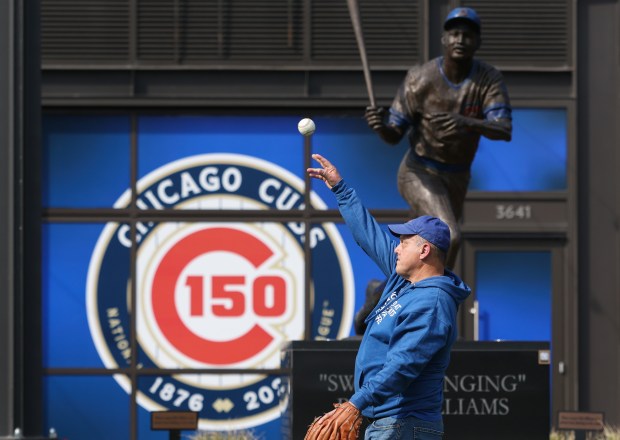
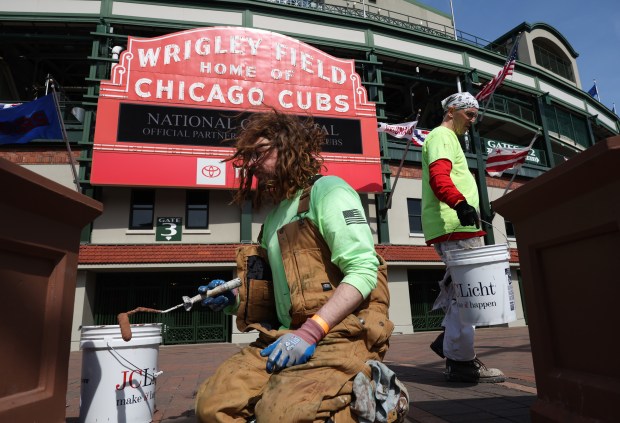




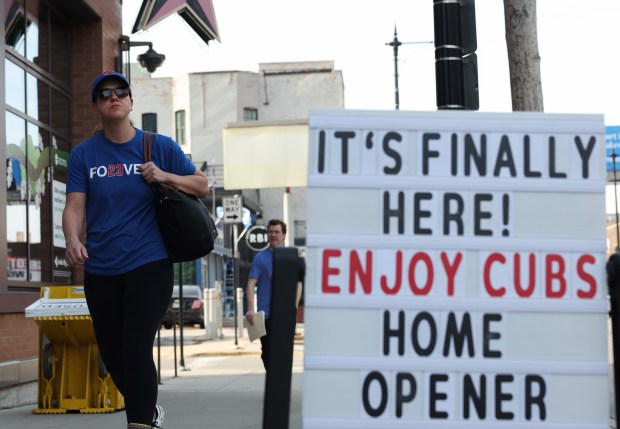

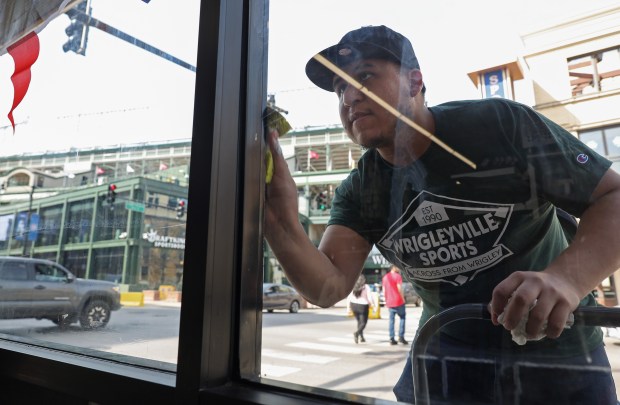
The Cubs clearly view Bregman as a special player and person by their willingness to depart from recent organizational trends and structure the deal to have $70 million in deferred money.
Although deferred money isn’t paid out until the years stipulated within the contract, a team must fully fund it by then. In the case of Bregman’s $70 million deferred, the Cubs are required to pay a set amount annually into an escrow account. Both sides agreed to an annual rate of 5% and Major League Baseball checks each year that the fund is accruing enough money to hit the deferred payout total. If it is trending below the needed figure, the Cubs must add money to the escrow account.
The Cubs are deferring at least $10 million per season in Bregman’s five-year contract: $15 million in 2026, $10 million in 2027, $10 million in 2028, $15 million in 2029 and $20 million in 2030. So, for example, the Cubs will need to put roughly $8 million into an escrow account within the next 24 months so it accrues to $15 million by 2034 when they owe Bregman his 2026 deferred money.
The Cubs are embracing high expectations. They are not satisfied with last year’s 92 wins and being on the verge of the National League Championship Series. For a group that largely returns intact but could be a very different squad next year with the number of expiring contracts among the Cubs’ core, 2026 presents opportunity.
“It’s a really enjoyable group to be around, they’re really dedicated to their craft, they really care,” Hoyer said. “It’s super gratifying to be around them, because they take the day-to-day so seriously. Every year is a different mix, probably a little bit more different, more change than usual going forward, so hopefully we can embrace this.”