
Elgin’s outdoor warning system was activated three times Tuesday night but not because there were tornadoes spotted in the area.
The alerts were triggered by the severe thunderstorm moving through the area, alarming some residents who were unaware the city’s siren system now also goes off when a severe weather warning is issued by the National Weather Service.
A cluster of severe thunderstorms capable of producing tornadoes and heavy rain moved into portions of northern Illinois about 9 p.m. Elgin experienced both, NWS senior forecaster Mark Ratzer said.
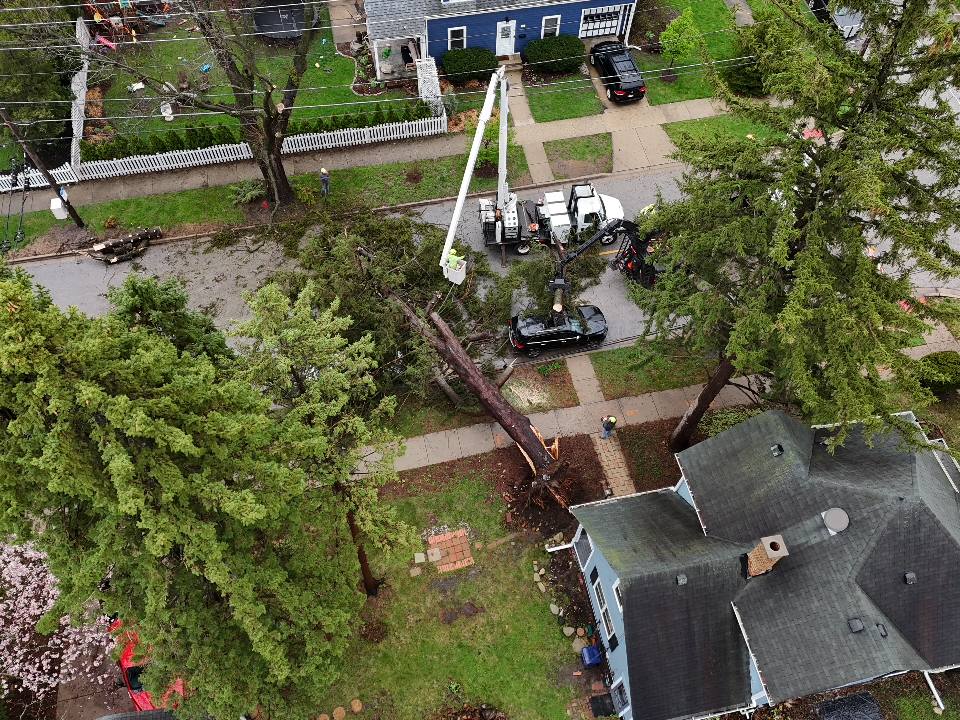
Some wind damage was reported in the city, with at least one large tree being uprooted on Chicago Street as a result.
Residents commenting on the sirens on social media said they were unsure what to do because there were no broadcast reports of a tornado in the area.
“Maybe change your policy and stop doing that because all it’s doing is confusing people and making people stop paying attention to the sirens altogether,” one person wrote. “More people are going to get hurt by this than helped.”
Another post said: “Hate to compare, but this is partly why Joplin, MO (tornado) was so devastating, like the boy who cried wolf. When there actually is a tornado. No one is going to believe it.”
Josie Beecher-Crotty, Elgin’s communications and engagement manager, said the sirens activate automatically when the NWS issues a severe weather warning within the city’s geographic area.
“This includes tornado warnings and severe thunderstorm warnings with damaging winds or large hail,” she said. “Automation ensures the fastest possible public notification.”
It also removes human delay from the notification process, she said.
There is a difference between a warning and a watch. The NWS’s definition of a tornado or severe weather watch is when severe thunderstorms or tornadoes are possible but won’t necessarily occur, according to its website. A tornado or severe weather warning means take action, meaning conditions have been sighted or are indicated by weather radar.
Warnings are triggered when one of three conditions is expected: thunderstorms with wind gusts of 70 mph or higher, hail that is 1.75 inches or larger, or a tornado has been spotted, Ratzer said.
Straight-line wind can be equal in speed and cause as much damage as a weaker tornado, he said.
That’s what happened last spring, when a severe storm with straight-line winds tore off a portion of the roof at First United Methodist Church of Elgin.
Elgin currently has 12 sirens throughout the city, which are tested at 10 a.m. on the first Tuesday of every month.
“These sirens are regularly maintained, including replacements when applicable, and additional sirens have been added as the city develops and grows,” Beecher-Crotty said.
According to a Facebook message posted April 3, “These sirens are designed to alert people who are outdoors to seek shelter. They are not intended to notify people who are already indoors. … We advise residents to have more than one way to get warnings, such as radio, news or trusted weather apps. You can also sign up for emergency alerts on our website: elginil.gov/alerts.”
Two years ago, Elgin upgraded its outdoor severe weather warning system so that activation is automatic and not done manually, Beecher-Crotty said. Activation is triggered by both tornado and severe thunderstorm warnings.
When to trigger warnings is a decision made by communities, not the NWS, Ratzer said.
“Every municipality has its own control of the sirens and has its own protocol to turn on or not,” Ratzer said. “We don’t control sirens.”
Chris Kennedy, Elgin fire division chief of emergency management, spoke about the city’s warning system on April 3 when appearing on Elgin Police Chief Ana Lalley’s “Fridays with the Finest” radio show on WRMN (1410 AM).
The system is meant to alert people of all weather hazards, not just tornadoes, he said. Sirens go off as the NWS issues warnings.
Because Elgin covers a large geographic area, the weather may seem clear in one neighborhood but could be severe in another, Kennedy said at the time. City officials want to alert residents ahead of any potentially dangerous weather, he said.
Following this week’s storm, Beecher-Crotty said the city is aware that some residents were confused by the sirens.
“The fire department is working with the city’s communications team to proactively educate residents on how the outdoor warning siren system works, including through social media and other outreach methods,” she said. “The key message: sirens mean ‘seek shelter and get more information,’ not just ‘tornado.’”
Gloria Casas is a freelance reporter for The Courier-News.