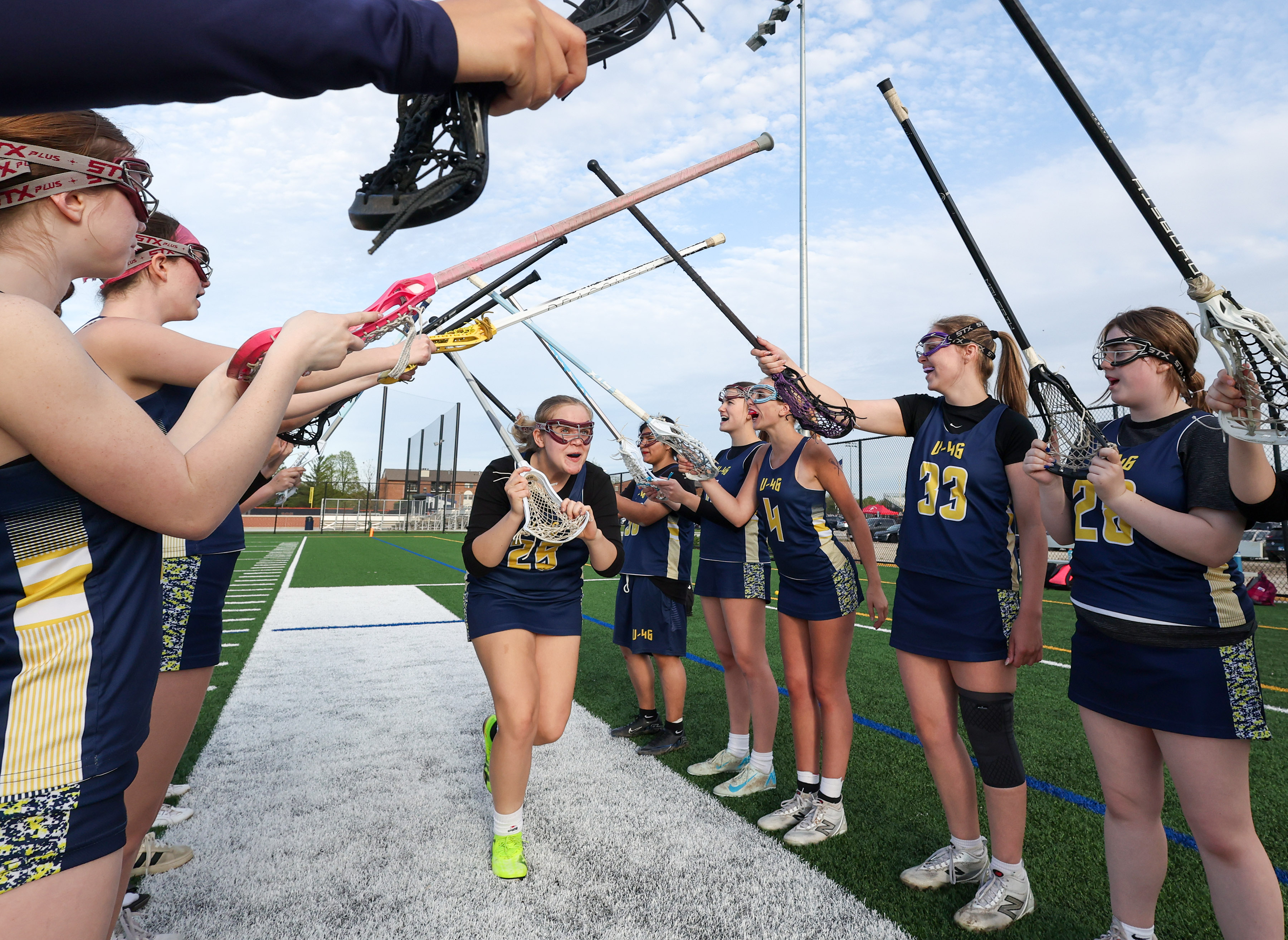
One of the enduring quirks, among many, about U-46 girls lacrosse is that it’s a team with no name.
Its players are from all over Illinois’ second-largest school district, spread throughout Chicago’s northwest suburbs, and as a co-op team it is without a mascot. They are not the Eagles or Wildcats, or any other animal or army (Knights! Warriors!) ubiquitous in high school athletics.
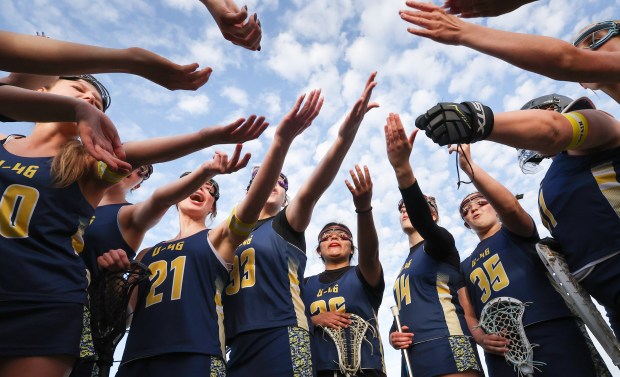
And so when the girls of U-46 break a huddle, forgive the limitation of their rallying cry.
“U-46 on three!” their coach, Grace Miller, said countless times over the past few months, during a season that lacked victories but not heart.
“One-two-three … U-46!” Miller and the team yelled countless times over the past few months, through the losses and long practices and abundance of life lessons.
It was a season of learning, played in limbo. Among the state’s largest high schools, the future of co-op sports teams is in doubt. An Illinois High School Association rule change, set to take effect next academic year, will bar co-ops from schools with a combined enrollment of more than 3,500 from competing for state championships.
The new rule is meant to stop the formation of so-called super teams, and to promote fairness. An unintended consequence is that it’s likely to lead to fewer opportunities for the teenagers who’ve been a part of co-ops that disband, and choose not to play what would amount to a season’s worth of exhibitions. U-46 girls lacrosse is among more than 100 Illinois co-ops affected by the rule.
It also happens to be a particularly poor example of what the rule is attempting to stop. Because while the players of U-46 may be many things — good-spirited, willing to learn, hardened by defeat and defined by perseverance, and showing up game after game, practice after practice — it must be said: They are not, in large part, particularly great at lacrosse.
For most, that’s not necessarily the point. They came to learn. To try. To be a part of something.
“I mean, they’re not a super team,” Alyssa Fiebig said with a laugh, on the thought that this team, of all teams, could go away because of a fear that those like it are too good. “By any means.”
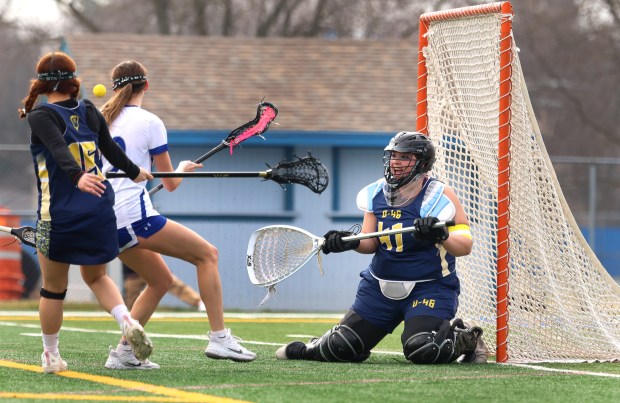
Fiebig is the mother of Mackenzie Fiebig, the U-46 goalkeeper known to teammates as “Bonez.” Three years ago, the younger Fiebig had never played a sport. Now Bonez is among the state’s most prolific goalies and plans to play lacrosse and study mortuary science at Thiel College, a Division III school in Pennsylvania. At U-46’s senior night on a warm recent Monday, Alyssa Fiebig beamed.
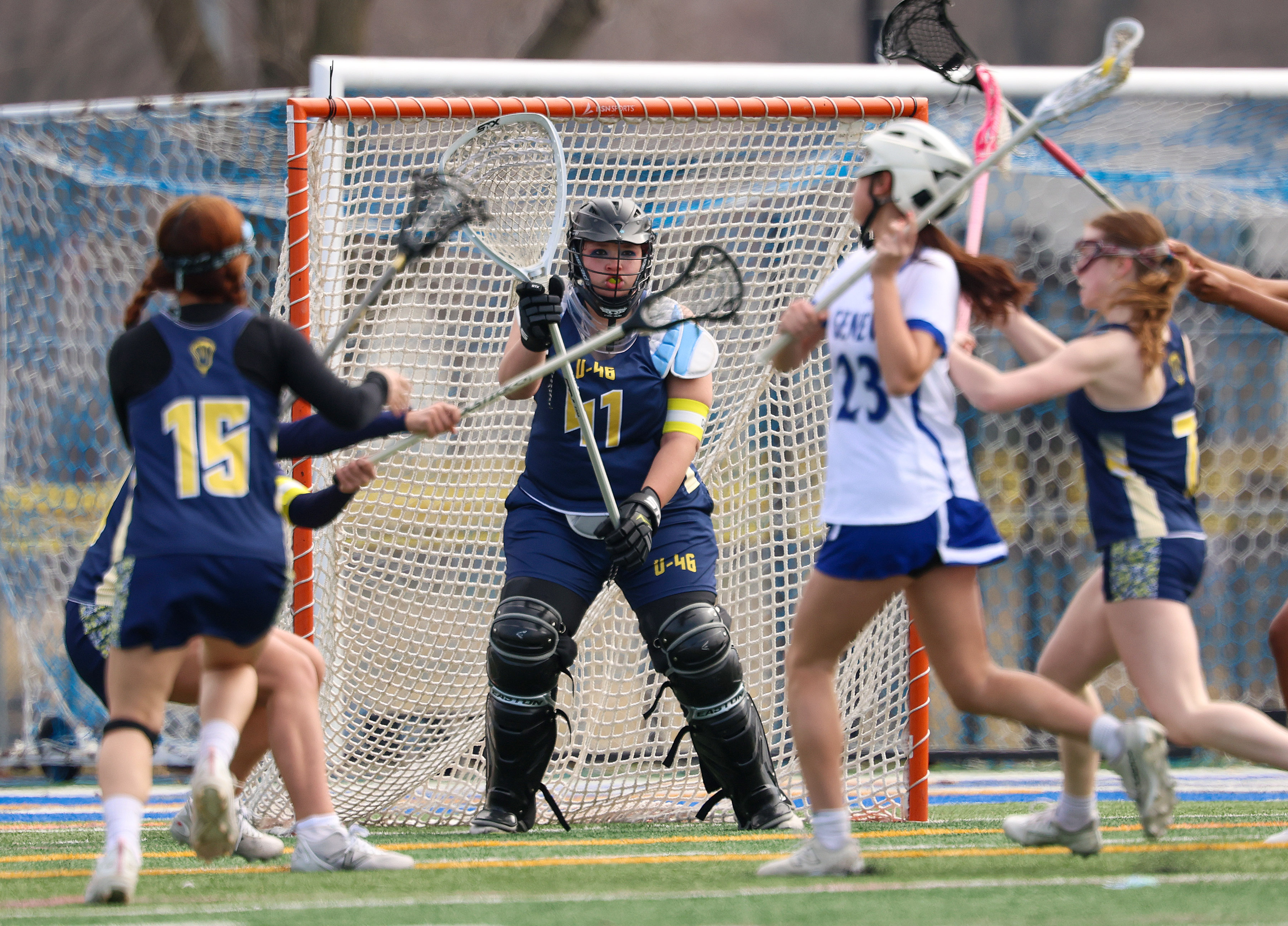
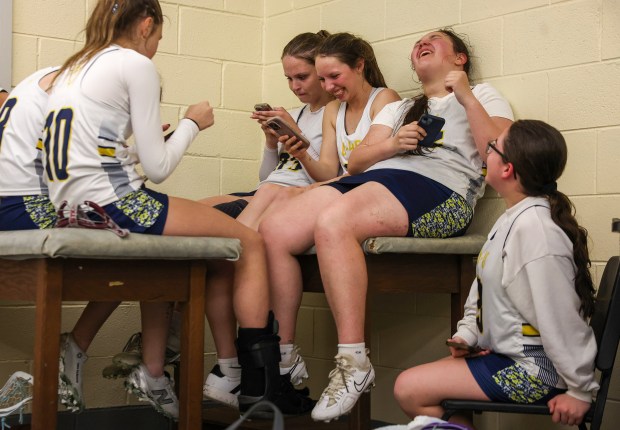
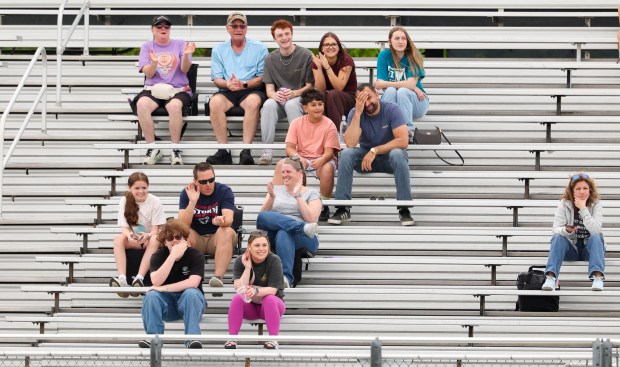
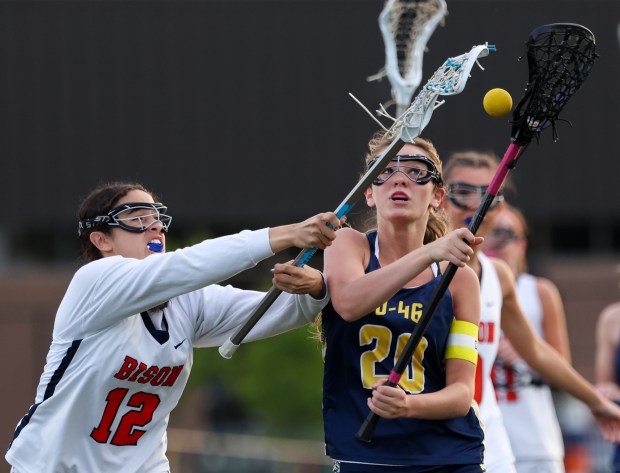
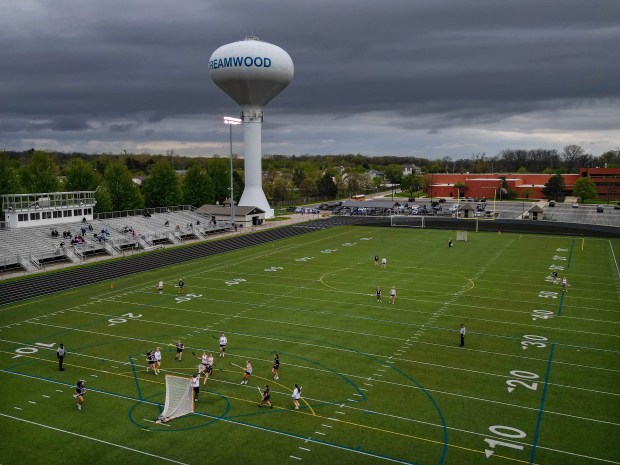
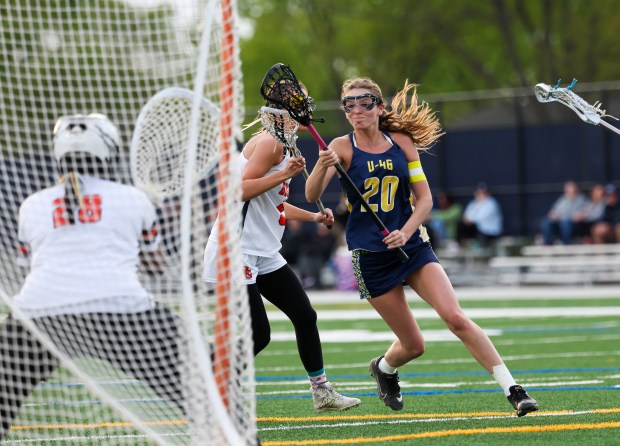
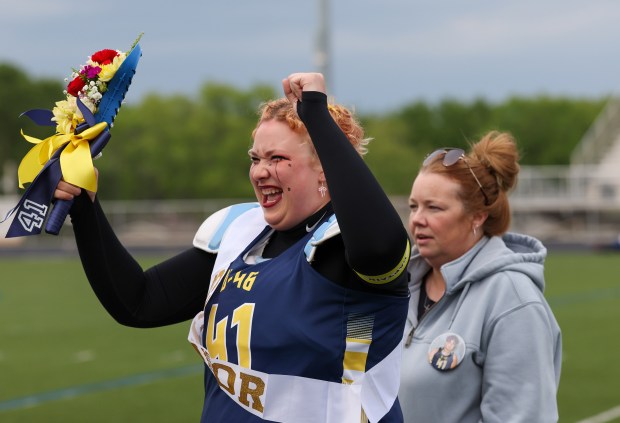

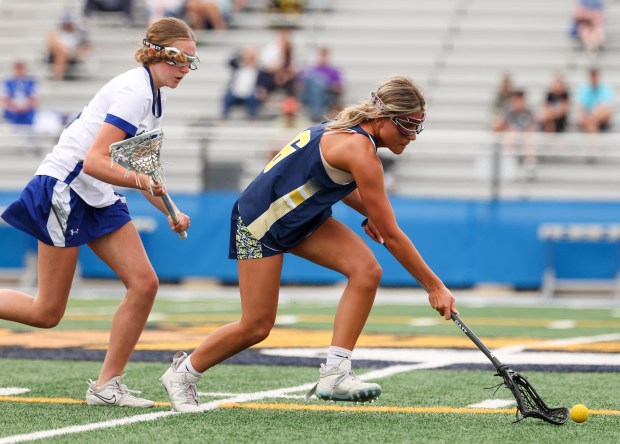
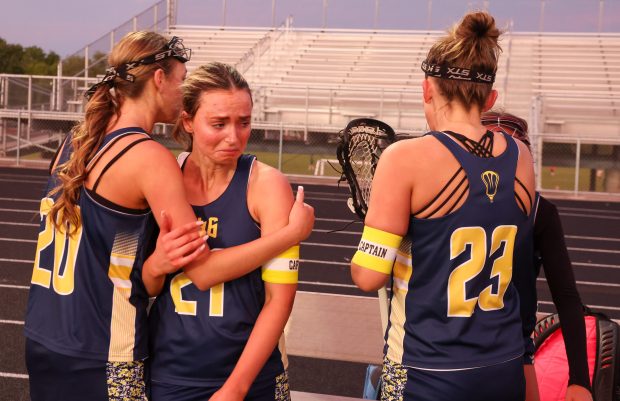
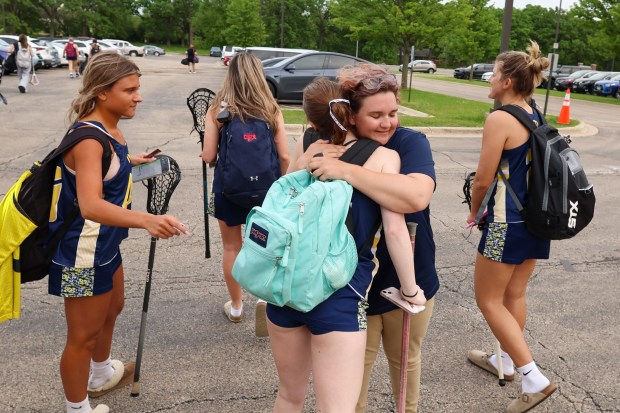
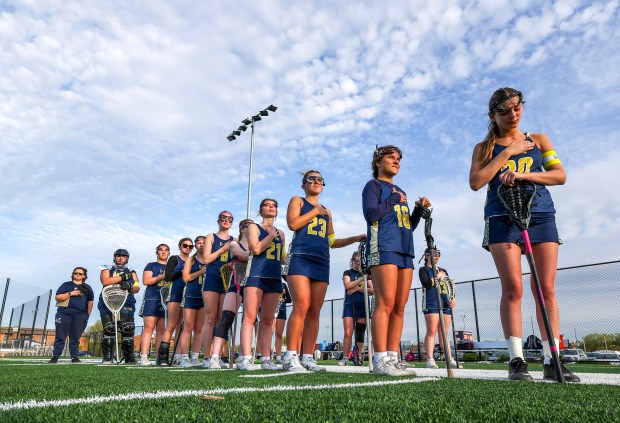
Her daughter had come a long way because of lacrosse, and the co-op, Fiebig said. A lot of family came to cheer on Bonez on senior night. A grandmother. A great-grandmother. It remained a work in progress for them to understand the intricacies of lacrosse, just as it was still a challenge for some of the players. About a third of the team had never played before the start of the season.
And yet here U-46 was, keeping things competitive during its final home game. It played those games, oddly enough, at Streamwood High — the only one of U-46’s five high schools that wasn’t represented on the team. It was another of those quirks of the co-op, along with the lack of a name. One of the team moms, though, had given U-46 an unofficial mascot.
“Have you ever seen ‘The Mighty Ducks’?” Mallory Menacker asked, referencing the 1992 movie in which a bunch of misfit kids go from hockey novices to improbable winners. “I’m really showing my age now, but we call them the Ducks in our household.

“It’s like, different people, different walks of life, different schools. And these girls come together and they figure it out. And you know, we don’t win every game. Clearly. But they have fun, and it’s just so good, and our daughter has excelled, in life, just being part of a program.”
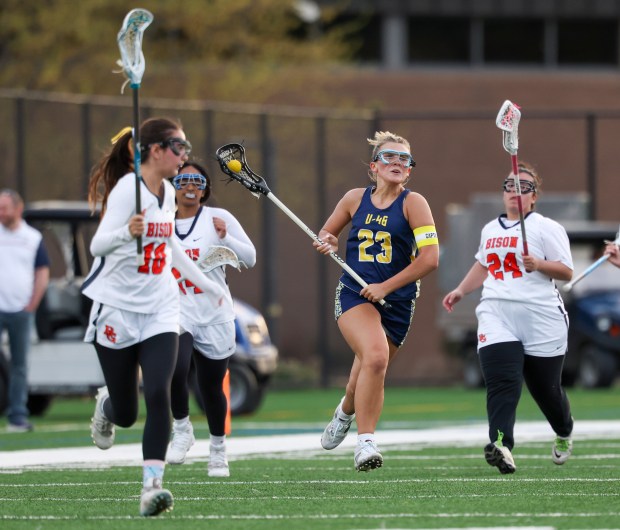
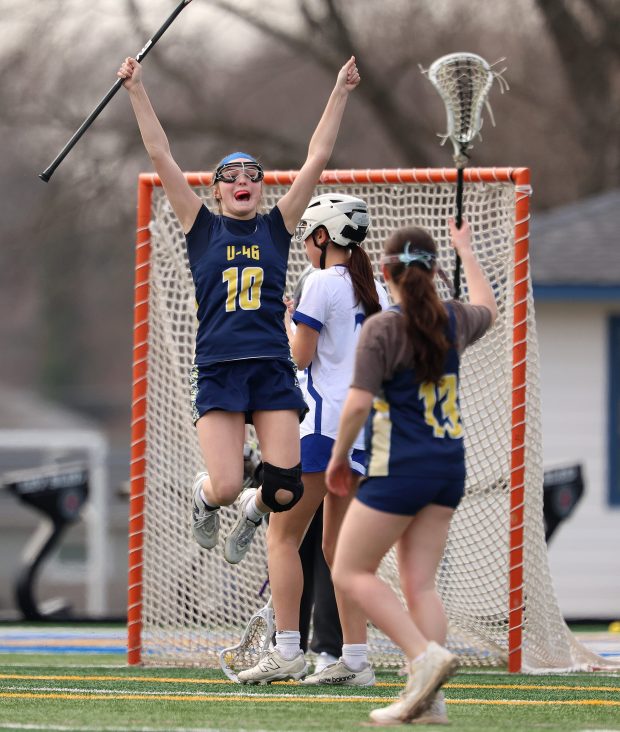
By senior night, U-46 — the Ducks, to some — had won two of its 11 games. The team had been outscored by 79 goals. Somewhere along the way, though, skills that had been elusive began to stick. The losses grew closer. And now the team found itself locked in a 5-5 tie in the waning moments of its final regular season game. The outcome meant very little in the grand scheme.
In another way, it meant everything.
***
The IHSA recorded 1,310 high school co-ops in 26 sports during the 2025-26 academic year. The number included 39 in baseball and six in girls bowling and two in boys gymnastics. There were 46 in football, mostly among small schools in rural areas. Twelve in bass fishing. Five in girls tennis and five in e-sports.
There was one in trap shooting, which the IHSA sponsors as an “emerging sport,” between Galatia and Thompsonville in the far southern reaches of the state. The TrapCats — their co-op does have a mascot — won their first varsity shoot last year. The IHSA sanctions nonsports activities, too, and so there were co-ops in speech and chess and scholastic bowl.
Not every state association allows for co-op teams. In Illinois, they’ve formed when a school has not been able to support a team on its own, due to small enrollment or lack of interest or both. In girls lacrosse, for instance, the U-46 team’s largest contingent is from South Elgin High. The 12 players from there would not be enough to form a team, though, and thus the need for a co-op.
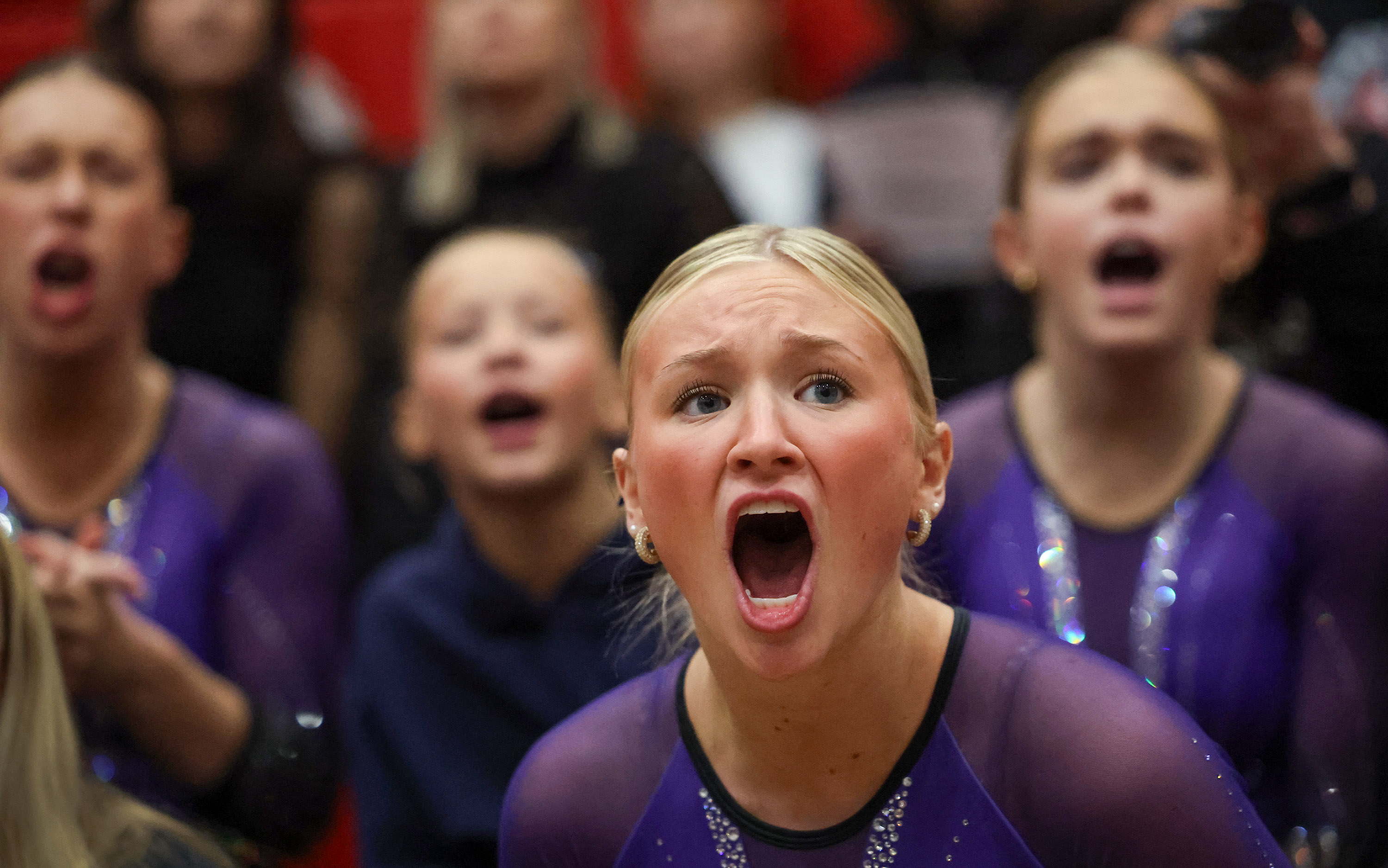
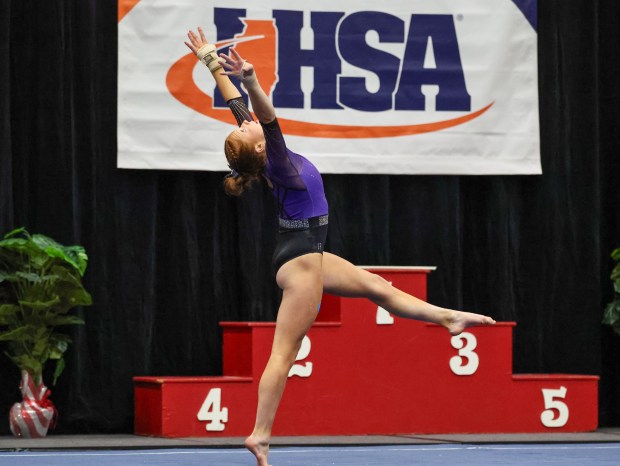
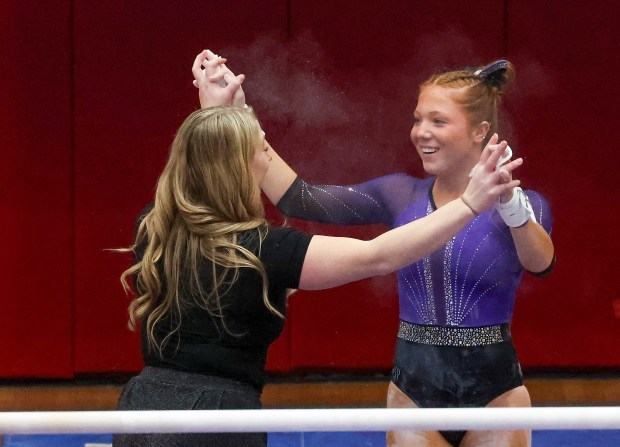
Among the largest schools, co-ops are endangered in part because some started to win. A lot. In girls gymnastics, for instance, a co-op at Prairie Ridge, in Crystal Lake, has won six state titles since 2016. Its most recent came in February. The co-op includes four schools — Cary-Grove and Crystal Lake Central and South are the others — with a combined enrollment of more than 5,000.
The Downers Grove co-op, made up of Downers Grove North and South, has also become a gymnastics powerhouse. Its girls team won a state championship in 2025. For years, discontent simmered amid the co-op dominance in that sport. Movements to change IHSA by-laws never went anywhere, though, until a proposal Marty Manning submitted last fall.
Manning, the athletics director at Schaumburg High, acknowledged “that people have been frustrated with girls gymnastics for a while.”
“But that wasn’t my reasoning” behind his proposal, which eventually brought significant change to Illinois high school sports. In recent years at Schaumburg, Manning said, the school has started girls programs in wrestling and lacrosse and water polo. Others in the school’s conference — the Mid-Suburban League — have made similar additions.
To Manning, growing pains are part of starting a new program. Schools have to figure out how to generate interest among students. Participation might be low before programs establish themselves, if they ever do. It can take years of hardship before a team starts to grow.
“And we work really hard at it,” Manning said, “and then (our teams) get matched up against someone in the state (playoffs) that combined enrollments.
“So it’s easy for them to get a team, and we get beat up pretty good. …
“And I can see the look of frustration on their faces when they get matched up with some of these (co-op) programs. And they’re like, it’s not fair. They’re like, ‘It’s four schools we’re competing against, not one.’ And I’m like, ‘I know. I get it.’”
In his proposal, Manning explained its necessity like this: “The purpose of a co-op is NOT to create ‘super teams’ by combining large high schools together.” Without a change, he wrote, “Co-op teams will continue to form for competitive reasons and win IHSA State series competitions.”
Among the 726 high schools that voted in December, Manning’s proposal passed by a margin of 316. He has become something of a controversial figure in Illinois high school athletics in the months since, and he said he labored over the thought that a rule change he wrote might cost students an opportunity to participate in sports.
During a recent interview, he emphasized the change affects only teams and not individual athletes. In sports like gymnastics and swimming, for instance, individuals can still compete for state championships. It’s their teams, if they’re co-ops, that can’t. And co-op teams among large schools can still form, too, in a technical sense, Manning said. They’re just ineligible for the state playoffs.
To some of those teams, that’s of little consolation.
“I have had, obviously, a couple (athletic directors) reach out to me and just say things like, ‘You’re killing me,’” Manning said. “You’re killing what we’re trying to do with our sport.”
Among affected co-ops, few if any will suffer more than Prairie Ridge gymnastics. The program, which has been a regular state championship contender, will be split in half, with Prairie Ridge and Central forming one team and South and Cary-Grove forming another. At least, that’s the idea.
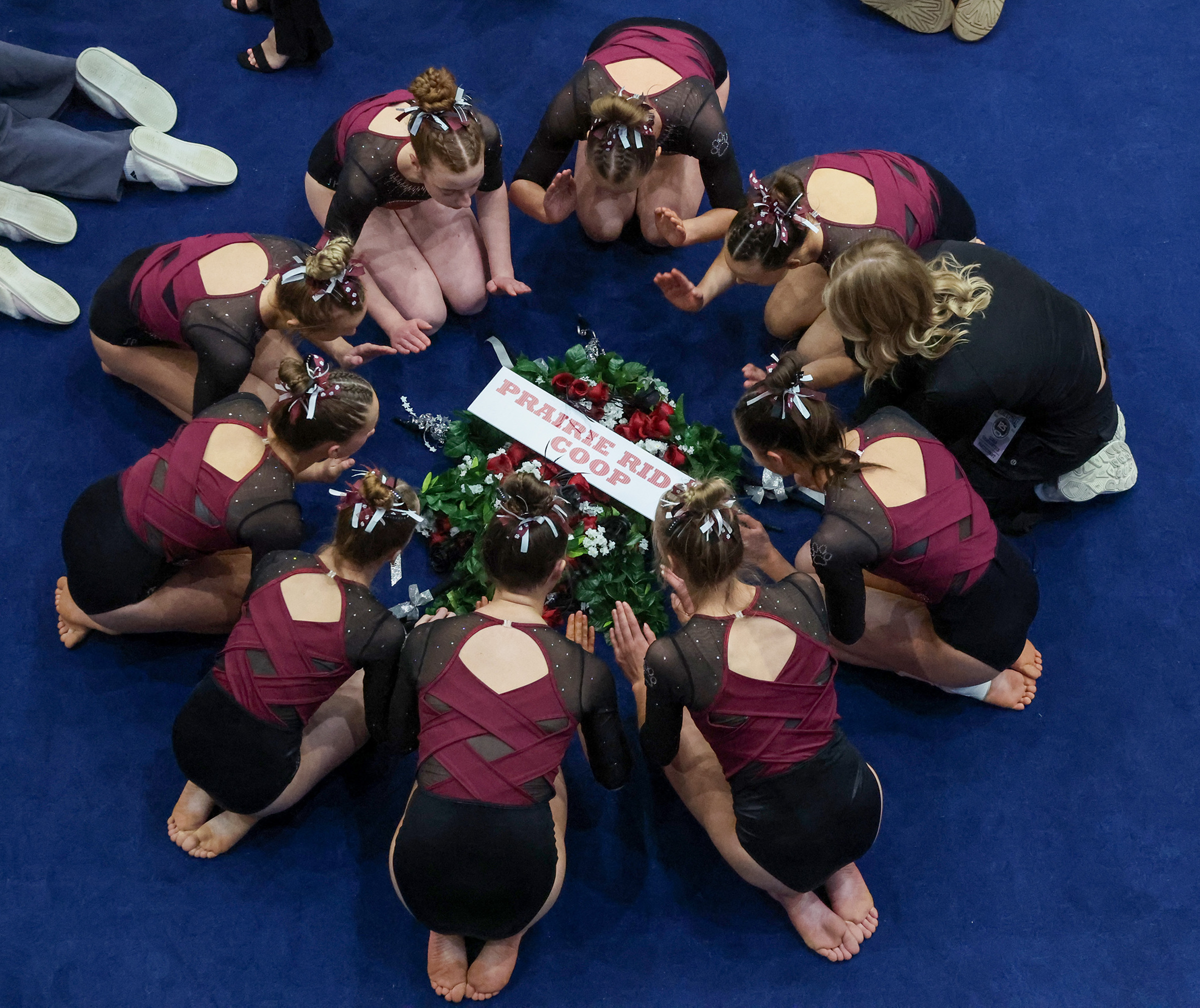
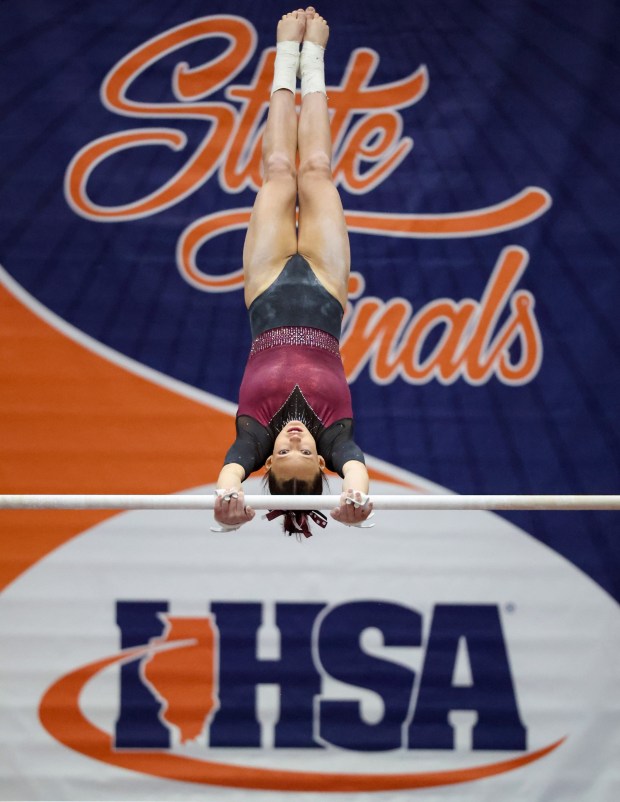
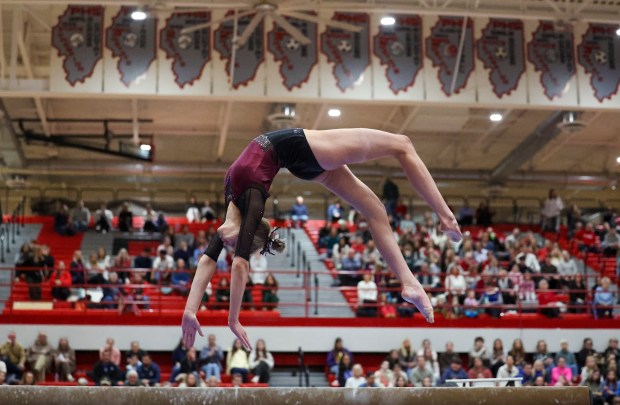
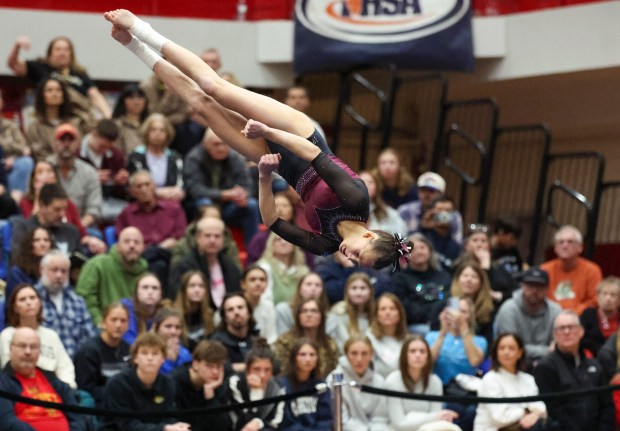
Next year at South and Cary-Grove, though, “We don’t have enough to make a team,” Lexi Redmond, the Prairie Ridge coach, said recently. One of her rising seniors, a student at South, will not be able to be a part of a high school team because of the rule change.
“How is that fair?” Redmond asked. “And you’ve got people just say, ‘Pick another sport,’ and that’s not fair. You don’t just go pick another sport, you know?”
Redmond underscored that she had 10 gymnasts “out of four schools to scrounge together” a team.
“And yeah, we’re good. These girls put 20 hours a week in this gym all year round. They don’t pick a leotard up in November and say, ‘Hey, I’m going to try gymnastics for this season,’ and then hang up the leotard in February, and say that was fun. This is a lifestyle that they choose.”
***
On a cold Wednesday night in early March, a light mist covering the football stadium lights in a thin layer of haze, Grace Miller gathered a hopeful group after the second day of U-46 girls lacrosse tryouts and shared some happy news: “If you were here the past two days,” Miller said, “then congratulations: You’re on the team.”
In response, there was a joyous release of screams and hugs. Moments later came the bad news. With the rule change affecting co-ops, Miller told the players, the team’s future was in doubt beyond this season. It already was going to be difficult enough without the uncertainty. For one, it was Miller’s first as a head coach. Most of the best players from last year had graduated.
Numbers were low, and much too low to field a junior varsity. In a school district of more than 5,000 students, they were it: the only 24 girls who’d come out for lacrosse. While the fear of super teams made for an uncertain future, Miller, who played lacrosse at Concordia University Chicago before graduating in 2023, appeared happy enough to be able to put together a team, period. Building the program had proved difficult.

Along with teaching the sport to newcomers — some had never really picked up a lacrosse stick before — generating interest remained the most difficult part. Nobody at Streamwood High wanted to play. Only a few from Larkin and Bartlett and Elgin came out. At Larkin, Miller adopted the dual role of art teacher and lacrosse promoter.
That’s how Mackenzie Fiebig, “Bonez” to friends and teammates, first learned of the sport. In art class, sophomore year.
“One day I was working in the clay room, and Miller came in and was like, ‘Hey, you know what? You should try lacrosse,’” Fiebig said. “And I was like, ‘What’s that?’”
The memory made Fiebig laugh.
“No because, genuinely — I thought it was, like, a made-up rich sport.”
Fiebig, who is nonbinary and identifies as they, took Miller up on the offer, with more than a hint of skepticism. But the unexpected happened: Fiebig fell in love with it from day one of tryouts.
“I got into the car afterward, and I was like, I have to play this sport,” they said. “Really. Because I — I just loved it. It was the energy I wanted. Everyone was so welcoming, and it was just a fun sport. I mean, I’d been trying to do sports forever.”

None stuck, though. Not dance, after Fiebig recalled biting their ballet teacher as a 5-year-old. Not basketball, after Fiebig recalled trying it and instead finding more joy in sitting on the court. Not softball, which “was too much.”
But lacrosse?
“I was like, this makes sense to me.” And playing goalie came to make the most sense of all.
At 5-foot-11, Fiebig possesses the ideal size. The pads and mask make Fiebig look tough, and the gear obscures the pink hair and distinctive eye makeup.
Fiebig’s favorite part of being a goalie might be the bruises. They might come with some pain, at first, but they serve as reminders of would-be goals that instead become a kind of body art.
“I keep a folder on my phone of all of my good bruising,” Fiebig said.
In a lot of ways, Fiebig represents the deeper potential of co-op teams, and what could be lost if and when some high schoolers lose access to them. Larkin High would not have a lacrosse team on its own. Without the co-op, Fiebig never would’ve discovered the sport.
It has opened doors, including those to college. And then there’s the intangibles.
“I never got sports until this,” Fiebig said. “I never understood structured sports, if that makes sense. … But I can feel it. Like, it is a team.”

The tests to its resilience arrived early and endured. U-46 began its season with five consecutive humbling defeats, all by double-digits. Its opponents often included a lot of players who benefited from participation on club teams outside of school. Some of U-46’s opponents passed the looks test right away, with deep rosters and uniforms nice enough for a college team.
Naperville Central was one such opponent. During the first quarter of its 13-3 victory in April, it scored goals in a rush: back-to-back-to-back-to-back. Fiebig banged their stick against the goal post at one point, frustrated, but continued to shout instruction and encouragement. U-46 probably never had much of a shot. Not even with a pool of thousands of potential players.
Not against a school from Naperville, with its crisp Under Armour jerseys and built-in advantages. When the game ended, mercifully, a U-46 player lamented that the fastest she’d run with possession of the ball was the wrong way — toward her own goal.
“And that’s OK,” Miller told her. “Because we’re learning.”
Sure enough, a payoff arrived 10 days later. A victory, at last.
***
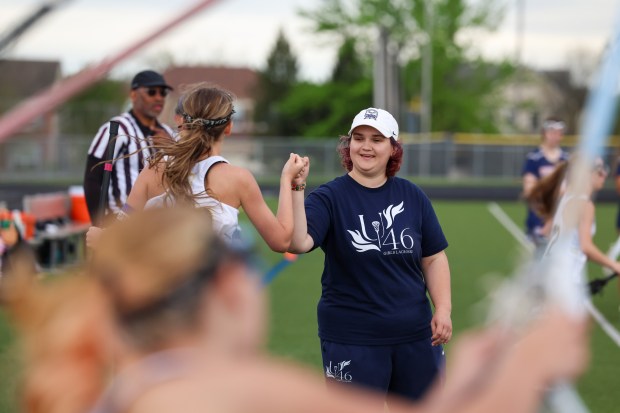
The triumph came in mid-April, a one-goal home victory against Rosary College Prep. The players of U-46 posed for jubilant photos after, some of them making “W” signs with their hands, others going with silly faces. Miller knelt down in the middle of it all with a wry look of contentment. The team had improved, even if it was hard to see sometimes.
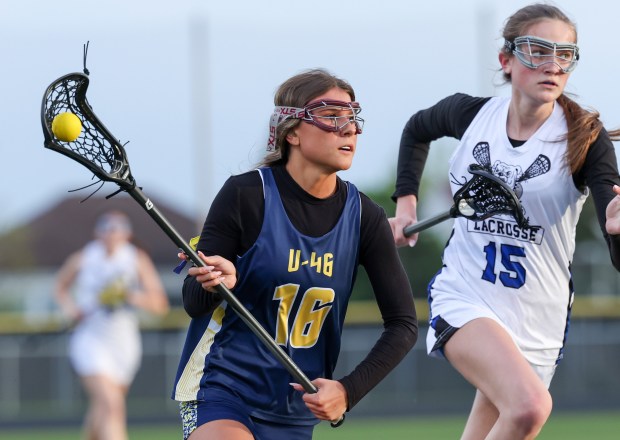
By Miller’s count, Fiebig had become one of the most prolific shot-stoppers in the state — in part because, well, U-46’s opponents rarely lacked for scoring chances. On offense, Mia Cataldo, a junior who scored seven of the team’s 11 goals in its first victory, had emerged to become a force. She could weave her way through any defense.
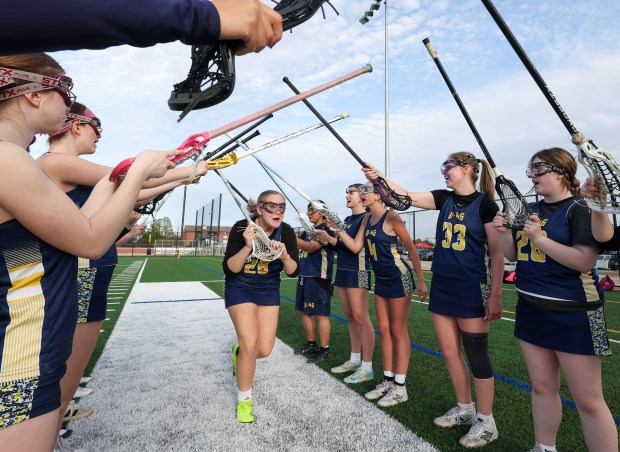
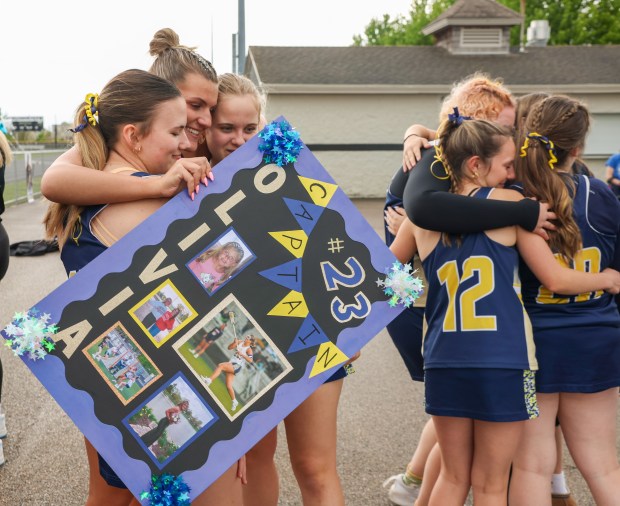
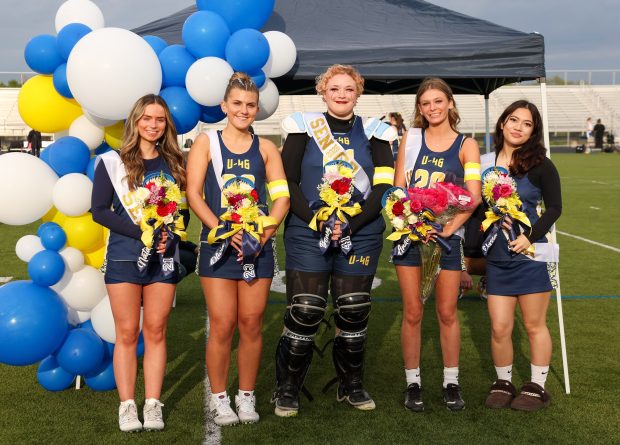
The team won again in early May and then came senior night. The younger players arrived early and brought posters honoring the five seniors — Fiebig’s included “BONEZ 41,” in all caps, above “#BestGoalieInIllinois” — and then hung those posters on a fence near the field. The mood was festive and celebratory, despite the rough won-loss record, and music thumped while players braided each other’s hair. When it came time to present the posters, there were many tears.
In addition to Bonez, Andie Bucaro, Natalia Truszkowski and Olivia Zabek were also captains, and family members escorted them during a pregame ceremony. A public address announcer listed their highlights — “Olivia is our rock,” and “Natalia is a captain that shows perfect composure” and “Bonez is currently ranked No. 1 in the state for save percentage” and Andie “has made 16 goals” — and future plans.

They were all headed for college with big dreams, of working in healthcare or science or, in Bonez’s case, in a mortuary. And their time on this team, losses and all, had been part of the journey.
By the end of spring sports season in Illinois, meanwhile, the rule change affecting co-ops had generated much debate. The IHSA does not unilaterally have the authority to change rules — only its member schools do, through a vote — but feedback in recent months suggested there might be enough support to revisit the change.
Matt Troha, an associate executive director with the IHSA, said “there’s been a lot of negative feedback and concern about how it’s impacting” schools, across several sports. He acknowledged, too, that the change will have a more profound impact on girls teams.
“We anticipate, from what we’ve heard from schools, that there are going to be some proposals in this next cycle,” he said. “… We don’t necessarily know what we’re going to get. I don’t know if it’s going to be to undo what was done, or if it’s maybe going to be tweaked and only apply in certain sports. I mean, it really is up to the submitting schools to write it how they see fit.”
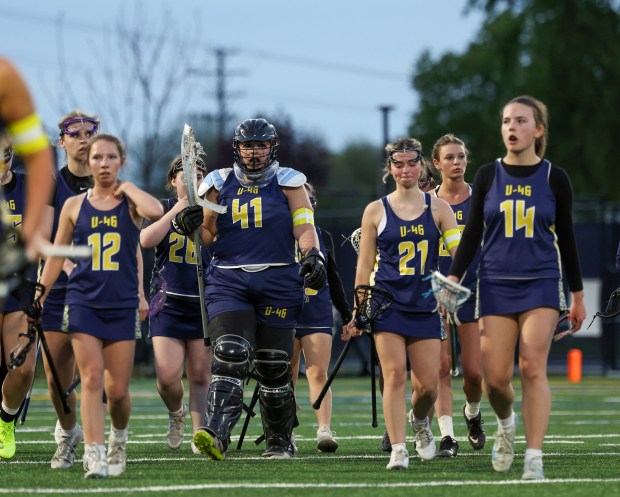
Back at U-46’s senior night, the intensity built throughout the second half. And if it were a movie — if the Ducks, as they were known to some, really were starring in the lacrosse version of “The Mighty Ducks” — then there would’ve been the perfect ending: a last-second victory and happy tears. In real life, though, the team surrendered a late goal and a last-gasp attempt at a rally fell just short.


Several of the players slumped to the turf. Some cried. Miller, who said the plan for the team was to keep playing next season, even without access to the state playoffs, tried to offer consoling words.
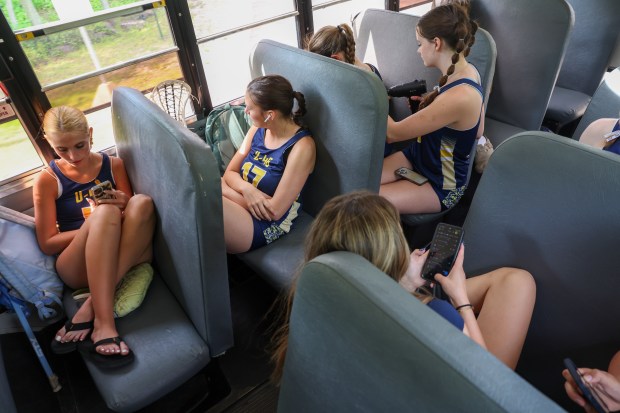
Days later they were back on a bus to Geneva High for a playoff game. That, too, came with no Hollywood ending. In the final moments of a 10-3 defeat that got away from the team, Miller gathered the players and offered encouragement and prompted Fiebig to lead the parting cheer.
And so Bonez did, with some enthusiasm despite the circumstances, and shouted:
“U-46 on three!”
“One-two-three … U-46!”