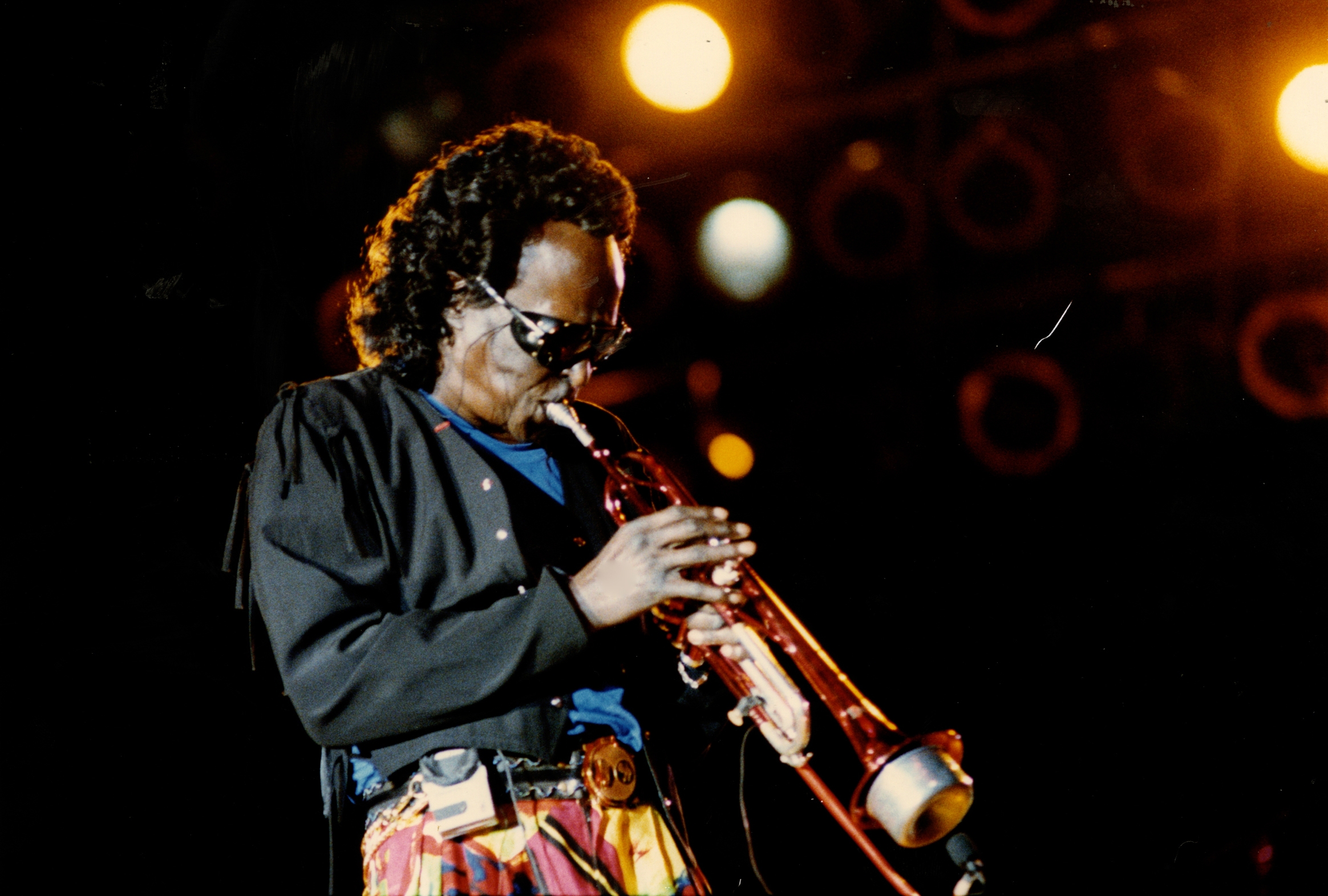

On the 100th anniversary of his birth this Tuesday, we should listen to jazz icon Miles Davis. It’s a good time to hear not only the trumpeter’s music but also his surprising message. It can help heal our discordant democracy.
Davis thought it’s not the note you play but the next note that makes it “right” or “wrong.” This echoes an old concept in jazz: When you hit, or get hit by, a “wrong” note, it’s your response that promotes either harmony or dissonance.
Today, the entire country faces far too much discord. But as with jazz, we have a choice — and a responsibility — in how we respond.
A famous story about Davis reflects this philosophy. It’s recounted by his young pianist from a 1963 concert. Herbie Hancock played a chord that clashed appallingly with the conversational call and response of Davis’ signature composition “So What.”
Hancock was mortified. Davis paused momentarily to digest the dissonance, then countered with a melody making Hancock’s “wrong” chord sound “right.” Davis’ ability to reflect and respond with his pithy probing of the disagreeing chord turned chaos into something cogent. Hancock said Davis’ musical lesson even taught him about life itself. “The important thing is that we grow and … turn poison into medicine.”
Of course, the problems confronting us are far graver than hitting a bum note. One fundamental issue is extreme tribalism’s destructive momentum toward distrust and disdain of others. Still, principles from America’s forgotten music can help preserve the world’s oldest continuing democracy.
A century ago, jazz was America’s popular music. Today, many may view it as a relic. Similarly, just because 250 years ago America’s constitutional republic was founded on democratic principles doesn’t mean it, too, can’t erode until it’s a distant memory.
Jazz values each member’s unique voice. But for this collective freedom to work, there must be some understanding among the group about basic structure. Agreeing on things such as the song, the key, the soloists’ order — and, most importantly, listening to each other — is essential. Absent this, it’s just noise.
In this way, democracy parallels jazz. For it to function, both citizens and government officials must commit to acting within its indispensable bounds.
Some of these requirements include free and fair elections, the rule of law, an independent judiciary, equal rights, separation of powers, accountability of leaders, political pluralism, a free press, majority rule tempered by minority rights and thoughtful citizen participation.
That’s a lot of complicated, and at times conflicting, objectives to try to balance. But ensuring our democracy endures requires working toward reconciling our individual rights with our responsibilities as collective citizens of a pluralistic society. As with jazz, when we can approach some form of equilibrium, it creates something rare that we should cherish and strive to preserve.
Davis’ music embraces the tenuous but inescapable tension between freedom and form, and the individual and the group. Democracies must do the same. Existentialist Søren Kierkegaard captures a key part of this challenge. He wrote we need “to be objective towards oneself and subjective towards all others.” Good civic engagement requires us to see ourselves as harshly as we view others and to see others with the humanity we view in ourselves.
Doing this allows us to hear and accommodate differing voices and views. A warning just before America’s Civil War reminds us today why this is so crucial. In examining liberty and the tyranny of the majority, philosopher John Stuart Mill observed: “Only through diversity of opinion is there … a chance of fair play to all sides of the truth.”
In any diverse group, we’re never going to — or supposed to — like everything we hear. Davis understood dissonance wasn’t a drawback but an opportunity to explore. Applying his insight to the mosaic of American democracy creates a gestalt in which the whole of all our distinct viewpoints is greater than the mere sum of everyone’s perspective in isolation.
So, what … do we do? We don’t need to agree on everything, but we must commit to shedding more light — and far less heat — while disagreeing.
Taking this step puts us, in a manner of speaking, miles ahead.
Steven D. Reske is an attorney in Minneapolis and a former jazz journalist for local and national publications. He served as legal editor-at-large for the magazine Minnesota Law & Politics.
Submit a letter, of no more than 400 words, to the editor here or email letters@chicagotribune.com.