For Baby Boomers who think of themselves as young in mind and heart, turning 50 can be a reality check. The Who’s 1965 lyric, “I hope I die before I get old,” has an entirely different resonance now for many of the 78 million Boomers at or near the half-century mark.
As they flock to the gym, gulp down vitamins and supplements or have cosmetic nips and tucks, many fiftysomethings are fighting the aging process tooth and nail.
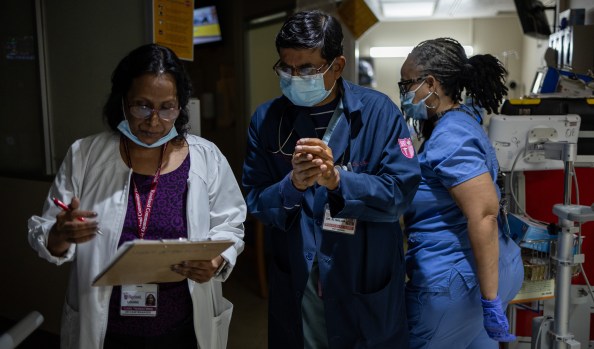
“It’s a time where, if you think about it, you have another 20 or 30 years,” said Dr. Nanajan Yakoub, a North Side family physician. “It’s a significant age in that you should start taking your health more seriously.”
One of the best ways to ensure health and vitality in the second half of life is to get screened for breast, colon, prostate, cervical, skin and lung cancer as well as heart disease and diabetes, physicians say. Early detection and treatment of these diseases may save your life. But before you run to one of those clinics that offers screenings from head to toe, consult your doctor.
“The most important way to diagnose disease is to have a doctor you can relate to, who knows you, and can take a good medical history,” said Dr. Steven Malkin, an Arlington Heights internist. “Then you can decide what tests to do. I don’t do screenings for the heck of it. In taking a thorough patient history you can often diagnose 70 to 80 percent of medical conditions.”
Once you turn 50, screenings for the following diseases generally are recommended.
Heart disease: Heart attack, strokes and other cardiovascular diseases kill more Americans than any other medical conditions, according to the American Heart Association. Contributing factors include high cholesterol–which starts to increase during middle age–high blood pressure, diabetes and being overweight or obese. The heart association recommends cholesterol screenings every three to five years.
Lung disease: The American Lung Association says lung disease, including lung cancer, causes one in seven deaths in America. Smoking is the main cause of lung cancer, though exposure to radon gas and carcinogens such as asbestos also can cause the disease. If you are experiencing such symptoms as chronic cough, shortness of breath or repeated bronchitis or pneumonia, your doctor may order a chest X-ray or CT scan.
Diabetes: Doctors say half of all diabetics are unaware they have the disease. Untreated, diabetes can lead to problems with vision, the kidneys and blood circulation. The most common form of the disease is Type 2 diabetes, typically diagnosed after age 45. You may need a blood screening for diabetes if you are overweight or have a family history of the disease.
Breast cancer: The National Institute on Aging says 80 percent of breast cancers occur in women 50 and older. Both Malkin and Yakoub recommend annual mammograms. Yakoub says women also should have their doctor perform annual clinical breast examinations. According to the American Cancer Society, women with a family history of breast cancer may need more frequent exams.
Cervical cancer: All sexually active women are at risk for cancer of the cervix. Doctors say regular pap smears can prevent most cervical cancer deaths. The American Cancer Society recommends annual pap smears for women age 30 and over. After three normal tests in a row, screenings are recommended every two to three years. Women with weakened immune systems, including those who are HIV positive, should get tested more frequently.
Colorectal cancer: Cancer of the colon and rectum is the second leading cause of cancer deaths and among the most treatable. “Screening will help us detect the cancer and cure it early on,” said Yakoub. “It will also cost much less to treat it before the symptoms increase. A fecal occult blood test to detect small amounts of blood in the stool–which can be an early indicator of cancer–should be performed annually. Also at age 50 and every five years afterwards, a sigmoidoscopy or colonoscopy, which examine the rectum and lower colon for growths, should be performed, according to the American Academy of Family Physicians. If you have a family history of this cancer, you should begin regular testing at 40, Malkin said.
Prostate cancer: About 180,000 men annually are diagnosed with prostate cancer, which most commonly affects men over 50. The American Cancer Society recommends annual digital rectal exams to check for growths as well as prostate-specific antigen (PSA) blood tests, especially for those at higher risk, including African-Americans and men with a family history of the disease.
Skin cancer: People over 50 are particularly prone to cancers of the skin. The American Academy of Dermatology says middle-aged men have a disproportionately high rate of the most fatal type, melanoma. At 50, men should be screened for skin cancer, especially if they have spent a lot of time in the sun, the academy says.
Other tests: After age 50, people might also consider annual vision tests, which should include a glaucoma screening; a hearing test, especially if there has been exposure to high-volume levels; and an annual flu shot, Malkin said.
While tests and screenings are important, Yakoub said the most important things you can do to remain healthy at 50 is to watch your weight, exercise regularly, eat healthy food and take vitamins and supplements.
“Of the patients around 50 I see, maybe 30 percent have taken good care of themselves and know what they should be doing to enjoy their lives as they get older,” she said. “Another 70 percent says they have been too busy working and raising children and have not made the time to do the right things. It’s an effort, but it’s not impossible. You’ll feel a whole lot better if you do.”