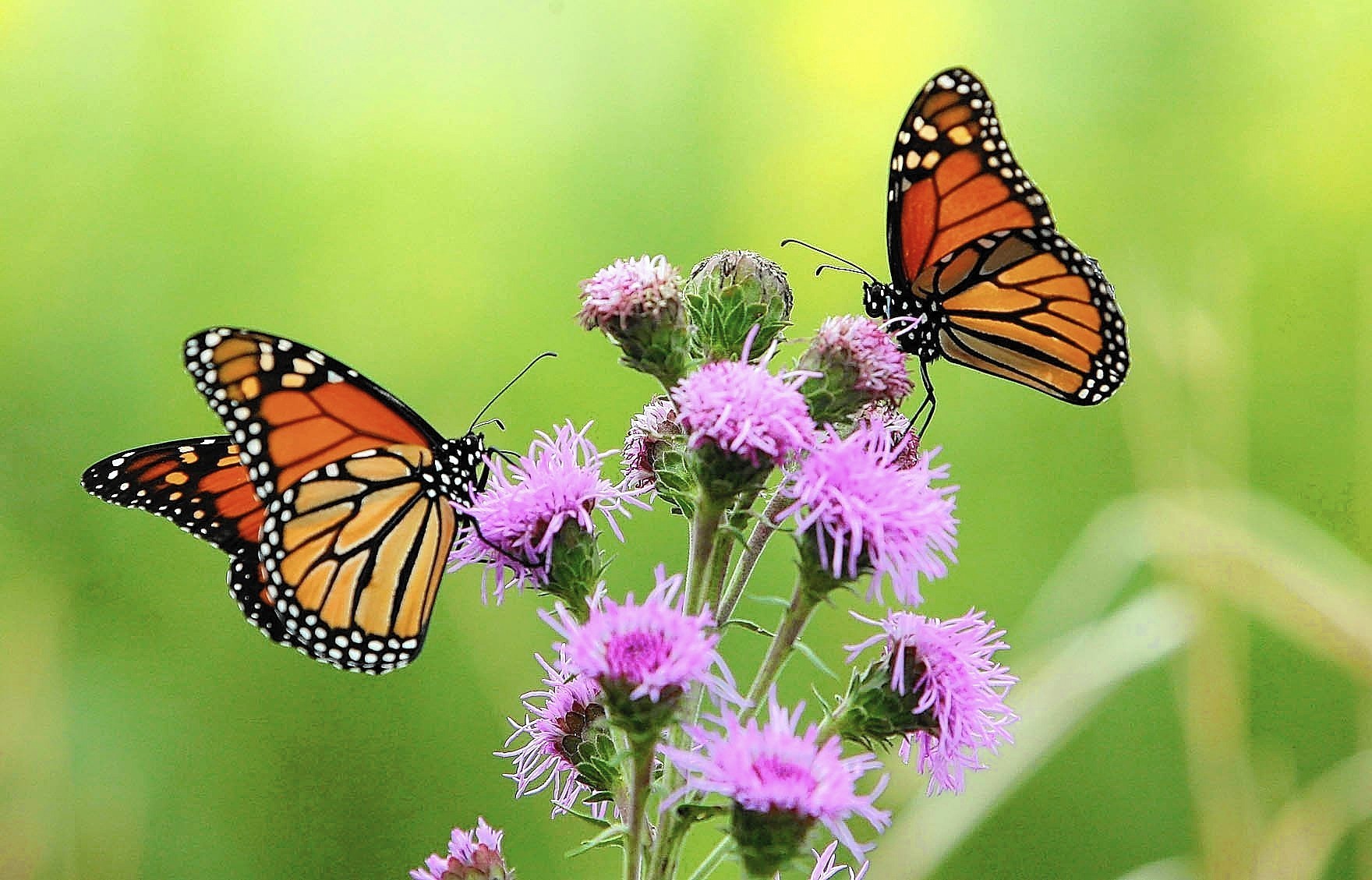

As the snowpack surrenders to the sun, flowers will bloom, birds will sing, and monarch butterflies will return from their winter vacations in Mexico and California. But fewer numbers will be flapping their wings than in the past.
Over the past few decades, the monarch butterfly population has decreased by about 90 percent due to many threats, including the loss of their habitats. The milkweed plant is key to their survival. They rest on the plant, drink the flower’s nectar and lay their eggs on it. It also nourishes their caterpillars.
To help the species, the National Wildlife Federation launched the Butterfly Hero Campaign on March 4 to encourage the planting of native milkweed across the nation.
To make the pledge, people can submit a photo of themselves making the international sign language sign for the butterfly (it looks like a shadow puppet of a bird with the fingers spread open) to the NWF’s Butterfly Heroes website. Participants will receive a free butterfly kit, while supplies last, complete with the tools they need to plant milkweed. Those who pledge by May 15 will be eligible for a chance to win a trip for four to Walt Disney World.
“The simple act of planting milkweed with your family provides monarchs with a place to lay their eggs and helps ensure this iconic species has a future,” said David Mizejewski, a naturalist with the NWF.
Caution: Avoid planting tropical milkweed. According to a study from the University of Georgia, monarchs that eat tropical milkweed in the U.S. are five times more likely to be infected with disease, which doesn’t help the population.
Want to explain the value of these winged creatures, beyond aesthetics, to your kids? (Maybe we should ask kids if they want to explain it to their parents. In any case):
Along with other pollinators, they move from plant to plant searching for protein-rich pollen or high-energy nectar to eat. As they move along, they are dusted by pollen, and when they move to the next flower, they fertilize the plant, allowing it to reproduce and form seeds, berries and fruits that are a foundation of the food chain that nourishes other animals, including humans.