The narrator of Jim Shepard’s harrowing new novel, “The Book of Aron,” is the sort of anarchic and undomesticated boy who would be dubbed a rapscallion in the lexicon of Mark Twain. He lies, steals, torments his teachers and parents, and generally behaves “like something that had been raised in the wild.” Twain’s incorrigible boys are generally charming rabble-rousers, their antics in part a critique of the staid hypocrisies of adult life. Shepard’s Aron is something else: a child in desperate conditions whose lawless conduct is a means of survival.
Aron lives in a small apartment in Warsaw with his parents and brothers during the opening years of World War II. He befriends a boy named Lutek who teaches him to steal from vegetable carts and shows him pictures of naked women. Shepard’s tone initially approaches an idyll of boyhood rascality, but the darkness and desperation of the details soon scrub any sheen of nostalgia from the material. Lutek, for instance, “put a hole in a kid’s head with a jeweler’s hammer,” and his father tries to cure his sister’s stutter “by mimicking her, to shame her into getting over it.” Aron’s little brother dies of pneumonia and his mother stays in bed for two weeks.
But what comes next makes these early troubles seem like relatively minor travails. Aerial bombardment of Warsaw leaves dust and soot hanging in the air and blocks of buildings demolished. Soon the Germans march into the city and begin harassing the Jewish population. Curfews and armbands are mandated, draconian quarantines spread sickness and a three-meter wall topped with barbed wire rises around the perimeter of the Jewish ghetto. Aron and Lutek discover that the rubble of destroyed buildings is “a great playground,” and the cratered cityscape of wartime Warsaw allows the boys to become barterers, smugglers and thieves. Shortages and rationing create a flourishing black market for everything from flour to cigarettes.
Small, nimble hands and the ability to wriggle through a narrow hole in the perimeter wall are useful assets in the new economy. But Aron, Lutek and two girls who join their informal gang are not a band of merry thieves. As forced relocations swell the ghetto’s population, multiple families cram into every apartment, and squatters claim stray stairwells and sidewalks. Sickness and hunger spread, and the kids are reduced to stealing from those already starving.
Aron roams the streets in a sweater so infested with lice that it appears to be moving. He cuts deals with smugglers, evades the clutches of both German and Jewish policemen and fights street battles against other gangs of children. He’s lived for barely more than a decade, but he becomes a de facto provider for his family by securing potatoes, flour, honey, meat and extra ration cards for soup and bread lines. Family and friends, however, begin to disappear; they are claimed by typhus, shot by the Germans, conscripted into work details and eventually relocated to the countryside — a euphemism for extermination in Treblinka and other concentration camps.
The novel is bleak and unrelenting, a narrative demonstration of the fact that things can, in fact, always get worse. But the book’s unsentimental power proves that Shepard is doing more than simply piling misfortunes upon his characters. The bare prose style reflects the boy’s dazed psychology; he narrates in simple, visually evocative sentences that barely register the distinction between, say, stealing a turnip and watching his father get beaten. The blunted and spare language Shepard uses illustrates Aron’s desensitization to a world in which all situations are to be exploited, observed, avoided or endured.
Shepard shows the flickers of resilience that persist amid the most dreadful circumstances with a restrained and affecting technique. At points the characters are nearly reduced to the status of sentient automata, responding mechanically to the prods of each brutal stimulus, but a basic humanity still lingers in their smallest gestures. Aron describes his own tears as just another immutable feature of the world, something he can’t change or understand. “‘My eyes do this,’ I told everyone at the table. ‘I don’t know why.'”
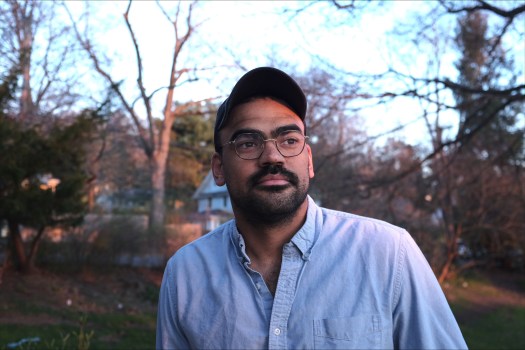
Nick Romeo also writes regularly for The Atlantic, the Times Literary Supplement, The Boston Globe and The Daily Beast.
“The Book of Aron”
By Jim Shepard, Knopf, 263 pages, $23.95