

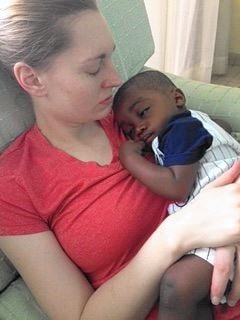

The Indiana Congressional delegation is asking President Barack Obama to personally intervene in a situation that has left more than 400 orphaned children in the Democratic Republic of Congo — and the American families who have legally adopted them — in limbo for more than two years.
The problem is particularly acute in Indiana, where the highest number of children — 27 — have been adopted by 20 Hoosier families.
All of the adoptions had been completed through Congolese courts, recognized by U.S. consular officials, and were in accordance with American visa procedures and international conventions. But in September 2013, the Congolese government put a moratorium on issuing exit permits from the DRC — the final step in the process — and thus stopped the adoptions in their tracks.
In the time since the moratorium, 25 of the adopted children have died in the DRC due to inadequate medical care.
The situation has been heart-wrenching for parents like Heather Long, who had just adopted a little girl from the DRC and was in the process of adopting her younger brother when the moratorium happened.
“It’s been a very frustrating situation as families try to figure out how to be a family while separated,” said Long, who lives in the Indianapolis area. “Our son is 2. We have traveled over there, Skyped, sent packages of clothes, so he’s very aware of who we are.
“A lot of the children are living in orphanages, but we’re fortunate that our son is living with foster parents, so he’s got a lot of one-on-one care.”
Long said diseases like malaria, which is rare in the United States, are more prevalent in the DRC and have sickened children.
The moratorium stemmed from a Reuters special report on neglect and abuse of foreign adoptees by American families, Long said, but she emphasized that none of those reports involved Congolese children and the cases reflected a small percentage of all adoptions. DRC officials have promised that the moratorium would be resolved through legislation in their National Assembly, but that has yet to occur.
“The DRC made an announcement (in September 2013) that they were not going to give exit permits for international adoptions for a year, but over time, what happened is a year became two years and now we’re entering year three,” Long said. “The initial conversation was over the well-being of children, but over time the reasons have shifted. We wanted to show that our kids are thriving and a delegation of Congolese officials was scheduled to visit, but they cancelled at the last minute.”
Sen. Joe Donnelly, D-Ind., said it’s been frustrating to see this process drag out so long for families.
“For the parents, it is their child not being home with them and the anguish they feel every single day that they’re not with them,” he said. “We’re hopeful that President Obama can talk to President (Joseph) Kabila and emphasize that it’s personally important to him to get this done.”
U.S. State Department staff have been actively involved in resolving the situation, and those in Congress, including House Foreign Affairs Chairman Ed Royce, R-Calif., have visited the DRC and spoken to their counterparts in the National Assembly about the issue. They’ve received many promises — saying that the moratorium will be lifted in weeks or months — but no resolution to date.
Obama spoke to Kabila about the matter at the end of a broader telephone conversation in March 2015, but the letter requests that he call the Congolese president again “placing central emphasis on the matter and asking him for personal, verifiable commitments to you that the issue will be solved swiftly and thoroughly. In particular, we hope you will ask that these long-completed adoption cases not be subject to any new requirements or constraints imposed by future legislation.”
Long emphasized that Congolese children still maintain vital links to their culture in Indiana since one of the largest agencies that handles DRC adoptions in the United States is located in Indianapolis.
“We have an incredible support network,” Long said. “Our daughter is wonderfully connected to Congolese culture. The agency does a lot of cultural events for families. It sounds funny but it would be really hard to move from Indiana because of all the links to the Congolese culture we have here.”
Long said it’s been difficult for families to get their hopes up when there have been so many empty promises over the past 2 1/2 years, but they’ve formed a support network to help each other through it.
“I think we all would have been committed by now without talking to people in the same situation,” Long said. “It’s a very odd situation that we’ve been through.”


