

The Rev. Randy Schoof likes to think of McCarty Park as a symbol.
A representation of the city.
A parable, if you will, about “the ongoing Aurora transformation.”
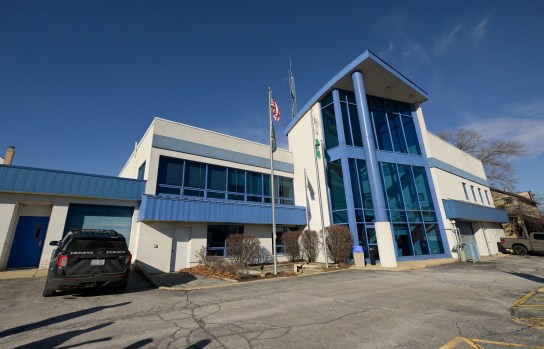
From the window of his first-floor office at Warehouse Church, the pastor has enjoyed a front-row seat in this gradual but remarkable change.
Consider this picture: In 1995 — the same year he moved into the building in the 300 block of East Galena Boulevard — a man was shot and killed in a nearby parking lot, one of several murders in the area. But it was on a daily basis that he would witness some of man’s worst behavior in that park: gang banging, drug abuse, prostitution, assault.
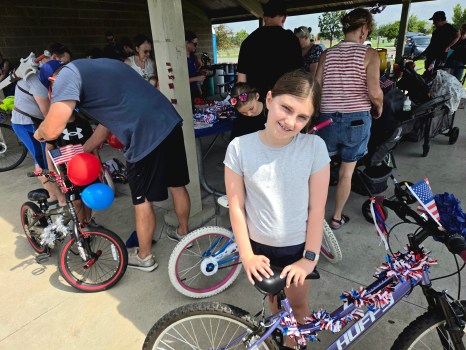
Now, he says, he looks out the window at McCarty Park, directly to the east, and sees groups of all ages, especially families with young children, enjoying the renovated area that includes its popular water feature.
Instead of the breakdown of morality, he said, “I see people building relationships.”
And that’s why Schoof is philosophical about the shootout that took place “just a long block down the street from us” on LaSalle Street Thursday night.
“It definitely sounds like a glitch,” he said of the exchange of gunfire that left the 36-year-old suspect dead and two police officers injured.
“Violence has been trending down for so long because of so many good factors” such as intelligent policing, community and church groups working together, and increased mentoring programs, he said.
And more than ever, Schoof, who has been a chaplain with the Aurora Police Department for over 20 years, notices a stronger bond between the community and police, which even includes the relationships officers have with the gang members they have dealt with over the years.
They don’t just see them as perps, but as people. Which was a point made in Police Chief Kristen Ziman’s news conference when she extended her sympathies to the family of Santiago Calderon, who was shot and killed in the parking lot on South LaSalle Street during the shootout with police Thursday.
“He was a son. He was a father,” Schoof said. “That was not lost on the police department.”
It’s that growing sense of trust with law enforcement, no doubt, that contributed to a refreshing shortage of negativity following the shootout. Not so long ago, an exchange of gunfire in downtown Aurora that resulted in death and injuries would have been a huge blow to business owners, to city officials, to this community in general that has worked so hard to contribute to its “ongoing transformation.”
Certainly you would not have been as likely all those years ago to see a crowd of theatergoers filing out of the Paramount’s Penn & Teller magic show on Friday evening, hours after police had removed yellow crime tape from the downtown area from the shootout the night before.
Indeed, a candlelight vigil Sunday marking next week’s 50th anniversary of Martin Luther King’s assassination was originally planned for another location but “was moved to downtown because we know it is a safe place,” said Clayton Muhammad, the city’s director of communications.
“Fifteen to 20 years ago, the reaction would have been, ‘Oh boy, here we go again,'” said former Mayor Tom Weisner, who took the reins at City Hall in 2005, three years after Aurora’s murder rate tied a record of 26 for one year. “Now the reaction is shock, surprise, because these sort of incidents are such an exception.”
Judging by what I’ve seen on social media and talking with residents, the tragic incident seemed to bring people together — in support of their police department. While neither officer was seriously injured, it doesn’t take much imagination to realize this scenario could have been far worse for the “good guys.” That fact hit home to many of us as a reminder that every shift these cops take on can put them in harm’s way.
Cheryl Maraffio, who works with dozens of neighborhood groups as the city’s community coordinator, says it’s that outpouring of support that shows how far Aurora has come since those dark days.
While some people will always choose to focus on the negative, “the past is far behind us,” said Maraffio, whose 30-year-old son Louis Sacckette was murdered in 2000.
It takes effort, however, to keep it there.
Workers have already begun showing up at the park, Schoof noted, to tweak the water feature and pick up winter refuse. And soon flowers will be planted in preparation for the festivals and other social gatherings that bring families, friends and strangers together as a community.
Just as it takes effort to maintain a park after it’s been renovated, “you can’t get lazy or complacent” when it comes to the ongoing transformation of a city, he added, because you don’t want to see a glitch turn into a trend.
“It’s been fun to see things improve,” Schoof said, “but we can always slide back unless we are moving forward.”