


As roads with presidential names go, Lincoln Highway gets most of the fame around these parts. One of the nation’s first coast-to-coast highways built to accommodate automobiles, it’s named after the state’s favorite son and was famously road-tripped by future president Dwight Eisenhower, who led a caravan across country as it was being built to promote the highway system.
The General Ulysses S. Grant Highway, on the other hand, doesn’t draw too much attention. Even regional roads with executive branch monikers such as Roosevelt Road are better known. But the General Grant Highway is one of the area’s busiest roads. Thousands of vehicles congest its six lanes every day in the south suburbs, where it’s primarily known as 95th Street.
In 1955, the Illinois General Assembly designated the state’s 196 miles of U.S. Route 20 to honor Grant, the Civil War hero and 17th president of the United States, and the state Department of Transportation ordered up 150 new Grant Memorial Highway signs for the route in 2007 to mark the 150th anniversary of the Civil War.
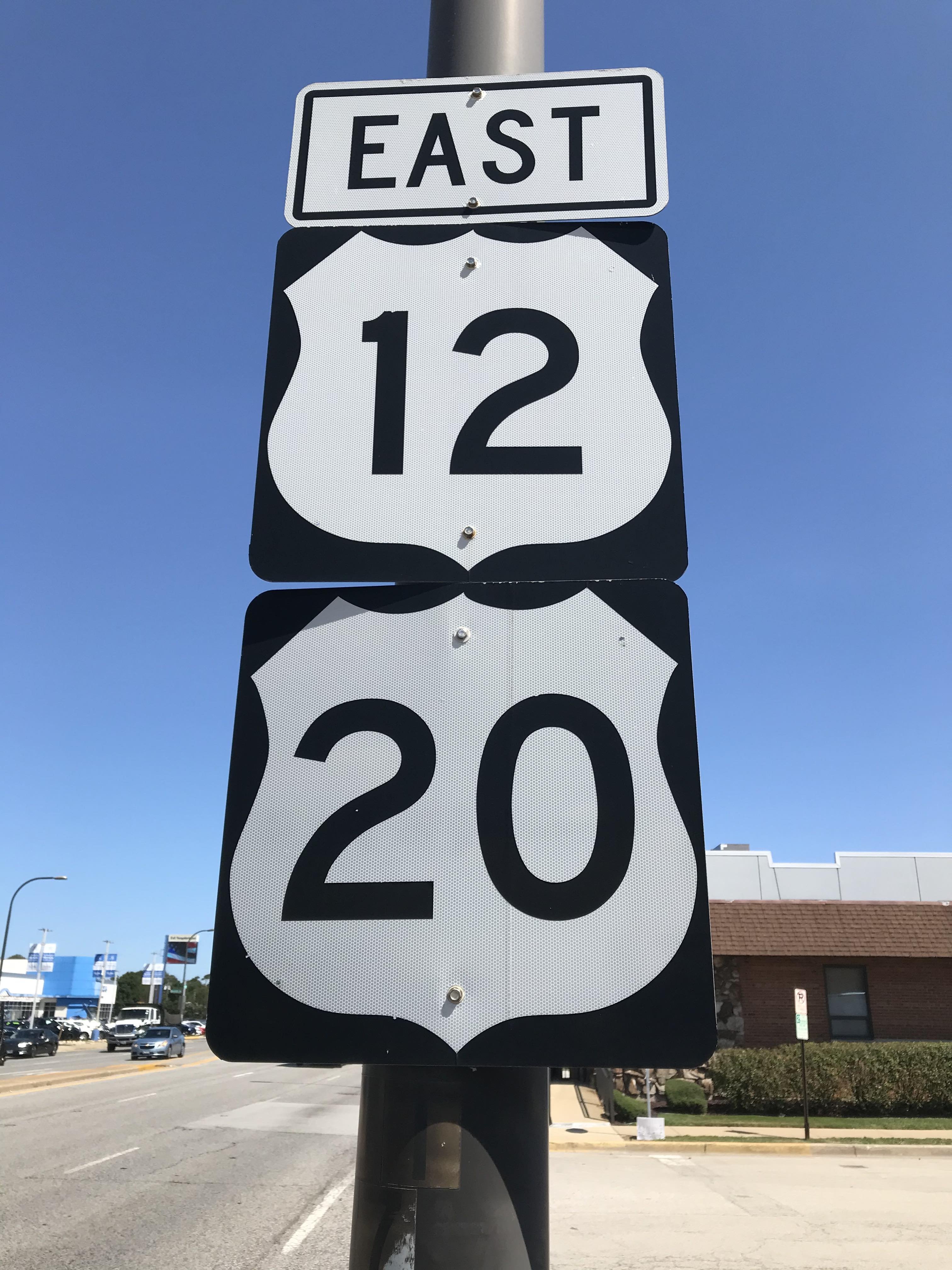
But those signs are hard to find these days, just 13 years later, at least in this area. The U.S. 20 signs are much more evident, though they usually play second fiddle to the numbered routes it shares a pathway with, U.S. 12 and U.S. 45, aka LaGrange Road. Eventually it becomes the Elgin Bypass before Grant finally gets his due as motorists approach his former home in Galena.
Regardless of its names, a Massachusetts organization is trying to raise the status of U.S. 20 nationally while giving the towns along its route a boost as well.

Bryan Farr, founder of the Historic U.S. 20 Route 20 Association, called it the longest highway in America, connecting Boston, Massachusetts with Newport, Oregon. And while the highway’s alignment has been unchanged since the late 1930s, focusing on its original 1926 route will bring benefits to more towns along its way.
“Everyone thinks of Route 66 when they think of a road trip,” he said during a recent phone interview from the association’s headquarters, a storefront in Chester, Mass., two hours west of Boston. Route 20 may not have a jingly song or occupy the same niche in the nation’s conscious, but it’s a better trip, he said, because it’s longer, and it offers much of the same Americana experience. He should know. He’s traveled the entire route several times since his first trip in 2010, stopping at new points each time.
“What you can find on Route 66 is exactly what you can find on Route 20,” he said. “They’re very comparable.”
Competition aside, his goal is similar to those of Route 66 proponents, the Lincoln Highway Association and similar groups. “We’re trying to get people to come back into small towns, get them off the interstates.”
But when its route was set in stone in the 1930s, decades before Eisenhower signed legislation creating the modern interstate highway system, U.S. 20 and its national road counterparts were early versions of interstates — routes where motorists could speed past busy and congested downtown areas as they headed to points far away. Its path through the south suburbs was semirural until the postwar housing boom made the surrounding population explode. Early on, it was rerouted out of Elgin to avoid congestion.
Sprawl has caught up, though, and busy 95th Street through Chicago’s bustling southern neighborhoods through Oak Lawn and up into the western suburbs make it squarely a commercial boulevard, home to some of the area’s most popular eateries like Palermo’s Pizza as well as magnet hospital complexes such as Advocate Christ Health and Little Company of Mary.
Still, if you look hard enough, there are glimpses of the small town seeds that every town wants to foster, and that’s what Farr wants to promote, in towns small and large.
“When people think of the South Side of Chicago, they may not want to stop there because they think it’s dangerous,” he said. “On my first trip, I thought I didn’t want to spend a lot of time there.” But Farr made a point explore the area anyway, ending up in Hickory Hills, where he spent seven hours in 2017 exploring with a local official.

“You may think these places have nothing to see, but I got to see a plaque that showed the extent of glacial Lake Michigan,” he said. “I got the stories of the supper clubs, and how they’re going away. That’s what I walk away with. Don’t think that because it’s suburban USA that there’s nothing there. There’s always something there.”
The key, he said, is to get out of your comfort zone and talk to people. Doing that creates connections with those from different areas and cultures. Promoting a nationwide route like U.S. 20 “gives towns across the country a connection, something they can share.”
And many of the places along the historic route could use a boost, so if a few more people stop and eat at a local restaurant or even buy a beverage at a gas station, that can only help.
Farr’s efforts to get U.S. 20 an official designation is starting in Iowa, where he’s submitted an application to get Old Highway 20 designated as a state Historic Auto Trail.
“Once we finish in Iowa, we can take it to other states as a model,” he said. “A town of 200 people will have a hard time attracting people on their own, but if you give them a tool like you’d have with Historic Route 20, then people might make the effort.”
Among Farr’s favorite places along the route are the high plains desert of central Oregon and the Finger Lakes region of upstate New York, where he first encountered the road as a youngster. But northwest Illinois also ranks up there. The Mississippi River, he said, is like the midway point in the journey of American history, from the roots of the country on the east coast, to the industrial growth and decline of the Great Lakes and Rust Belt, to the westward expansion and the Great Plains beyond.
And right along that route, in nearby Galena, is the onetime home of General Grant.
More information about the Historic U.S. Route 20 Association is at historicus20.com, and Farr details his travels on the association’s public Facebook page as well.
Landmarks is a weekly column by Paul Eisenberg exploring the people, places and things that have left an indelible mark on the Southland. He can be reached at peisenberg@tribpub.com.


