ROBERT LABERGE/AFP // Getty Images1998: Ice storm in the Northeast | Average winter temperature: 35.55°F (#23 hottest year; 8.8% above 100-year average). Record one-day snowfall: Greene County, N.Y. on April 1 (37 in.). Sixteen people were killed in January of 1998 when a four-day ice storm tore across parts of the Northeast, leaving 80% of Maine residents without power. The violent storm, which dropped 3 inches of freezing rain, took place from Jan. 5 to 9 and cost $2 billion, making it one of the most expensive storms of the past 40 years.
 Harry Morrison // Getty Images1961: New York receives 40 inches of snow | Average winter temperature: 31.08°F (#20 coldest year; 4.9% below 100-year average). Record one-day snowfall: Iron County, Utah on Oct. 10 (36 in.). In 1961, temperatures were cold throughout the country and Utah received record one-day snowfall with an early-season October storm that dumped 3 feet. However, it was New York that really got pummeled when a February storm dropped 40 inches of snow in some parts of the state, as well as significant amounts in other parts of New England.
- Spencer Platt // Getty Images2014: California floods and Mid-Atlantic blizzards | Average winter temperature: 36.81°F (#4 hottest year; 12.6% above 100-year average). Record one-day snowfall: Pennington County, S.D. on Oct. 5 (35 in.). The winter of 2014 was another year of giant rainstorms and flash flooding on the West Coast—particularly in California. Other parts of the country, by contrast, saw heavy snow, especially during a Jan. 5 to 8 blizzard that blanketed most of the Mid-Atlantic. Wind chill sent temperatures plummeting to 60 degrees below zero. The storm caused more than $1 billion in damage, and 16 people lost their lives.
- Derek Davis/Portland Press Herald via Getty Images2019: Storm batters from West to East | Average winter temperature: 36.43°F (#7 hottest year; 11.5% above 100-year average). Record one-day snowfall: Montgomery County, Mo. on Jan. 12 (13.4 in.). What started out as a bomb cyclone in Oregon and California spawned the storm that dropped snow for nearly two days straight in various areas throughout the Northeast. Sections of central and western New England received close to 2 feet of snow. It was one of Albany's top 10 storms, and the two-phase storm brought an interesting phenomenon to an area north of the Massachusetts Turnpike known as thundersnow.
- sergios // Shutterstock1947: Colorado blizzard | Average winter temperature: 32.92°F (#38 coldest year; 0.7% above 100-year average). Record one-day snowfall: Huerfano County, Colo. on Nov. 4 (48 in.). During the 1947 winter season, temperatures were average throughout most of the country and precipitation was lighter than normal. In the months leading up to the winter, Colorado's Eastern Plains experienced one of the biggest blizzards in the state's history. On Nov. 2, 1946, a storm swept the state. Denver reported 30.4 inches—about 2.5 feet—while other parts of the state received up to 3 feet of snow.
- Mennonite Church USA Archives // Flickr1946: Moderately warm temperatures nationwide | Average winter temperature: 36.18°F (#10 hottest year; 10.7% above 100-year average). Record one-day snowfall: Mariposa County, Calif. on March 30 (36 in.). The winter of 1946 was a moderate year with temperatures that were warmer than average, particularly in Kansas, Nebraska, and Montana which had enjoyed the warmest January to March period on record up to that time. "Temperatures during 1946 averaged higher than usual over practically the entire country, with the exception of California and Oregon," wrote Robert N. Culnan for the Monthly Weather Review.
- MARK J. DYE // Getty Images1999: North American blizzard of 1999 | Average winter temperature: 36.10°F (#13 hottest year; 10.5% above 100-year average). Record one-day snowfall: Clark County, Nev. on Feb. 24 (30 in.). Although average temperatures were warm in 1999, two back-to-back blizzards in January left 25 people dead and caused roughly $2 billion in damage. The turbulent storms struck the Midwest, Northeast, and southern states first, followed by the central and eastern states two weeks later. Chicago, which received 22 inches of snow, ranked the storm as the second-worst blizzard of the 20th century.
- Alin Brotea // Shutterstock1927: Record snowfall in Raleigh, North Carolina | Average winter temperature: 28.22°F (#5 coldest year; 13.6% below 100-year average). Record one-day snowfall: Tucker County, W.V. on Feb. 10 (36 in.). Although the winter of 1927 was fairly mild throughout the United States, the people of Raleigh, North Carolina, experienced an extremely intense winter with record-breaking snowfall. On March 2, the city received 17.8 inches of snow in 24 hours—a record that wasn't broken for more than seven decades until it received 17.9 inches in January of 2000.
- Spencer Platt // Getty Images2006: New York City Blizzard of 2006 | Average winter temperature: 36.57°F (#5 hottest year; 11.9% above 100-year average). Record one-day snowfall: Gila County, Ariz. on March 11 (32 in.). New York City's blizzard of 2006 took place between Feb. 11 and 13, and has been ranked as the eighth-biggest snowstorm of all time. Although it affected a large chunk of the Northeastern U.S., the heavy snow was confined mostly to the Big Apple. It didn't have the strong winds that are characteristic of other storms in the region; however, the sheer volume of snow was dramatic. At nearly 27 inches, it marked the highest volume of snow New York City had received since 1869.
- FRANCOIS XAVIER MARIT // Getty Images2016: Category 5 storm in the East | Average winter temperature: 32.95°F (#40 coldest year; 0.8% above 100-year average). Record one-day snowfall: Worcester County, Mass. on Jan. 27 (31.9 in.). A devastating storm lashed the eastern part of the country with snow and heavy winds from Jan. 22 to 24, affecting 11 states including New York, New Jersey, Pennsylvania, and Virginia. The Category 5 storm, which ranks as "extreme," caused at least 55 deaths and injured, stranded, or displaced hundreds more. The total cost of the storm was estimated to be between $500 million and $3 billion.
- David McNew // Getty Images2017: California's wettest year | Average winter temperature: 34.29°F (#37 hottest year; 4.9% above 100-year average). Record one-day snowfall: Loudoun County, Va. on Jan. 24 (36.6 in.). In 2017, California experienced intense rains that broke previous records, making it the wettest winter in almost a century. Five people died and the road damage totaled more than $1 million. Later in the winter, a late-season blizzard poured snow over the northeastern U.S., hammering states like New York, Vermont, and New Hampshire.
- Scott Olson // Getty Images2015: A series of blizzards and cold spells | Average winter temperature: 38.66°F (#1 hottest year; 18.3% above 100-year average). Record one-day snowfall: Erie County, N.Y. on Nov. 20 (47.5 in.). The winter of 2015 was packed with blizzards and storms, beginning with January's snow drops over New England. The snow continued through March, when a blizzard and its cold spell broke temperature records as far south as Florida. That said, 2015 was warmer than average in general throughout the country.
- George Marks // Getty Images1954: Montana sets record for coldest day | Average winter temperature: 33.91°F (#44 hottest year; 3.8% above 100-year average). Record one-day snowfall: Lassen County, Calif. on Jan. 17 (38 in.). Although the nation as a whole experienced a warmer-than-average winter in 1954, Montana set an all-time record for the coldest day in recorded history of the contiguous U.S. The record occurred on Jan. 20 when a temperature of 70 degrees below zero was clocked at Rogers Pass. Precipitation was also lower than usual that year, with an average of just over 6.5 inches.
- Justin Sullivan/Getty Images/TNSMillions of Texans lost their power when winter storm Uri hit the state and knocked out coal, natural gas and nuclear plants that were unprepared for the freezing temperatures brought on by the storm. Wind turbines that provide an estimated 24% of energy to the state became inoperable when they froze.
- JEWEL SAMAD // Getty Images2010: Snowmaggedon in Washington D.C. | Average winter temperature: 32.47°F (#30 coldest year; 0.6% below 100-year average). Record one-day snowfall: Malheur County, Ore. on April 8 (60 in.). As the name might suggest, "Snowmaggedon" dumped high volumes of snow onto Washington D.C. and surrounding areas. Between Feb. 5 and 6, the capital received nearly 18 inches at Reagan National Airport, making it the fourth-highest snowfall in the city's recorded history. The nickname was also applied to two other February storms that followed, including one that hit the Midwest, Mid-Atlantic, and parts of New England between Feb. 9 and 10. Another spanned Feb. 25 to 27, dubbed "Snowicane."
- George Marks // Getty Images1956: New England storms | Average winter temperature: 36.23°F (#9 hottest year; 10.9% above 100-year average). Record one-day snowfall: Pierce County, Wash. on Nov. 26 (70 in.). The winter of 1956 was a significant season for snowfall in New England, which saw three major storms in a 10-day period in March. The blizzards brought snow cover at the Blue Hill Weather Observatory outside Boston to a level of nearly 50 inches. Meanwhile, Pierce County, Washington, set the year's one-day snowfall record with 70 inches.
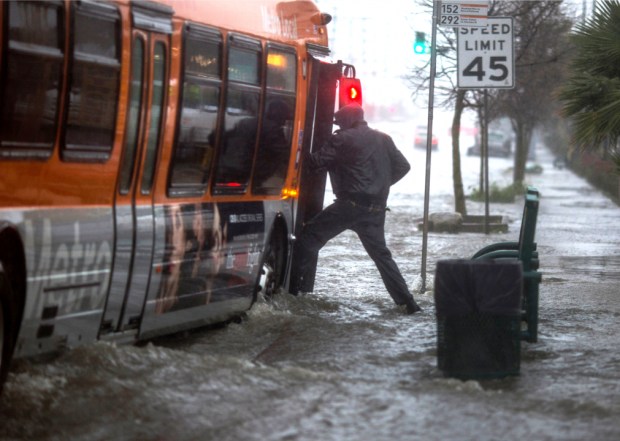
- David McNew // Getty Images1983: Winter flooding in the western states | Average winter temperature: 25.47°F (#1 coldest year; 22.1% below 100-year average). Record one-day snowfall: Benewah County, ID on Jan. 22 (60 in.). Although temperatures weren't cold enough for snow everywhere, a series of severe rainstorms from December to March caused major flooding throughout the western United States, resulting in 50 deaths. Washington, Oregon, California, Arizona, and Nevada were affected. In California, El Niño brought record-setting rainfall to the Sierra Mountains, causing landslides and flooding.
- Rebecca Butala How // Getty Images2018: North American blizzard in January | Average winter temperature: 35.51°F (#24 hottest year; 8.7% above 100-year average). Record one-day snowfall: Otsego County, N.Y. on March 15 (35.2 in.). The Mid-Atlantic once again bore the brunt of a major winter blizzard in January of 2018 when those states, along with parts of New England, were battered by heavy winds and intense snowfall. 300,000 residents lost power as a result. The storm, dubbed a "historic bomb cyclone," caused hundreds of flight cancellations and 22 deaths.
- Evening Standard // Getty Images1965: Albany's worst ice storm on record | Average winter temperature: 35.85°F (#19 hottest year; 9.7% above 100-year average). Record one-day snowfall: Socorro County, N.M. on Feb. 3 (41 in.). The city of Albany, New York, experienced its worst ice storm on record. According to NOAA, on Dec. 4, freezing rain shut down the entire east central part of the Empire State. Power was out in the city and surrounding areas for two weeks, with many residents fleeing to Massachusetts for temporary shelter. Other parts of the region were impacted as well, as the ice spread from Buffalo to Boston.
- Stephen Maturen // Getty Images2020: Christmas week storms during a pandemic | Average winter temperature: 35.74°F (#22 hottest year; 9.4% above 100-year average). Record one-day snowfall: Garfield County, Colo. on Feb. 7 (21.8 in.). The holiday season was already difficult due to the COVID-19 pandemic. The week of Christmas brought several weather events, which conspired to add another level of hardship. Parts of the Plains and upper Midwest saw blizzard conditions, which caused an interstate pileup in South Dakota and the cancellation of more than 400 flights, while the Eastern states saw heavy rains and strong winds.
- BMJ // Shutterstock1980: Massive North Carolina storm | Average winter temperature: 35.19°F (#27 hottest year; 7.7% above 100-year average). Record one-day snowfall: Shasta County, Calif. on Dec. 24 (48 in.). On March 2, 1980, North Carolina was hit by a turbulent winter storm that blew through most of the state, dumping up to 30 inches. Gusts of more than 50 miles per hour were recorded in the eastern part of the state, the largest of which occurred at Cape Hatteras. In addition to killing 13 people and causing nearly $22 million in property damage, the storm cost the poultry industry nearly $10 million.
- Mario Tama // Getty Images2013: February nor'easter brings a Category 3 storm: - Average winter temperature: 31.06°F (#19 coldest year; 5.0% below 100-year average) - Maximum winter temperature: 41.52°F (#22 coldest year; 2.9% below 100-year average) - Minimum winter temperature: 20.61°F (#17 coldest year; 8.8% below 100-year average) - Average precipitation: 2.21 in. (#36 driest year; 6.0% below 100-year average) - Record one-day snowfall: Polk County, OR on March 1 (39.0 in.). The winter of 2013 brought warmer-than-average temperatures; however, a significant nor'easter led to a Category 3 winter storm in February. The blizzard pounded the Southeast, Northeast, and Mid-Atlantic with snow, wind, and ice. A total of 18 people were killed, three of which were attributed to heart attacks while shoveling snow.




Vistra Corp., one of the largest power generators in Texas, said it warned state agencies days before cascading blackouts plunged millions into darkness that internal forecasts showed electricity demand was expected to exceed supply.
Despite the warning, “the coordination and planning by authorities across the broader energy sector were seemingly disproportionate to the severity of the situation,” Vistra said in an emailed statement late Sunday. The company didn’t identify which state entities it contacted. The Electric Reliability Council of Texas is the state’s grid operator, while the Texas Public Utility Commission regulates power generators.
ERCOT said in a statement its “operating notices incentived all available generation to serve customers” and didn’t immediately comment on the Vistra letter. Andrew Barlow, an official with the PUC, said he wasn’t privy to any correspondence between the agency and Vistra and referred the matter to ERCOT.
“Days ahead of this event, Vistra and others forecasted insufficient generation would be available, and we began winter emergency preparations,” the statement said. “The warning signs were there, but the public was unaware of the gravity of the situation, which led to people being unable to respond and make the necessary adjustments for their families.”
At its peak, more than 4 million Texans were without power over several days of unprecedented cold. Dozens have perished in the wake of what has now become known as the largest forced power outage in U.S. history. Even when electricity was restored as temperatures rose, millions remained without safe drinking water after power outages hit treatment plants and water pumps used to pressurize lines.
___
For more articles like this, please visit us at bloomberg.com
(c)2021 Bloomberg L.P.
Distributed by Tribune Content Agency, LLC