


For years, I’ve enjoyed the acrobatic antics of gray squirrels as they chase one another up and down tree trunks and through the high branches in the yard — and even as they use their ingenuity to get to what I had hoped was a booby-trapped bird feeder.
They’ve all been gray squirrels, until the other day when a black squirrel appeared in the yard.
I’ve seen black squirrels in Hawthorn Woods and Highland Park, and they’ve also been spotted in Chicago and at Illinois Beach State Park in Zion. Their numbers seem to be increasing in the region, and the geeky scientist in me wonders why.
Black squirrels are the same species as gray squirrels. Their fur is just dark. For every one black squirrel, there are 10,000 gray squirrels.
A black squirrel has a genetic condition called melanism, which occurs in other species as well. One researcher found the black fur is caused by a pigment gene with a missing piece of DNA.
But here’s where it gets more interesting. Recently, scientists decided that gene was more common in fox squirrels than gray squirrels. Fox squirrels are also found in Illinois. They are larger than gray squirrels and have reddish fur, actually a mix of rust and black that blends in to look red.
Fox squirrels tend to live away from towns compared with gray squirrels, but their lives have been intermingling, according to scientists. Researchers have found that the pigment gene in black gray squirrels likely started in fox squirrels. When fox and gray squirrels interbreed, that gene can be carried over to the gray squirrel.
It’s all so fascinating. I found a scientific paper that explains in detail why that’s the most likely explanation, and with more interbreeding between these two squirrels, there could be more black squirrels.
Melanism occurs in different wild animal species, including caimans, foxes, jaguars and even parrots. These creatures can turn all or partially black. Some folks refer to a melanistic leopard or jaguar as a black panther.
In Great Britain, a type of light-colored moth has been found in an all-black phase. Scientists think the moths evolved to better blend with polluted areas where they live, which contain the smoky colors of soot and gases. The phenomenon has been called, “industrial melanism.”
Melanism is considered the opposite of albinism or leucism. A true albino is completely white and has pink eyes. Leucistic animals don’t have the pink eyes that albino animals do, plus they are often partially white.
You can find true albino squirrels in the town of Olney in southeastern Illinois. There, a group of gray squirrels carries a recessive albino gene that they pass on to their offspring.
Animals with albinism often are easy targets for predators, but in Olney, these white squirrels are protected by law.
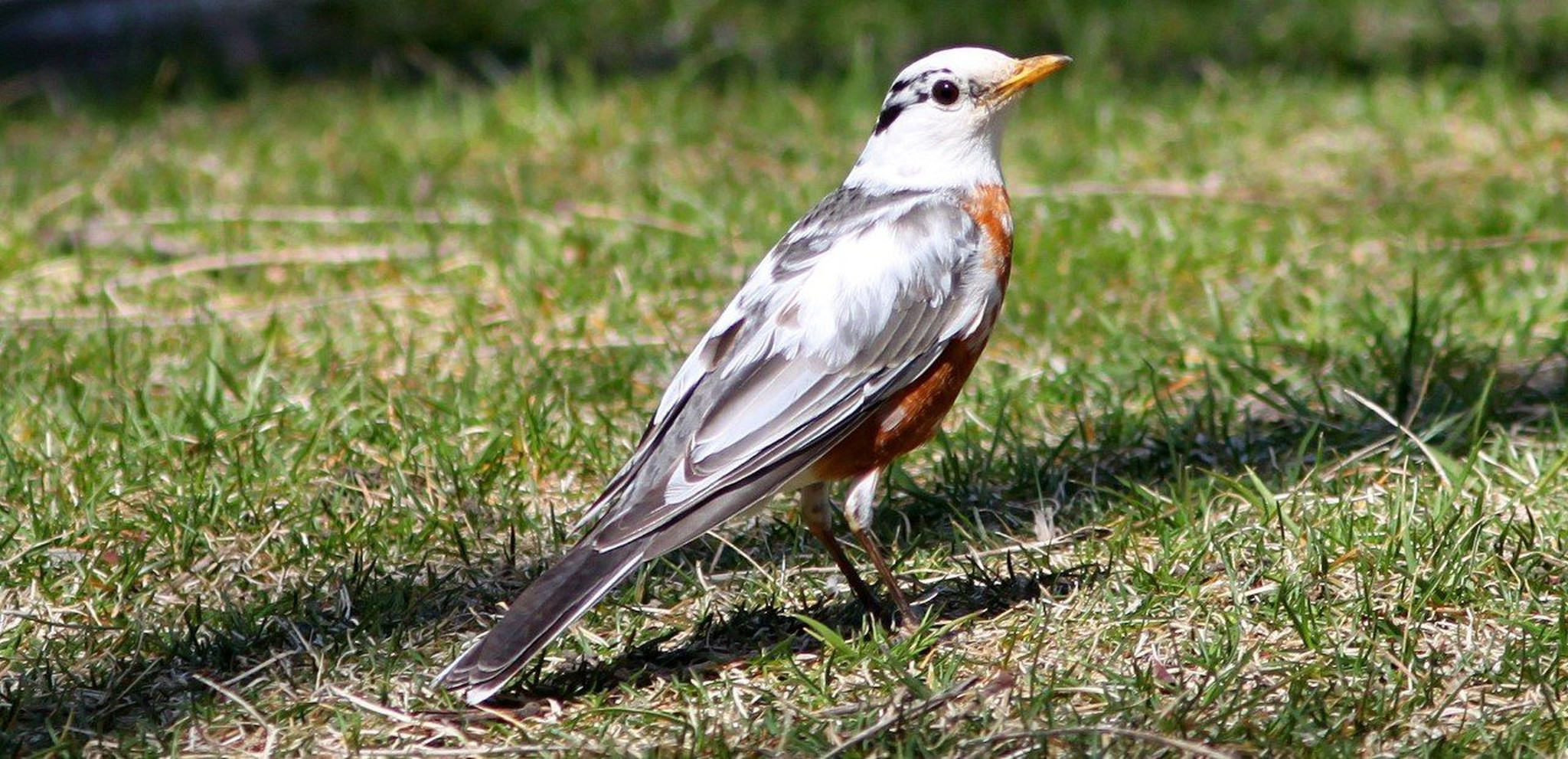
Birds can be leucistic, too. For several years, a partially white robin hopped around the neighborhood, seeking worms in spring and summer. Sometimes these creatures with unusual colors are not accepted by members of their species with “normal” coloration. It pains me to see that happen.
Perhaps the most fascinating sightings of leucistic creatures are those that involve large mammals. White moose have been found in Sweden and other countries, such as Canada. Hunters typically avoid shooting leucistic or albinistic animals, but unfortunately a white moose was shot and killed in Canada several years ago.
I like to think of these special black and white versions of animals we see in the wild as sacred. Native Americans call a white moose, “the spirit moose,” and a white deer, “the spirit deer.”
They don’t believe in harming other animals that wear white coats. They believe their unique coloration means they are watching over us. Perhaps the black squirrel in my yard is a reminder to respect every creature no matter its color.
Sheryl DeVore has worked as a full-time and freelance reporter, editor and photographer for the Chicago Tribune and its subsidiaries. She’s the author of several books on nature and the environment. Send story ideas and thoughts to sheryldevorewriter@gmail.com.