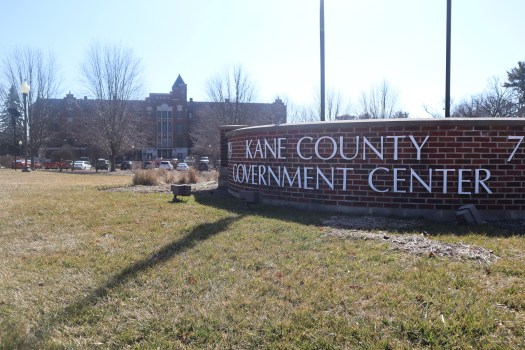

Budget talks continued at the Kane County Board meeting on Tuesday, with several measures meant to help close the county’s impending multimillion-dollar shortfall passed, and an item setting recommended budget amounts to departments and offices tabled for another day.
Among the items passed by the board on Tuesday were a reallocation of the county’s Regional Transportation Authority sales tax funds from transportation to public safety, and an approval of using the increase in the Consumer Price Index as the level for a possible property tax levy hike to be voted on at a later date.
The county board held off on voting, however, on a measure that would recommend reduced budget numbers to county departments and elected offices, as county officials discussed an alternate proposal and expressed concern about potential legal issues.
Kane County has been facing a budget shortfall, which it has been dealing with since 2023 by dipping into its cash reserves. Last year the county used roughly $27 million in reserve funds to pay for expenses in its general fund, according to past reporting.
One possible solution to the county’s budget woes was a referendum question that would have increased the county’s sales tax by 0.75% to pay for public safety expenses, a measure projected to generate more than $50 million in revenue each year. But it was overwhelmingly shot down by voters in the April 1 election.
Since the failure of the referendum question in April, the Kane County Board has been discussing how it will close a budget gap for the next fiscal year that County Board Chair Corinne Pierog has previously estimated as being in the range of $25 million to $29 million. The county is on pace to dip below its required 90-day reserves in 2027 if revenue and spending remain level, according to past reporting.
Numerous revenue-generating and cost-cutting suggestions have been put forward by Kane County Board members, and several were discussed and voted on Tuesday.
One matter the board is considering is a possible hike in the property tax levy for the upcoming year. The proposed percentage of 2.9% for the potential tax levy hike is based on the increase in the Consumer Price Index, or CPI, and would generate around $2 million in additional revenue for the county. The maximum percentage the levy can be increased is either the CPI or 5%, whichever is lower.
Last year was the first year since 2013 that the county board increased the general fund property tax levy except to account for new construction, according to past reporting.
The measure discussed on Tuesday was not an approval of the CPI increase for the tax levy itself, Pierog noted, but rather an approval to use that percentage as the proposed increase as the county prepares its budget. Final approval of the levy will likely be brought forward for a vote in late October or November, she said. Nevertheless, the county board’s discussion centered around whether it wanted to see a CPI increase in the tax levy for the upcoming year to help close the budget gap.
Board member Mohammad Iqbal said on Tuesday that he opposed a property tax increase, suggesting instead the use of special reserve funds to help balance the budget for the year.
Board member Deborah Allan said it’s necessary to approve a tax levy hike based on the CPI to provide fair wages to employees and address the rising costs of contracts and services.
“These prices go up,”Allan said at Tuesday’s meeting. “The CPI is a modest tool given to governments to try and keep up with the expenses we cannot avoid.”
Board member Rick Williams said the county board should get the approval of voters before approving a tax increase, and board member David Young nodded to the recent failure of the sales tax referendum question as proof that residents don’t want to see their taxes go up.
The year-to-year increases from rising costs for the county would amount to more than $2 million, board member Bill Lenert said. Voting against the CPI measure, he noted another possible revenue source.
“I think what it does is it kills any opportunity to revisit the sales tax referendum, which would … if the public voted for it, be the solution that we need long-term,” Lenert said.
Board member Michelle Gumz referred to recent energy cost increases, and said there will be similar increases at the county level in the future as well. Not anticipating them is “not being responsible,” she said, but acknowledged that an additional $2 million alone is not enough to solve the budget problem in the long run.
Tuesday’s item setting 2.9% as the proposed levy increase for the county to use in its budgeting process was ultimately approved on Tuesday with Iqbal, Lenert, Williams, Young and board members Myrna Molina, Bill Roth, Jarett Sanchez and Clifford Surges voting against it.
On Tuesday, the county board also passed a measure it deferred voting on last month that would reallocate some of its RTA sales tax funds from transportation to public safety costs in the county.
The RTA sales tax helps fund public transportation in Cook and the collar counties. The RTA collects a 0.75% tax in Kane and the other collar counties, one-third of which is distributed back to each county for it to spend on transportation and public safety, according to past reporting.
For example, in fiscal year 2024, Kane County received just over $26 million in RTA sales tax funding. Almost $20 million of that went toward transportation and the rest to public safety and judicial safety funds, the county’s Finance Director Kathleen Hopkinson has said.
The measure passed Tuesday will increase the amount of that sales tax revenue to the general fund by 25%, and decrease its allocations to the transportation sales tax fund by 25%. That means half of the county’s RTA sales tax revenue will go toward public safety and judicial costs, while the other half will still go toward transportation costs and capital projects.
This reallocation of the RTA sales tax money is only for one year, meaning any future reallocations would be decided on at a later date.
The county board is also considering cost-cutting measures as it works to close its budget gap.
One possibility that gained traction with the board was a recommendation to all of the county’s departments and offices to reduce their proposed budgets to what was spent in 2024.
This isn’t the first time the county board has asked county offices and departments to reduce their proposed budgets — last year, for example, the board asked them to cut $5 million collectively. This year, board members are asking them to cut roughly $16 million in total.
The suggestion came out of a working group created to address the county’s budget shortfall that was made up of board members Lenert and Vern Tepe, Hopkinson, Executive Director of Information Technologies and Buildings Management Roger Fahnestock and Executive Director of Human Resources Jamie Lobrillo. That group is no longer intact, Kane County Assistant State’s Attorney John Frank said at a Kane County Board Executive Committee meeting last week, citing that the group having advocated for certain policies makes it more of an advisory committee, rather than an informal “working group.”
Using 2024 as a guide would result in a total general fund budget of about $124 million, as compared to $138.9 million in 2025, according to past reporting. The majority of the proposed cuts — a little under $14 million — would be coming from the elected offices under that proposal, putting their collective budget at around $85 million for the year.
At Tuesday’s county board meeting, board member Leslie Juby suggested an alternative way to ask the departments and offices to cut their budgets: an across-the-board reduction from the 2025 adopted budgets of just under 8%, and the removal of $6 million from a county capital fund to fill the rest of the budget gap. She explained this would allow the departments and offices to reduce their budgets by a set percent in whatever way they choose.
Pierog noted that the previously suggested cost-cutting proposal was already under discussion.
“Logistically, we’d have to start from scratch once again,” Pierog said.
This conversation is happening as the county departments and offices are beginning to present their budgets to their respective committees. Several departments and elected offices, including the Kane County Sheriff’s and Kane County State’s Attorney’s offices, are expected to present their proposed budgets for next year at the Kane County Board Judicial and Public Safety Committee meeting on Thursday, for example.
At Tuesday’s meeting, Frank recommended that the board not make a decision on the measure to allow for the elected officials to first present the budgets they want.
“If you are already, as a county board, predetermining what their budget limit is going to be without even hearing them, it runs the risk of a challenge,” Frank said.
This is another issue that has come up before in the county. Last year, State’s Attorney Jamie Mosser argued that it’s against state law for the county board to restrict elected officials’ control over their budget proposals, even though the board still makes the final decision on what’s budgeted to each office and department.
Following some discussion, Juby’s proposed amendment was removed, and the county board voted to send the matter back to the Finance Committee to ultimately vote on it at a later date — to consider another suggestion for the board, and to avoid any potential timing issues with the presentations of the elected offices’ budgets.
mmorrow@chicagotribune.com