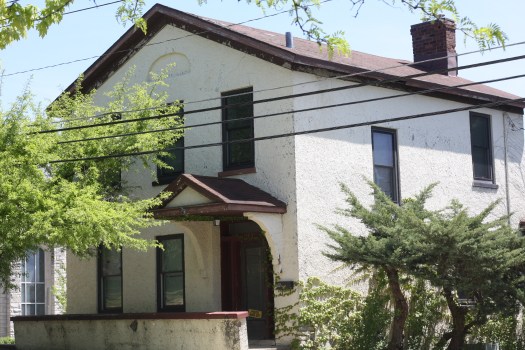
Although the previous Skokie Village Board may have wanted to impose some basic limitations on how Airbnb-like short-term rentals operate in the village, the current Village Board appears to favor more stringent restrictions, possibly even banning them in residential neighborhoods.
At the Sept. 2 Board of Trustees meeting, village staff presented to the Board for a second time what regulations and rules the village could impose on short-term rentals, or residential properties that rent out for less than 30 days. The presentation was meant to give staff direction on what the Board of Trustees is interested in implementing. The Board did not vote on any measures.
Skokie Mayor Ann Tennes did not mince words at the end of the staff’s presentation. “I don’t believe that we should allow any short-term rentals in residential zoning districts,” she said.
“I think, when people purchase a home in a residential neighborhood, there is an expectation that they are buying just that — a home in a residential neighborhood,” Tennes continued. “(Homeowners) should not have a business next to them where the property is rented out.”
The only exception to that, Tennes mentioned, is if someone were to rent a short-term rental for a minimum of 30 days. She said other municipalities have similar rules, some even having a 90-day minimum.
Currently, there are about 15 to 30 short term rentals in Skokie, according to Community Development Director Johanna Nyden. The village began considering implementing a system of guidelines and regulations before the current Village Board was sworn in and presented information to the former Village Board in 2024.
Short-term rentals are not distinguished from other residential rental property in Skokie, according to Nyden. Short-term rentals and regularly leased homes are subject to the same regulations and rules, with the only exception that registered short-term rentals pay a hotel-motel tax to the village.
The proposed guidelines that staff drew up included regulations on how many short-term rentals can locate in a block, what the expectations are for a curfew on noise, registration fees to the village and penalties for short-term rental hosts not following the regulations.
As presented, the proposed guidelines create a 48-hour minimum stay, similar to Chicago, a limit of one short-term rental per block, midnight noise restrictions for Friday and Saturday and 10 p.m. for other days.
Most trustees on the dais were in favor of some sort of regulation, without directly addressing whether they would support or reject a short-term rental ban in residential areas.
“I think when people choose to buy property, their property, they should be allowed to do things within reason with their property,” Trustee Keith Robinson said in favor short-term rentals. “I was just in an Airbnb in my travels over the weekend, and I appreciated that and the time that I spent with my whole family… I want other folks to be able to have that ability,” he said.
Trustee Gail Schechter expressed concern about how short-term rentals could affect Skokie’s affordable housing, in cases where an otherwise affordable home could be taken off the market if it were turned into a short-term rental. She spoke in favor of local ownership, and regulating short-term rentals, instead of banning of them. She was also not in favor of multi-family housing units being allowed to be short-term rentals.
Schechter said she could see some exceptions to that, on an almost case-by-case basis. “I could also see an owner-occupied building (with four housing units)… perhaps allowing a vacation rental,” she said.
Trustee Lissa Levy pointed out that there aren’t too many alternatives for short-term housing in Skokie, with the downtown Skokie hotel still half built, considerations of adding a hotel to Westfield’s redevelopment of the Old Orchard mall and the DoubleTree up for sale. “I think there’s room in the mix,” she said.
Trustee Alison Pure Slovin, who previously supported short-term rentals because they could allow people to walk from rental property to synagogues, was absent from the meeting.
“I’d like to just reiterate, from my perspective… but I think a residential district is a residential district,” Tennes said after hearing comments from her colleagues on the dais. “I think… they’re businesses…. in addition to the Double Tree that is up for sale, we have the Hampton Inn, we have the Holiday Inn… there are other options for folks to stay.”
The village’s subcommittee of the Plan Commission is currently considering allowing additional dwelling units, sometimes called granny flats, to be built in Skokie. Those additional homes have traditionally been built as an addition to a property’s basement or attic or converted from a garage in the Chicago area.
Levy said if the village were to allow ADU’s, she would not be in favor of allowing them to be used as short-term rentals. “If you rehab your garage, that’s addressing our affordable housing crisis right now in Skokie, and so I would say, ADUs would be off the table as far as I’m concerned for a short term rental ordinance.”
Schechter seemed to nod her head in approval of Levy’s comment, with Tennes responding, “Thank you, good point.”
At the end of the meeting, several neighbors to short-term rentals thanked Tennes for her comments, agreeing with her sentiments.
Xavier Diokno, a resident of Skokie for two years, said he moved to Skokie to raise his family in a family-friendly neighborhood. He lives next door to an Airbnb, he said.
“Over the past year, I have not seen my neighbor. Rather, I have seen a carousel of strangers walking into the house next door,” Diokno said. “I have a 5-year-old and a 3-year-old boy… having them ride their bicycles in front and having new strange vehicles coming in, parking in front of our house and just side-eyeing these people… I don’t know them, I don’t know where they’re from… so it is very unsettling, to say the least.”
“Madame Mayor, the things that you have stated, (the) quality of life, residential (neighborhoods), those are the values and reasons why I moved my family to Skokie… we love Skokie for what it is… but as you said earlier, we didn’t intend to move next to a business,” he said.
Skokie resident Bob Kusel agreed with both Tennes and Diokno. He too lives on a block with an Airbnb, he said.
“I heard one of the trustees mention that when you buy a home you can do with it as you please, essentially,” Kusel said. “The investor who bought this property wasn’t buying a home, he was buying a business. Just as we wouldn’t let or shouldn’t let a 7/11 operate in a residential neighborhood, or a gas station or (allow someone to) put up an oil well, nor should we allow an investor to operate a business.”
Skokie’s Communications and Community Engagement Director Patrick Deignan told Pioneer Press that the village’s staff is working on the next steps for the proposed ordinance, and that the Village Board will readdress the issue in the next 30 days.