

Effective communication is baked into one of Waukegan Community Unit School District 60 Superintendent Theresa Plascencia’s four goals for the current school year, and she said its proper implementation is a major challenge.
Policies and directives go through a lot of layers from the time Plascencia initially articulates an idea or policy. She said she does everything she can to see that their meaning remains unchanged. Consistency and support are essential, and she strives to make sure that her charge is properly understood.
Among other elements, one of the four goals requires Plascencia to engage students, staff, families and community members, “in a coordinated effort to strengthen perceptions of safety, climate and belonging,” according to the published goal. Effective communication is essential.
“Sometimes the message can start off very strong, but by the time it gets into the classroom, it morphs into something different or not as strong a message as previously thought,” Plascencia said. “It keeps me up at night.”
Plascencia gave the District 60 Board of Education an update on the progress of her efforts to engage the school community on Jan. 27 at the Education Service Center in Waukegan, letting board members know her progress.
Nick Alatzakis, the district’s communications director who assisted Plascencia with the presentation, said there were recurring themes in some of the surveys of a lack of consistent communication. Plascencia said improvement is needed.
“There’s got to be different methods in communicating with (everyone) to ensure they are getting the message in a timely manner, but that message is staying consistent throughout the process, if that makes sense,” Plascencia said.
Communication is an important part of the goal — Goal 4 — of engaging the school community to learn more about what students, staff and families understand, both through surveys and listening tours at all schools and other buildings.
While there is a general feeling among teachers and students that the school buildings are safe, students have some concerns about some parts of the schools, and proved Plascencia’s feelings about communication reaching all levels have merit.
“Students said when safety concerns are reported, they believe adults listen and respond, but they sometimes feel the response is inconsistent or delayed,” Plascencia said. “They don’t know what the follow-up looks like because no one communicates back to the students.”
Though students generally feel safe in some parts of the building, Plascencia said they have concerns about common areas like hallways and bathrooms. Administrators are working with the safety department to improve the situation.
Looking at the surveys, Plascencia said teachers are worried about inconsistency in discipline meted out. Two teachers may use a milder form of discipline for the same infraction than another instructor. Communication can help make things more uniform.
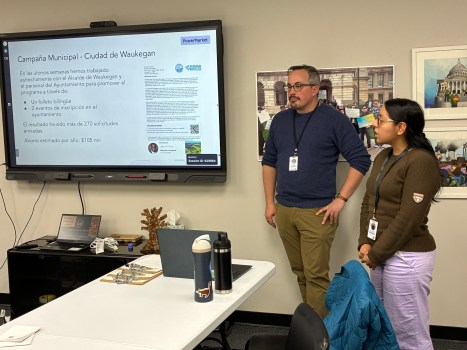
With the listening tour getting started, Alatzakis said approximately 60 stops are planned over the next few months. There will be discussions about themes raised in the surveys, as well as open-ended talks, so that different groups involved can talk freely.
Plascencia said the recent listening stop with students at Jack Benny Middle School went well. She said small groups will enable the youngsters to be more open. There will be multiple stops at the schools as well as places for parents to talk to administrators.
“It was phenomenal how they expressed themselves,” Plascencia said of the Jack Benny stop. “They were just so spot-on in how they articulated what they need, how they want to be seen, and actually, their expectations.”
All four goals set March as a target date for achievement. Goal 1 requires 31% of students to be actively engaged in tutoring, extracurricular activities such as athletics or clubs, and/or receiving services through social-emotional learning partners.
Goal 2 mandates that all schools will use the district’s new literacy plan and core curriculum for daily classroom learning. Goal 3 requires a financial plan that takes into account all “ongoing federal executive orders impacting public education,” as well as a budget reflecting the strategic plan.