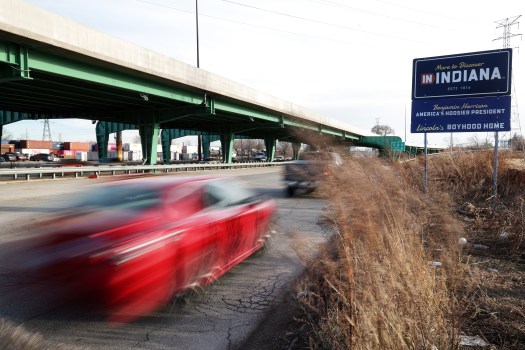

The Arlington Cowboys. East Rutherford Giants and Jets. Inglewood Rams and Chargers. And maybe the Hammond Bears.
Ten NFL teams don’t play in their namesake cities but in their suburbs. If the Chicago Bears go through with one of their proposals for a new stadium — Illinois Gov. JB Pritzker acknowledged Friday that the team’s next home is unlikely to rise within Chicago’s city limits — they could wind up in northwest suburban Arlington Heights or just across the Indiana border in Hammond.
But like other NFL teams, they have trademarked their name and would retain their city identity — along with their Chicago “C” and Bears head logos.
What to know about the Chicago Bears’ possible move from Soldier Field
Despite former Mayor Richard J. Daley’s threat in 1975 to sue the Bears if they left and tried to keep “Chicago” in their name, the team has the right to do so.
And in moving, the Bears would be taking part in a trend of big-city teams moving out of town, often getting big bucks from taxpayers to do so.
Indiana lawmakers advanced a measure Thursday to build a stadium for the Bears in Hammond. The proposal calls for a 1% food and beverage tax in Lake and Porter counties, a 5% innkeepers tax in Lake County and a 12% admissions tax to help build a stadium. The team would rent the stadium for at least 35 years but would operate the facility and get the revenue from any events there and could opt to buy the place for $1 at the end of the lease.
The plan also calls for a Professional Sports Development Area (PSDA) tax district to help pay the bonds for the stadium.
Geoffrey Propheter, associate professor at the University of Colorado in Denver who has studied stadium subsidies, warned that politicians often understate the costs and overstate the benefits of such projects.
“Indiana is preparing to throw a lot of money at this,” he told the Tribune, “and the plan to finance state debt in part with local taxes is going to result in a lot of money diverted from local general funds because of the state’s PSDA legislation.”
An earlier version of the measure was approved by the Senate and goes to the House this week, with action expected before the scheduled end of the legislative session Thursday.

The Bears originally wanted to build their own $2 billion stadium in northwest suburban Arlington Heights. The team spent $197 million to buy the former Arlington International Racecourse, but officials said they need state lawmakers to let them negotiate long-term property taxes with local governments, which the state has not done.
The move outside cities, analysts say, is driven largely by the desire for more money from new stadium revenues on larger, cheaper tracts of land, often closer to many season ticket holders, where teams can build surrounding entertainment districts with restaurants, hotels, retail and housing.
After recent massive tax subsidies were awarded for new stadiums for the Buffalo Bills and Tennessee Titans, Economics professor J.C. Bradbury of Kennesaw State University called such subsidies “welfare for the rich” that always cost more than they return.
“Economic studies consistently find little to no tangible impacts of sports teams and facilities on local economies, and hundreds of millions to billions of taxpayer dollars provided far exceeds any observed economic benefits,” he wrote. “The consistent empirical evidence explains why economists overwhelmingly agree that sports stadiums are bad public investments.”
Yet taxpayer money keeps rolling in to new stadiums.
Since 1970, state and local governments have contributed $35 billion, adjusted for inflation, to constructing professional sports venues, Bradbury reported. Since 2010, the average stadium has received $500 million in public funds.
The trend toward public subsidies only continues to grow. The Washington Commanders plan to move from Maryland back to Washington, D.C., to benefit from a new nearly $4 billion covered-stadium project, with the district kicking in roughly $1.1 billion.
Topping that, the Kansas City Chiefs plan to move across state lines from Missouri to a new $3 billion stadium in Kansas, with the state committing taxpayers to spend up to $1.8 billion — which Bradbury said is the largest stadium subsidy ever.