
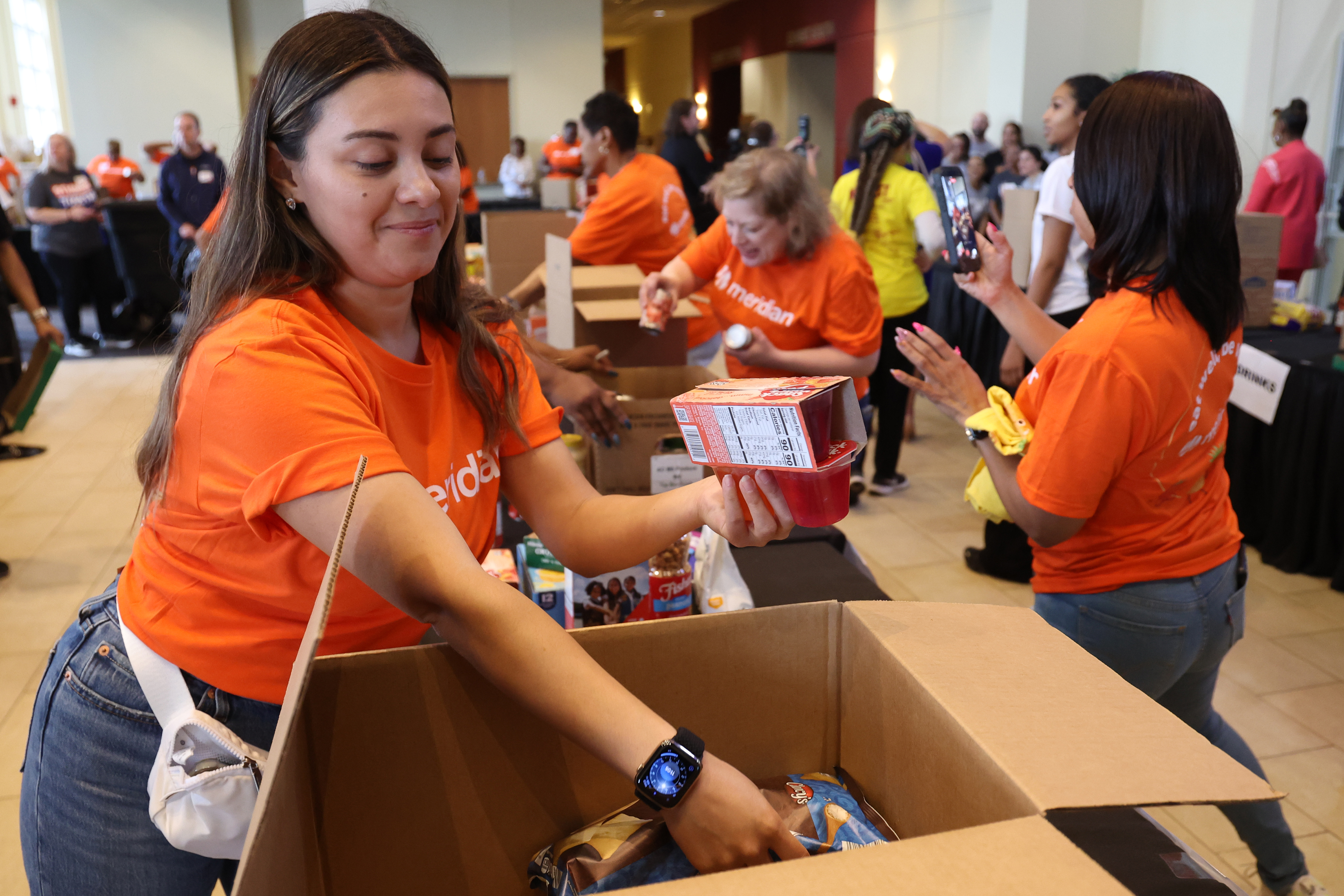

A United Way of Metro Chicago event that began as a small mall food drive raised more than 65,000 pounds of nonperishable food and household items for 10 pantries across the south and southwest suburbs Wednesday.
United Way’s April food day included donation collection, awards and a luncheon with keynote speaker Bobby Simmons, an Olympic and NBA basketball player from the south suburbs.
More than 150 volunteers sorted donations of vegetables, soup, cake mix and other staple items to be delivered to the pantries, where advocates say there is critical need.
“I don’t want to lose that, how important it is in times of stress for people to band together and find ways to support each other, whether it be through donating food or donating money or donating your time,” said Kimberlee Guenther, United Way Chicago’s chief strategy and development officer.
“It highlights to me the shared humanity,” she said.
Guenther, who has worked at United Way for 13 years, said the nonprofit often sees the highest number of people calling for food assistance from the south and southwest suburbs.
She said that need is exaggerated by rising costs in food, housing and gas, along with changes to the Supplemental Nutrition Assistance Program that added work requirements for recipients during a tough job market.
Guenther said about 250,000 households in Illinois are in danger of losing benefits, which provides a majority of meals for these households, according to United Way data.

This increased need can be shown by the 95% increase in calls for food assistance in March 2026 compared to March 2025, she said.
“These rising costs stretches people’s already tight budgets to the breaking points,” Guenther said. “We also know that looking ahead there’s real peril for people who previously have had some additional support to be able to survive.”
“It feels like a tragedy and this is hitting at the same time when jobs are not abundant at any level,” she said.
United Way receives assistance calls through the 211 Metro Chicago call center, a hotline established in 2023 to help Chicagoans reach basic needs.
Nearly 400 people called the hotline in Ford Heights through April 12 this year, by far the most calls in the area, according to United Way 211 data.

More than 300 people called the hotline in Harvey and over 200 people in Calumet City during the same time period, according to the data. More than 100 people called the hotline in nearby areas such as Blue Island, Dolton, Matteson, Park Forest, Lansing and South Holland.
Guenther said United Way has seen a consistent uptick in people calling for assistance in the past three years. These call numbers spiked, increasing by 149%, when the SNAP benefits were temporarily lost in October and November 2025, she said.
This situation prompted United Way to think about more ways to use real-time data to get immediate resources to people. In October, the nonprofit distributed $250,000 to 24 organizations providing food assistance across metro Chicago, she said.
“That was for us the start of how do we use this real-time data, this rare real-time data combined with what we’re hearing from people that are working directly with community residents to respond and get resources immediately where they’re needed,” she said.
The pantries receiving Wednesday’s donations are Blue Cap in Blue Island, Cornerstone Community Development Corporation, Free-N-Deed in Dolton, Governor State University, Orland Township, Respond Now in Chicago Heights, Restoration Ministries in Harvey, Rich Township, Thornton Township and Together We Cope in Tinley Park.

Guenther said it’s important to continue addressing the need for food assistance beyond a one-day event, because that need persists throughout the year.
“The more we continue to draw attention to the experience of people in our region that are having to make these tough decisions, the closer or the faster we can move to solving them,” she said.
Kris Adamik, United Way Chicago’s communications director, said the nonprofit will continue to take monetary donations on its website, LIVEUNITEDchicago.org.
“The need is great, and even when residents and partners are stretched thin, they still show up for our neighbors, donating tens of thousands of pounds of food to stock pantry shelves and help individuals and families meet their immediate basic needs,” Adamik said.
awright@chicagotribune.com