
As we approach the end of yet another National Child Abuse Prevention Month, it’s worth taking stock of what, if anything, has been accomplished for children.
We’ve certainly changed how we talk about child abuse and neglect since 1983, when the designation was first announced. Advocacy groups such as Prevent Child Abuse America, including its Illinois chapter, have largely stopped talking about the need to protect children when they are in danger, focusing instead on “centering families through every turn.”
Philanthropy and advocacy have also changed. Groups that invested in improvements to our public child protection systems now emphasize “moving upstream” and “community-based supports.” States fund voluntary family resource centers that offer diapers and gift cards, while leaving child protection agencies understaffed and undertrained.
But child maltreatment has not changed. It remains the outcome of complex, intergenerational problems such as substance use disorders, mental illness, intellectual disabilities and domestic violence. Many maltreating parents struggle with chronic conditions that start well before their first child and will impede their capacity to provide safe and appropriate care indefinitely.
And preventable deaths of children left in homes known to be unsafe become more likely as states shift their priorities.
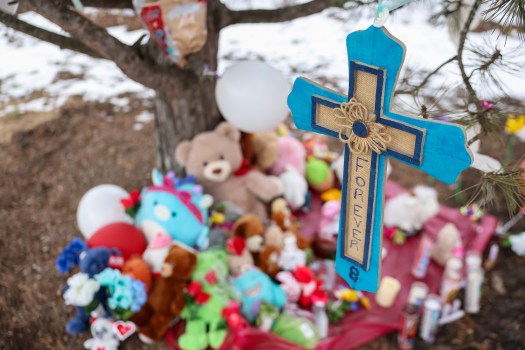
The recent killing of 8-year-old Markell Pierce illustrates our failure to act: The Illinois Department of Child and Family Services (DCFS) received at least seven calls about him in the three years before he died of malnourishment and long-term abuse. Markell was never going to be saved by the types of prevention services that are in vogue today: He was not eating trash because his family couldn’t afford food, and he wasn’t beaten because of a momentary lapse of judgment of a struggling parent.
For many children who experience maltreatment, the window for upstream prevention closed long before their conception. In 2024, 2-year-old Trinity Balen-Weiher died of an overdose from multiple drugs, in a home filled with drugs. The walls were stained with blood and human feces. Why was she there? DCFS knew she was born with drugs in her system. Even when the agency eventually removed Trinity and her older siblings from their parents’ care after the kids suffered additional harm, DCFS sent them back.
One key selling point of prevention is downstream savings — in both reduced human suffering and economic costs. With some public health problems, the case is compelling and backed by strong evidence. Take vaccination: A low-cost intervention such as the polio vaccine has all but eliminated a disease that once paralyzed thousands of children each year, sparing both lifelong human suffering and the enormous costs of long-term care.
Advocates for increased prevention spending frame the promise of child maltreatment prevention similarly. Even DCFS argues that “just as immunizations shield children … from influenza and other disease,” child abuse and neglect can be prevented by promoting “protective factors” such as “connecting families to community resources.” But neither participating in a home visiting program nor expanding economic assistance programs — two of the most commonly advocated prevention strategies — are shown to meaningfully reduce abuse and neglect.
The logic breaks down further. So-called prevention frameworks purport to reach families before challenges become crises. In reality, families are typically offloaded to community pathways after a maltreatment report. These pathways offer the same services typically provided to families in an open child-protection case — just with no safety assessment or monitoring. Providing the same interventions to the same families with less oversight is unlikely to reduce costs or suffering.
Worse, the pitch for community prevention too often involves demonizing interventions delivered by our child protection systems, especially foster care. The American Civil Liberties Union of Illinois refers to a so-called child welfare system, claiming that foster care “often results in long-term harm spanning years, and even generations.” It positions the “harms and trauma” to youths as stemming from DCFS involvement, not abuse and neglect. Its solution? Diverting DCFS funding to more lawyers and “prevention” services.
When we oversell the impact of prevention services and deny that protective interventions — including foster care — are lifesaving for children, agencies will keep underreacting to danger. Even requiring a mother of a substance-exposed newborn to enroll in treatment before being discharged with the child is deemed stigmatizing, punitive and counterproductive. When parents decline services such as drug treatment that might actually prevent maltreatment — which they routinely do — it is simply presumed that the parent knows what is best for themselves. Markell’s parents reportedly declined services on multiple occasions. Trinity — as a drug-exposed newborn — should have been offered services as required by state and federal law, but no evidence of services provided has been released.
The best way to keep children safe — and reduce investigations — is not to go upstream. Rather, we must train and support our child protection agencies to protect endangered children the first time a concerned relative, teacher or other community member calls the hotline. Due to weak investigations and tepid responses to risk, children are often reported multiple times before their victimization is formally proved or acted upon. Illinois substantiates only 17% of child protective services reports, but nearly 50% of reported children have a substantiated case at some point.
The risks faced by Trinity, Markell and other children were not unknown or unforeseeable. They were simply ignored. We might not have been able to prevent their first instance of abuse, but there was no excuse for letting it happen again.
Sarah Font is a professor of social work in the Brown School at Washington University in St. Louis. Emily Putnam-Hornstein is the John A. Tate Distinguished Professor for Children in Need at the School of Social Work at UNC Chapel Hill.
Submit a letter, of no more than 400 words, to the editor here or email letters@chicagotribune.com.