As Mayor Brandon Johnson mulls her successor, Inspector General Deborah Witzburg has returned to one of her favorite phrases.
Chicago, she told the Tribune during an interview as part of a media tour before she leaves office, “operates at a deficit of legitimacy.”
The leader of this famously corrupt city’s most visible watchdog agency has long described her work as “paying down” that gap in trust. In four years at the helm of the Office of Inspector General, she has certainly presented an invoice.
Her departure gives Johnson a new challenge: Tasked with selecting her successor, the mayor must convince aldermen the person he nominates to follow Witzburg will be a strong independent investigator who will hold him and his administration to account.
The outgoing inspector general — a witty and outspoken leader well-liked in the City Council, disfavored by the mayor and unshy of fight — says she chose to not seek another term, a decision she announced in July after previously making a forceful push to keep the job.
“There’s a huge amount of work left to do, and I’m really proud of the progress we’ve made,” Witzburg said earlier this week. “That is the right time to leave a job like this. I will leave this office more effective and more independent than I found it.”
The confident note she struck ignores the reality complicating her departure, that she probably was not going to get the choice to say.
Witzburg faced bad odds of winning reappointment from Johnson, a frequent target of her politically damaging investigations and opponent in legislative pushes. The mayor recently poked again at their many contentious run-ins by calling one of her most-publicized investigations into his administration “reprehensible.”
Whoever he picks will face close scrutiny from the council. The mayor is currently vetting candidates and has until May 12 to make a final decision, Johnson press secretary Allison Novelo said in a Wednesday statement.
“The administration is moving through the process as expected and will share an update once that process is complete,” Novelo said.
In an exit interview with the Tribune this week, Witzburg touted how she led and reformed the office. And she again criticized Johnson’s responses to her work, arguing they show how his administration seeks to duck accountability.
“When we see a pattern of decisions, we are entitled and may be obligated to see them as just that, as a pattern,” Witzburg said. “When that pattern walks and talks like hostility to oversight, sometimes it’s just hostility to oversight.”
Witzburg referred, explicitly and indirectly, to several high-profile dust-ups between her office and Johnson’s.
She cited the administration’s repeated decision to not comply with requests for records to which she argues she was entitled. That dispute flared most recently when the city’s Law Department declined to share hiring records while arguing an exemption was merited because of the new employee’s “high profile” status, a complaint detailed in a March report her office published.

She also pointed to how Johnson initially ignored her calls for city government to root out extremism within the Chicago Police Department, a move she said “really surprised” her given its alignment with Johnson’s political views.
She did not bring up Johnson’s initial pushback against an ethics ordinance she proposed in the City Council. An altered version of the measure passed in July, after the first go was stoutly rejected as “a calculated endeavor to expand the Inspector General’s authority beyond its prescribed limits” by Johnson’s top attorney, Mary Richardson-Lowry.
The compromise that passed restricted when Law Department attorneys can attend Office of Inspector General interviews and laid out when city attorneys can claim attorney-client privilege to avoid sharing records sought by the inspector general.
Johnson and Witzburg continue to disagree on their most-heated quarrel: the debate over the mayor’s gift room.
Witzburg last January published a report detailing Johnson’s gift-receiving practices, blasting the mayor for blocking her investigators from the room where they were stored.
The report made note of apparently high-priced items: a Gucci tote bag, a Montblanc pen, designer cuff links, Carrucci shoes. The publication — and, in particular, the careful description of the valuables — sparked dozens of media reports.
Johnson the same day slammed it as a “mischaracterization.”
“There is a process that everybody has to go through. Nobody is above the law,” he said of Witzburg’s claim that her investigators were unduly blocked. “There is a clear process.”

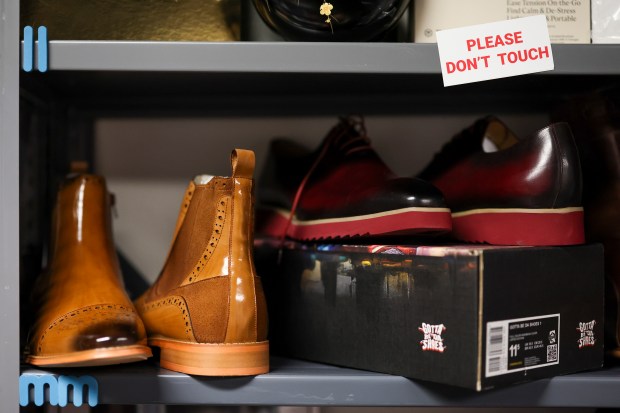
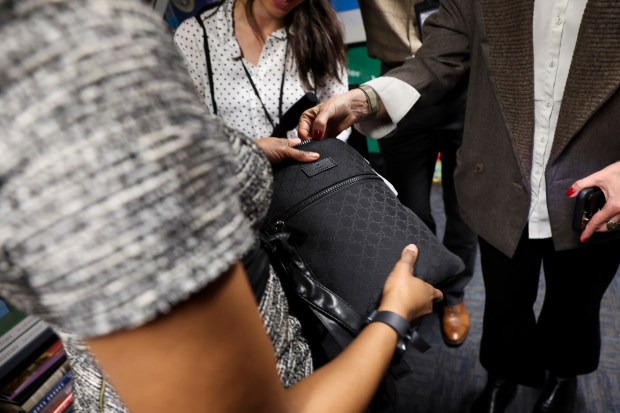
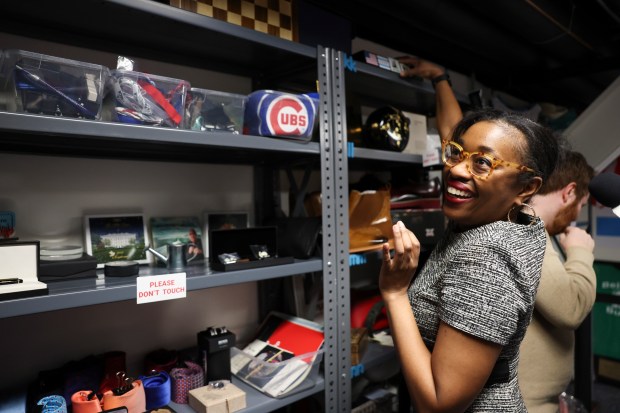
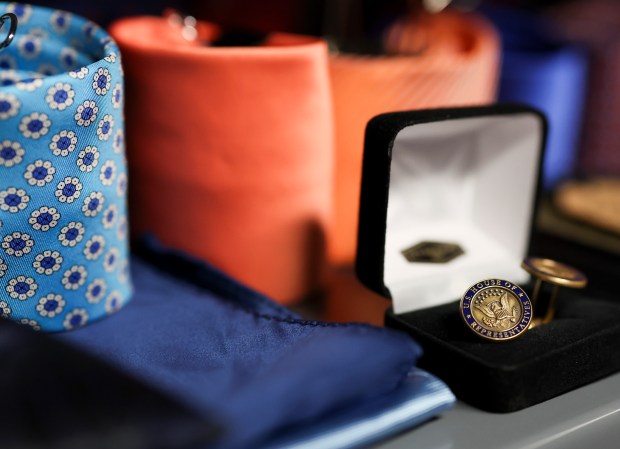
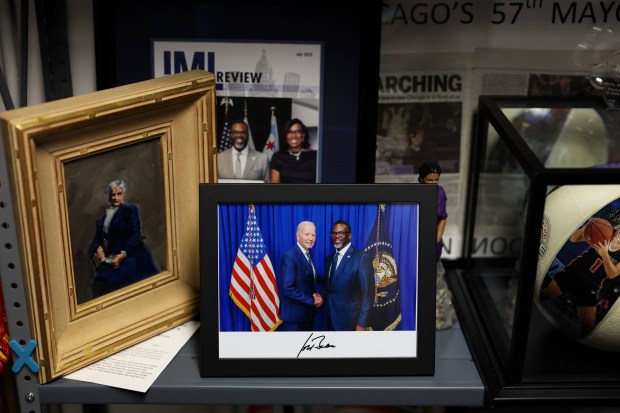
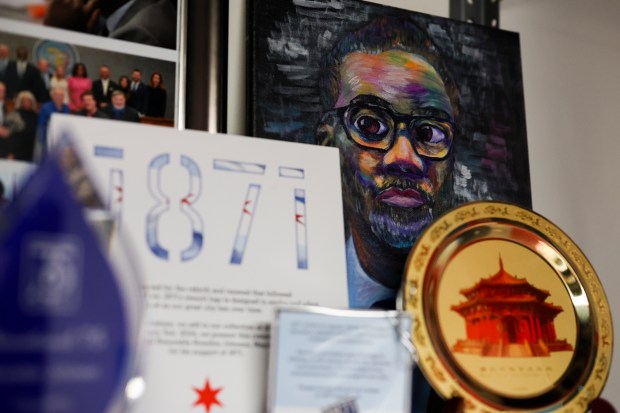


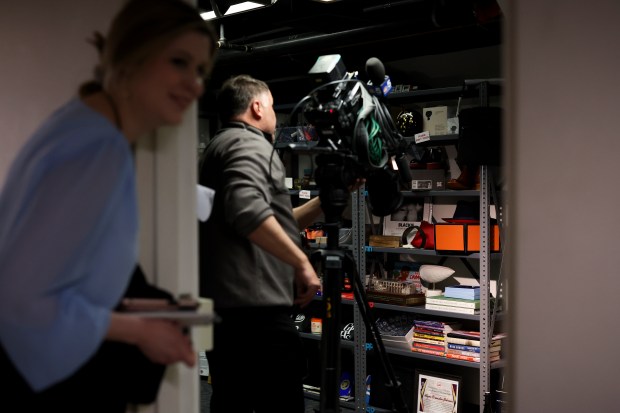
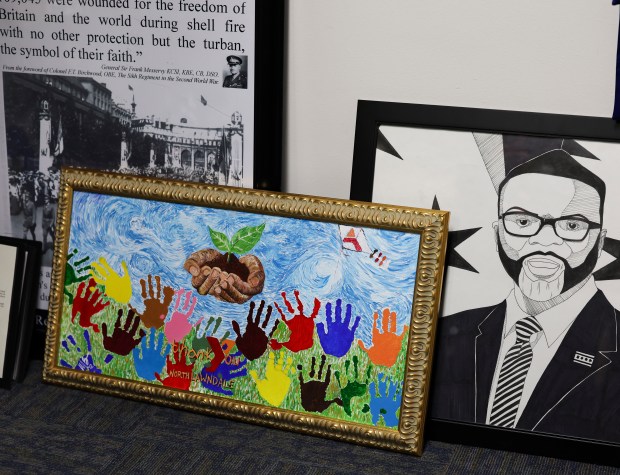
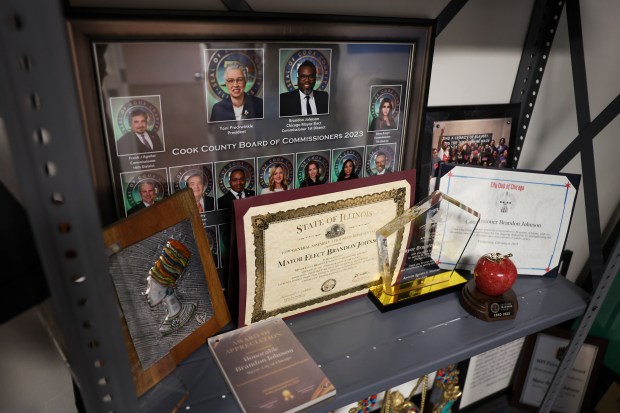
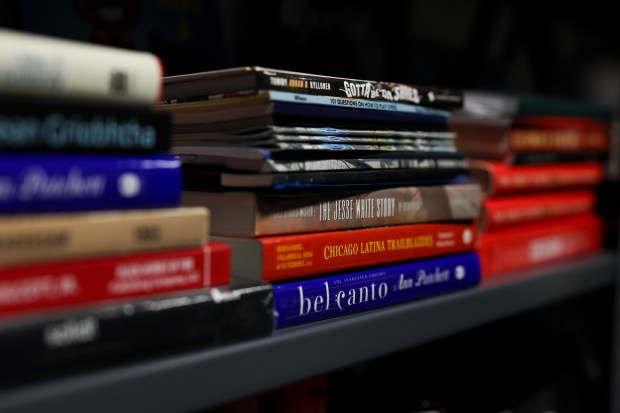


Around a month later, Johnson opened up a new, manicured gift closet where the items listed on his log were carefully staged. They were largely uninteresting and nearly valueless: T-shirts, ties and a Gucci bag that appeared to be counterfeit.
Asked on WBEZ’s “In The Loop” earlier this month what he thought about Witzburg’s comment that his administration is “reflexively hostile to oversight,” Johnson retorted that her work has been “disingenuous” and “woefully politicized.”
“There’s nothing in my administration where any corruption or impropriety took place while I was here. So I actually am concerned about how the outgoing inspector general has politicized this position,” he said. “There’s been a gift closet in the city of Chicago for 40 years. I didn’t invent it. I didn’t, and I actually think it was reprehensible and, quite frankly, I think it was distasteful.”
For her part, Witzburg argued this week that the issue with the gift room “had less to do with the cufflinks” and more to do with Johnson’s office and Law Department blocking investigators.
“That’s a big deal,” she said. “It was sort of the literally and figuratively slamming the door in the face of oversight that made people care about that story.”
Johnson was treated differently than past mayors were treated when she enforced long-standing and long-ignored rules, she conceded. But there was also a different inspector general.
“If we are going to make meaningful change and expect different outcomes, then we have to actually change the way we treat some of those long-standing practices. That means that somebody gets caught in the switch,” she said. “I think that feels unfair to the people involved. The fact of the matter is that people in power in the city are not entitled to the status quo.”
In the fall, Johnson declined to follow Witzburg’s recommendation that he fire his top adviser, Jason Lee, for failing to cooperate with an investigation into City Hall’s handling of a negotiation with an alderman. The mayor denied Lee failed to cooperate.
She said she has reached out to the mayor directly three separate times, most recently to tell him of her decision to not seek reappointment, but never heard back.
The latest in Witzburg’s array of investigations, published last week, zeroed in on a group of O’Hare International Airport city employees her staff caught drinking at bars while on the clock. Witzburg’s office also determined that an unnamed former candidate for elected office accepted 12 prohibited campaign contributions.
Campaign finance investigations have been a focus for the office, she said.
“We can ill afford either the appearance or the reality that there’s a for sale sign on the door to City Hall,” she said.
Reflecting on her term, Witzburg said she entered the office with a goal of “engineering the place for long-term stability and success.”
One early effort to enact such a change was her successful push for a new ordinance to limit inspectors general to two terms and set firm timelines on the appointment process. Her predecessor, Civic Federation President Joe Ferguson, served three terms.
The agency now publishes more city data, features greater collaboration among its 120 employees and even moved to a new office, away from an old one marked by other city employees, mold, “a ceiling that was collapsing on top of people’s desks” and doors that would not lock, she said.
As with her predecessors, it’s debatable whether Witzburg has been able to change the sometimes shady way Chicago government operates or simply reported on some of the specifics after the fact.
Ald. Matt Martin, 47th, who became an ally of Witzburg’s as chair of the City Council ethics committee, praised her for operating “with tremendous integrity, with principle and with clear focus on rooting out waste, fraud and abuse.”
“You couldn’t find a better public servant,” he said. “Whoever her successor is, they have incredibly big shoes to fill.”
Witzburg had little to say about what the office should focus on next, calling the future direction a decision for “the next person lucky enough to do the job.”
The Northwestern University Pritzker School of Law graduate worked for the Cook County state’s attorney for nearly eight years and spent over five in the inspector general’s office, including as deputy inspector general for public safety, before Mayor Lori Lightfoot appointed her to the position.
As for her plans, she said she hopes to continue in government service and cited “good things coming,” but declined to elaborate.
City code bars Witzburg from running for elected office for two years after she steps down. Asked if she is considering a run in the future, she demurred.
“Seems like a long time from right now,” Witzburg said. “I don’t know what I’m gonna do when I grow up.”