I’m a parent and someone who has spent 35 years working in education, including decades focused on improving outcomes for Black male teenagers in Chicago. I read the editorial on “teen takeovers” with both concern and frustration (“It’s time to get tougher on teen takeovers after chaotic Memorial Day weekend,” May 27).
Concern, because the violence and chaos in Hyde Park and elsewhere over the Memorial Day weekend are dangerous and unacceptable. Frustration, because too much of the public conversation defaults toward blaming parents while failing to grapple honestly with the cultural shift in our society that is shaping these gatherings.
When I was a teenager on the South Side, I might have asked my mother if I could go to the lakefront with friends. She would ask who I was going with and how I was getting there. I’d sigh dramatically, then reluctantly name a friend and say we were taking the bus. My mother would respond: “OK. Stay safe. Be home before the streetlights come on.”
Today, the conversation is largely the same. But even the most attentive parent is unlikely to know their child is heading to what could become a “teen takeover.” Most teenagers are not asking permission to attend mayhem. They are simply going where social media apps tell them the “lit” spot will be that night.
These gatherings are not organized the way teenagers congregated a generation ago. Hundreds of young people can now be mobilized through algorithms designed to amplify virality and spectacle. Yet social media companies largely escape scrutiny while parents and teenagers absorb the full weight of public condemnation.
The overwhelming majority of the teens at the lakefront were not there intending to cause harm. In fact, far more Chicago teenagers are going to school, working jobs, caring for family members, participating in sports and the arts, and preparing for their futures than are participating in “teen takeovers.” Yet we rarely elevate those stories with the same urgency devoted to outrage and disorder. Good news simply does not generate the same clicks and likes as bad.
Chicago absolutely must respond to the violence and disorder demonstrated at these gatherings. But if our only response is harsher punishment for kids and public shaming of parents, we will continue treating symptoms while ignoring causes.
A city that only sees its young people at their worst moments will inevitably fail them at their most important ones.
— Tim King, Chicago
Let’s hear from the teens
So much has been said about the “teen takeovers” in Chicago, and I come away from the articles wondering what the participants have to say about it all. How about sending a videographer along with reporters to get it straight from the attendees? We need to hear from them. We hear from the mayor, Chicago police Superintendent Larry Snelling and aldermen all the time. Let’s hear it from the teens.
Why do they gather in large out-of-control groups, especially when gun violence is likely to happen? Do they have any concept of what these events do to the reputation of Chicago, and therefore to their futures? Do they have any ideas about how to change the dynamic?
They need to be part of the conversation.
— Mark Battrell, Wilmette
Claims about MFN pricing
In his recent op-ed (“Price controls on medicines are stymieing innovation. Trump’s plan will make it worse,” May 20), economist Tomas J. Philipson calls drug price controls “a losing bet,” warning that “most favored nation” (MFN) drug pricing will stifle innovation and cost Americans more in the long run than it saves. He is wrong.
As families struggle with rising costs, healthcare affordability has emerged as a defining issue heading into the midterms. In today’s deeply partisan America, few issues unite voters across the aisle — but prescription drug pricing reform is one of them.
New national polling from the Pharmaceutical Reform Alliance shows that 94% of voters blame pharmaceutical companies for high healthcare costs, 68% don’t trust drugmakers to price their products fairly and 89% support pricing reform.
President Donald Trump issued an executive order on MFN drug pricing policy, which, if codified, would bring U.S. prices in line with the lowest rates paid by other wealthy nations. Now, it’s now time for Congress to act. More than 75% of all voters support that effort, including 91% of Republicans, 70% of independents and 64% of Democrats. That type of rare cross-party support demands attention.
So why is Big Pharma fighting it so hard? The pharmaceutical industry’s response has been predictable: Stoke fears that MFN will threaten innovation. But Americans see through their research-and-development excuse. Eighty percent of voters cited corporate profits as a top driver of high drug prices, and 73% blamed executive compensation. American patients effectively subsidize R&D for the rest of the world while paying the highest drug prices of any wealthy nation.
The MFN drug pricing policy doesn’t eliminate innovation. Other wealthy countries pay far less for the same drugs and still benefit from the same breakthroughs. The idea that pharmaceutical companies would abandon lifesaving research the moment they can no longer charge Americans a premium lacks credibility. America’s leadership in the pharmaceutical sector won’t be jeopardized by commonsense reforms, especially when drugmakers earn more revenue from U.S. sales than from all other countries combined.
More than 75% of voters say they’re more likely to support a candidate who fights the pharmaceutical industry. Lawmakers looking for common ground ahead of the midterms don’t need to look far. When it comes to drug pricing reform, doing the right thing and the popular thing are the same.
Big Pharma is betting that its messaging machine can outlast public frustration — lawmakers should call their bluff. The time is right to do what’s right!
— Joe Cunningham, former U.S. representative, Charleston, S.C.
The faculty is the school
The University of Chicago Laboratory Schools’ decision to adopt the “Chicago Principles,” published in 2014 by University of Chicago President Robert Zimmer, is a good one.
The University of Chicago is a national treasure. As a Chicagoan, I applaud the decision of the U. of C.’s Lab Schools. It is smart, simple and very Midwestern. Think about it. Chicagoans are not people of the left or people of the right. We are just people. Geographically and politically, we are the center. We are, as Thomas Dyja so perfectly described us, “the Third Coast.” We have always been scrappy, inventive, decent, down-to-earth and innately pragmatic.
Every grammar, secondary and tertiary school in the nation would do well to adopt the Chicago Principles. They represent the difference between education and indoctrination.
That said, the adoption of a sane policy on freedom of expression, while laudable, is not a silver bullet. The faculty is the school, and “Magister est lectio” (“The teacher is the lesson”).
Just as the University of Chicago has been led by legendary presidents including William Rainey Harper, Robert Maynard Hutchins, Edward Levi, Hanna Gray and Zimmer, throughout its history, the Laboratory Schools has benefited from the genius of great teachers including Francis Parker, John Dewey, Geoff Jones and Vivian Paley, to name only a few.
Great teachers are not catalogues of information tucked between cardboard covers. They are human beings with a passion for their subject, which exceeds their knowledge of it. They have hearts as well as minds. The best of them are idiosyncratic and idealistic in the extreme. They understand that their mission is not merely to transmit information but also to stir the embers of the soul and fan the flames of truth, beauty and goodness.
Having headed great schools, both public and private, I would never hire a teacher I thought I could control.
If the adoption of these principles is a good thing, it is also a good thing that several teachers have voiced very real concerns. In this day when anti-intellectualism is fashionable and bumptious ignorance is national policy, we all need to raise our voice. This is Chicago.
Have no fear. The true teacher will always teach. The bright student will always question. There will always be controversy in the classroom. And as long as teachers give tests, there will always be prayer in our schools. The darkness will never extinguish the light.
— T. Robinson Ahlstrom, chair, The George Washington Scholars Endowment
Note to readers
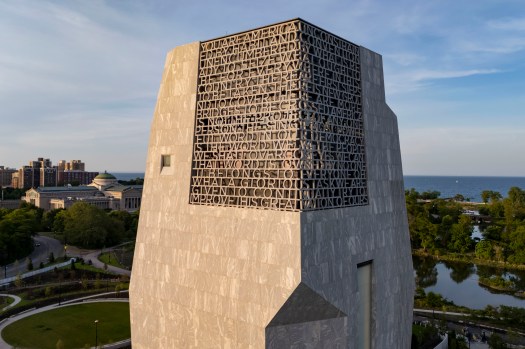
The Obama Presidential Center is opening on June 19. Do you have memories of former President Barack Obama you’d like to share? (Sincere thoughts only.) Send a letter of no more than 400 words by Thursday, June 11 to letters@chicagotribune.com. Include your full name and city/town.
Submit a letter, of no more than 400 words, to the editor here or email letters@chicagotribune.com.