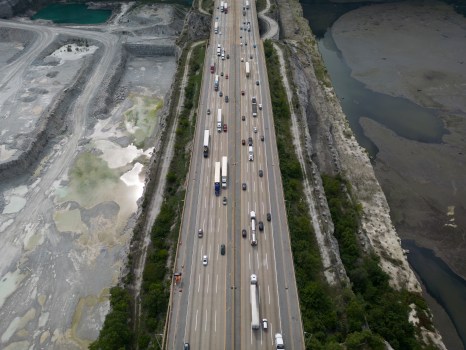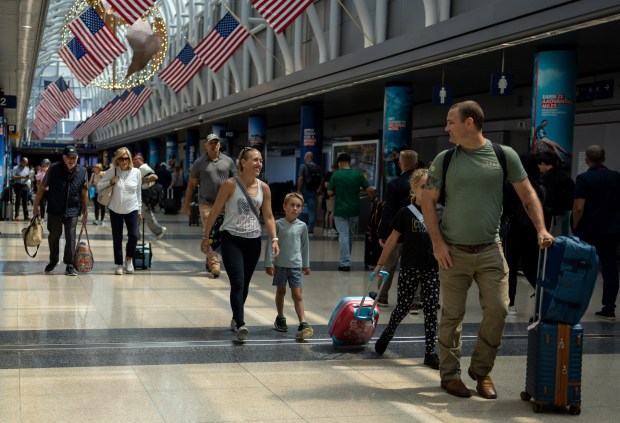
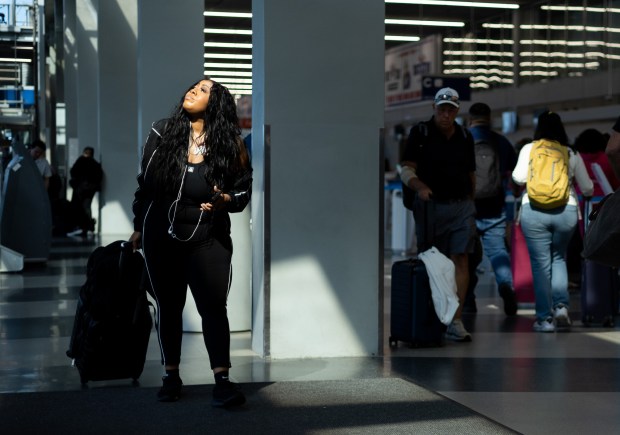
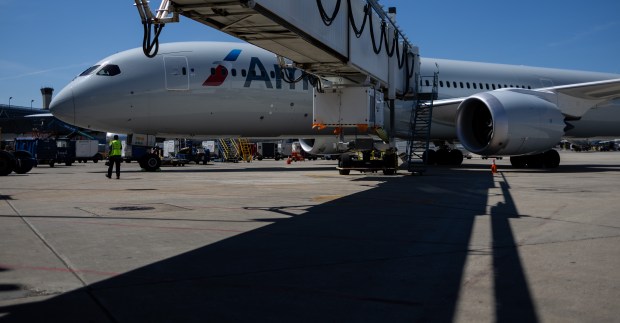
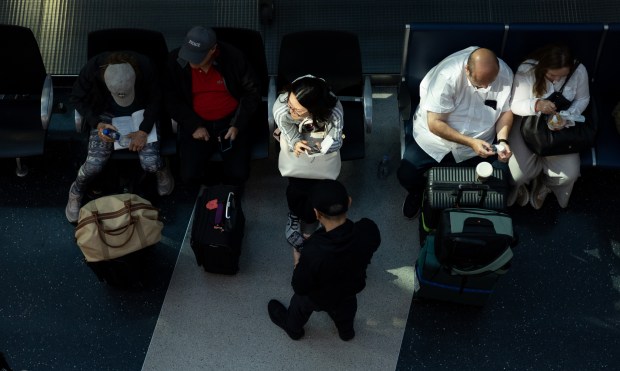

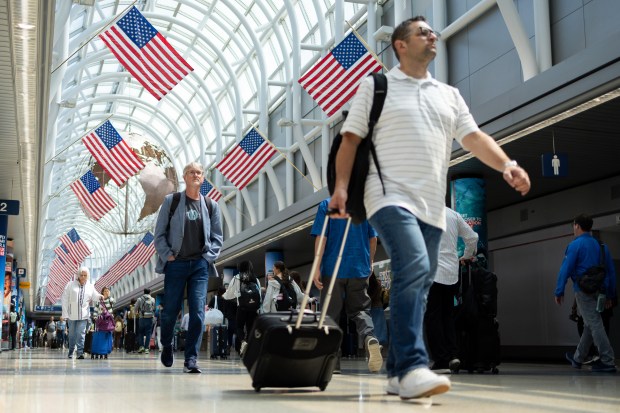

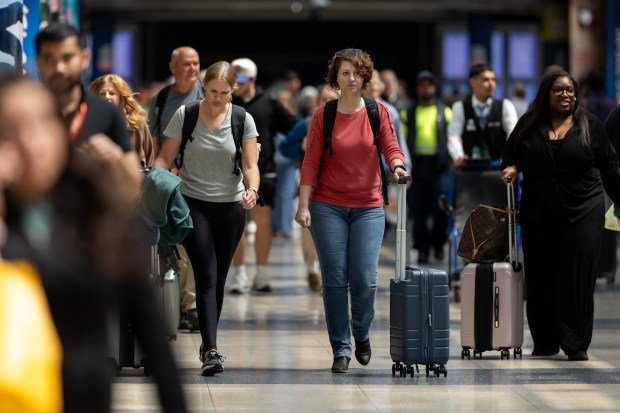
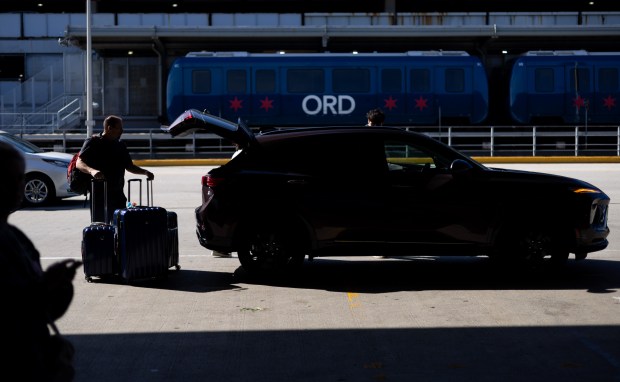

Travelers flying out of O’Hare International Airport this summer can expect a busy airport.
In fact, the airport is expected to be even busier than it was last summer, at least in terms of the number of scheduled flights. That’s despite a turbulent spring for the airline industry. High jet fuel prices due to the war with Iran are weighing on consumers in the form of pricey tickets and baggage fees. And at O’Hare, the Federal Aviation Administration has ordered airlines to cut hundreds of planned flights per day, a step it said was necessary to prevent extensive delays at the airport this summer.
But despite the FAA cuts, there will still be more flights out of O’Hare this summer than last, the city said. The airport is the busiest in the world by flight volume, and is among the busiest when it comes to passenger traffic.
The feds capped daily flights at 2,708 — including both arriving and departing flights — at O’Hare through Oct. 24. Last summer, daily operations at the airport peaked around 2,680 per day.
During the July peak this year, O’Hare is projected to have almost 100 more daily departures than during the same period last year, Chicago Department of Aviation spokesperson Kevin Bargnes said in an email.
Experts said demand for air travel remains strong despite pricey fares and fees. Airfare was up more than 20% year-over-year in April, according to the Bureau of Labor Statistics. The Thursday before Memorial Day, United Airlines boasted, was its busiest ever at the airport by passenger volume.
“People are spending money and buying a lot of tickets,” said industry expert Brett Snyder of the Cranky Flier website. “If they weren’t doing that, then fares would have to come down more.”
O’Hare’s summer has been shaped in part by an all-out turf war between United and American Airlines, archrivals which together control the majority of the airport’s gates. Gates at O’Hare are allocated by how much an airline flew the previous year, prompting an arms race between the airlines, which both beefed up schedules before the the feds brought the hammer down, saying the air traffic system couldn’t handle so many flights.
United is cutting around 130 O’Hare departures per day from its previously planned summer schedule. “The largest destinations from Chicago we did not make any large cuts to,” said managing director of domestic network planning Mark Weithofer.
The airline is delaying the launch of 10 routes, largely to smaller midwestern cities, that had been slated to begin in June. Those flights — to locales such as Bloomington-Normal; Kalamazoo, Michigan; and Wausau, Wisconsin — will now launch in late October, after the federal flight cut mandate expires.
The airline has scaled back flights to some other markets but has only exited one entirely for this summer — Billings, Montana — according to Weithofer. United plans to put the seasonal route back on the schedule next summer, he said.
“We did consolidate some flights onto larger airplanes so that the loss of the seats wouldn’t be as great as the loss of flights,” Weithofer added.
Some of United’s flight reductions will hit travelers in smaller markets, but are less likely to have a big impact on Chicago-based travelers, Snyder said, noting that the majority of people who book a flight on a delayed-til-fall route like Chicago to Champaign would be connecting passengers. Chicagoans, he noted, would likely drive that trip, not fly it.
American is cutting only around 20 planned departures per day as a result of the FAA order, according to Brian Znotins, the airline’s senior vice president of network planning.
When considering where to make cuts, Znotins said, the airline decided to keep flights to new markets such as Allentown, Pennsylvania, and Lincoln, Nebraska. “We also wanted to limit the impact to the top 25 largest markets for Chicago-based travelers,” he said, which include destinations like Boston, Philadelphia and Las Vegas.
Instead, the airline cut some flights to some existing smaller markets that had multiple flights a day such as Chattanooga, Tennessee, and Dayton, Ohio. American didn’t pull the plug on any O’Hare routes entirely, Znotins said.

Meanwhile, O’Hare is in the midst of a massive expansion project. Vertical construction on a new concourse — which will ultimately add 19 new gates at O’Hare — started this spring.
Transportation expert Joseph Schwieterman of DePaul’s Chaddick Institute for Metropolitan Development said O’Hare travelers are already “feeling the effects of gate losses and added taxi times.”
Bargnes, of the Department of Aviation, said that “while the FAA flight reductions and ongoing construction at O’Hare are important factors, CDA is working closely with airline partners, the FAA, and other stakeholders to support safe, efficient operations and minimize impacts to travelers amid ongoing construction.”
Bargnes advised travelers to allow for extra time at the airport “particularly during peak summer periods.”
The implosion of Spirit Airlines removes some low-cost fares from travelers’ array of options, though the airline had a relatively small footprint at O’Hare.
Bargnes noted other airlines had added capacity on routes previously served by Spirit.
“For example, jetBlue has announced twice-daily service between O’Hare and Fort Lauderdale beginning July 9, adding low-fare service on a major leisure route,” Bargnes said.
A Friday through Sunday round-trip on the route in early August was going for just under $200 after fees at the most restrictive fare level, according to JetBlue’s website.
But because of the FAA order, the airlines have been a bit hamstrung when trying to fully backfill Spirit flights at O’Hare.
“We can’t really add flights into those routes,” said Weithofer, of United. “But we can add larger airplanes, and that’s one of the things that we’ve done,” he said, noting the airline had chosen to do so on flights between Chicago and Orlando, for instance.
The sudden shuttering of the budget airline led to more than 350 layoffs at O’Hare, according to a filing the airline submitted to the state of Illinois. About 100 pilots and more than 230 flight attendants were slated to be laid off permanently starting May 2.
Also exiting O’Hare is Southwest Airlines, which will leave the airport entirely this week after about five years there. “Operating at Chicago O’Hare continues to be challenging, and we are confident we can serve Chicagoland through Chicago Midway,” the airline said earlier this year.
At Midway, Southwest added new routes to Des Moines, Wichita and Milwaukee in March, Bargnes said.
Znotins said American paid attention to the Southwest exit when planning its summer schedule, being careful not to cut flights to Southwest markets like Austin, Fort Myers and Tampa.