
The blues can be heated music that thrills a sweat-soaked, booze-fueled crowd in a packed bar. It can also be the gentle sounds of acoustic guitars wafting from a nearby front porch.
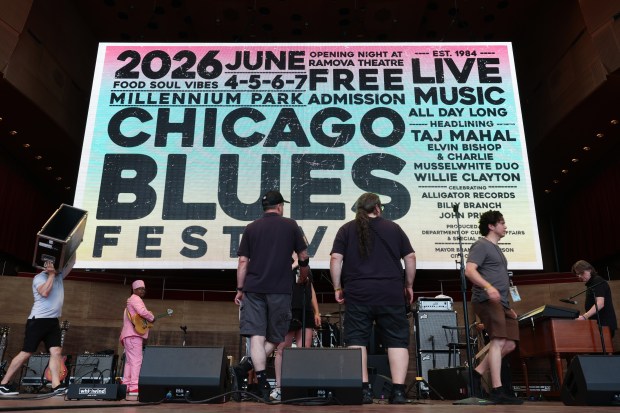
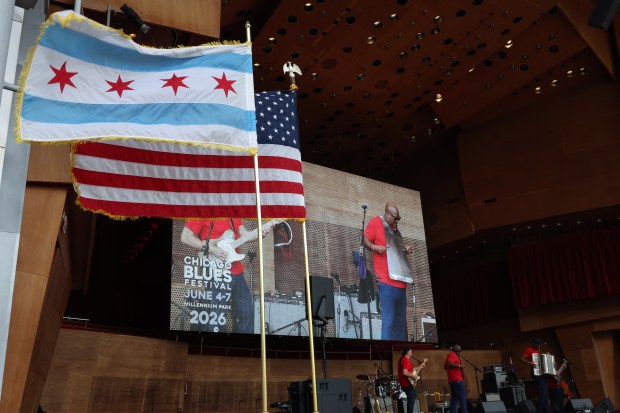
The latter ambience largely prevailed in Millennium Park on Friday night during the Chicago Blues Festival, which began Thursday at the Ramova Theatre in Bridgeport before moving downtown. The festival continues through Sunday night at the Jay Pritzker Pavilion and three side stages across Millennium Park, with performances starting at noon.
The combination of mostly easy-going music, a warm early summer evening, and the flotilla of lawn chairs and blankets that half-covered the park’s Great Lawn gave the event a relaxed vibe. As usual, the festival crowd skewed middle-aged and older, reflecting the graying audience for the blues, but it also included many younger adults and families with young children who played tag, attempted somersaults, and kicked soccer balls on the grass.
The lineup of mainstage acts themselves ranged in years from mid-50s to early 80s, which did little to ease concerns about the blues aging out of existence. Similarly, Saturday night’s schedule featured a nearing-his-75th-birthday tribute to Billy Branch, once considered a young lion in the genre, and the festival will conclude Sunday with 84-year-old living legend Taj Mahal. Fortunately, the music remained vibrant nonetheless.
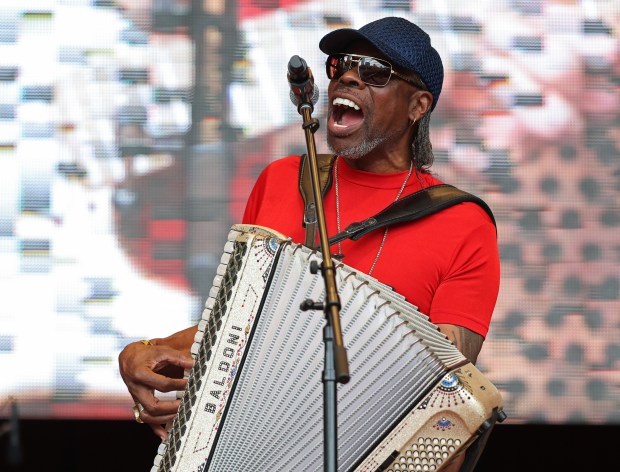
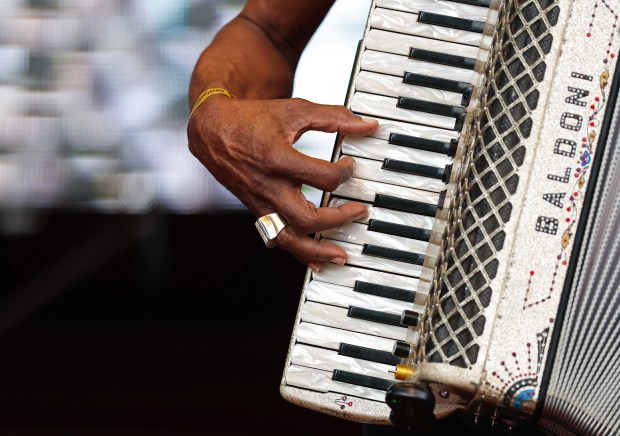
C.J. Chenier & the Red Hot Louisiana Band set the tone during their late afternoon appearance. The son of the legendary zydeco pioneer Clifton Chenier, C.J. mixed his father’s repertoire (“Jambalaya,” “Hot Tamale Baby”) and songs that extended their genre, particularly Bob Marley’s “Three Little Birds.” All were filled with Chenier’s murmuring accordion, the rustle of a washboard player and slinky grooves.
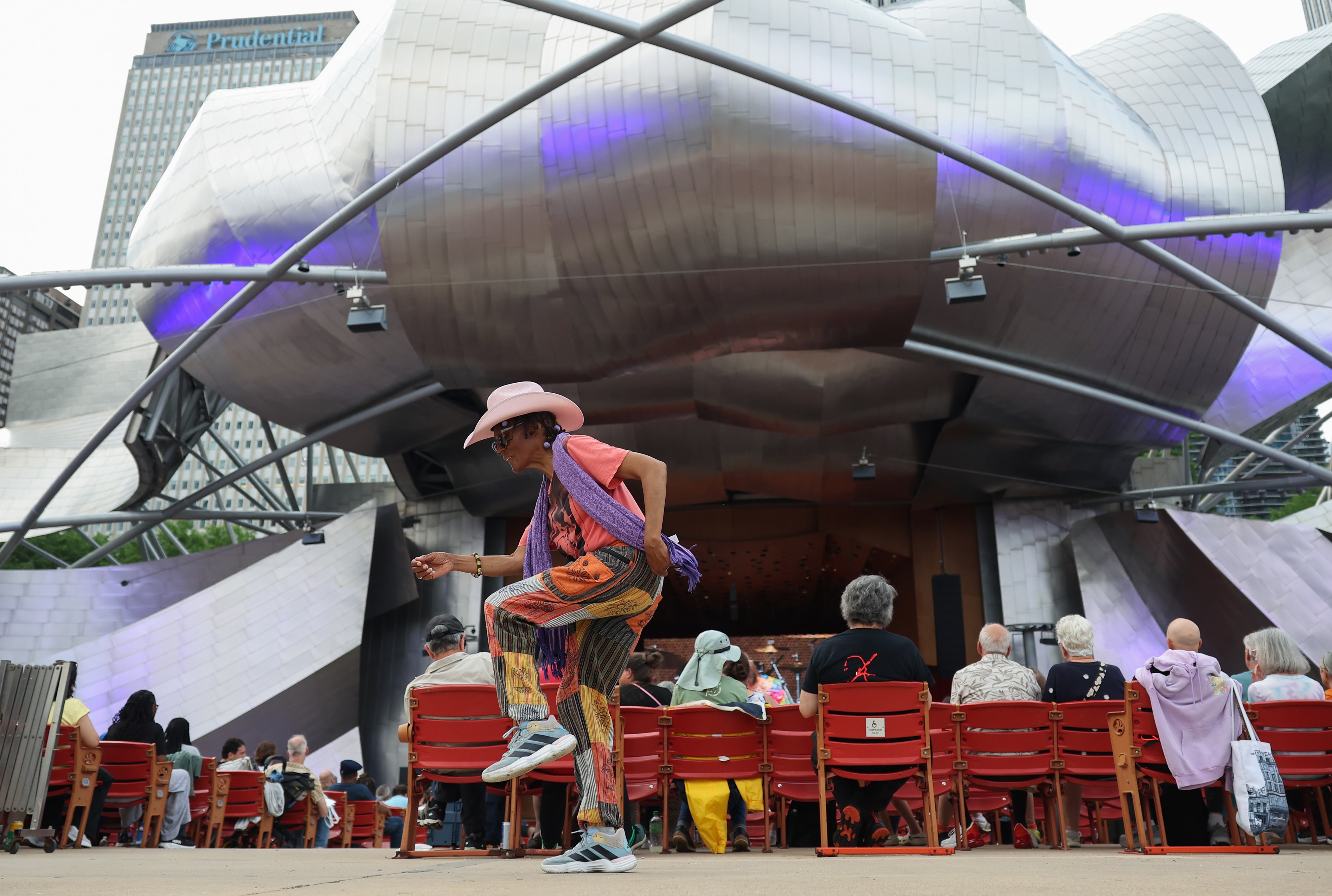
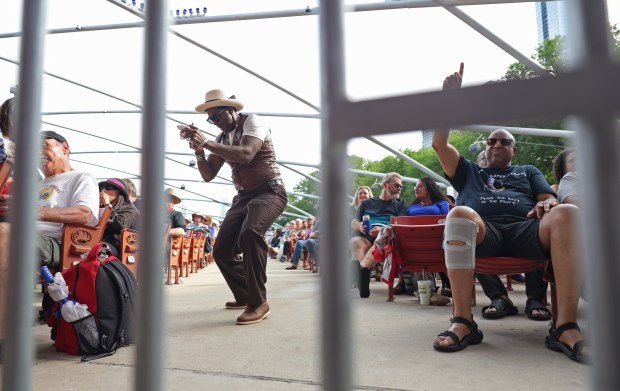
The bayou rhythms already had some people dancing in the area between the pavilion’s seats and its lawn. Among them were Louie Stallone and Nancy Riesling, who hadn’t arrived together but were used to being dance partners after frequently crossing paths.
Stallone has been a dance teacher at the Old Town School of Folk Music for 29 years. Riesling took dance lessons elsewhere to relieve her boredom during the COVID-19 pandemic, wearing two face masks for the in-person instruction.
“You’re in the moment,” Riesling said of dancing, which she does two or three nights a week. “It’s great physical and mental activity, you use your right brain, your left brain. It’s social, it’s everything you need.”
A flight attendant who’s danced all over the world during her layovers, including a boat on the Seine river, Riesling was joined by four colleagues who like her have sought out live music across the globe. They included Cyndy Lee Molik, the daughter of jazz musicians and a former host of a blues program on local radio station WDCB. The blues is “a feeling, it’s energy, it’s passion,” Molik said.
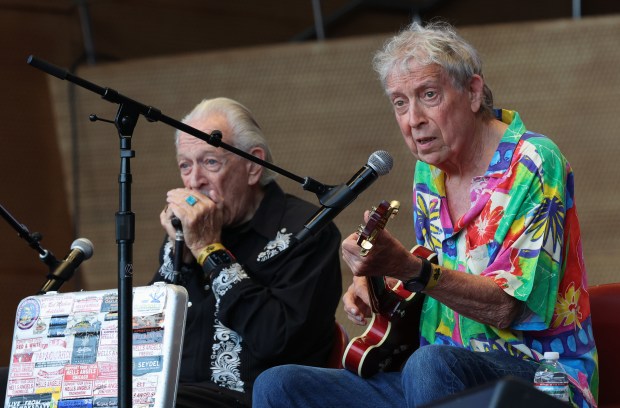
Veterans of Chicago’s 1960’s blues scene, Charlie Musselwhite and Elvin Bishop made music that hearkened back even further to the blues’ rural southern roots. Accompanied by Bishop’s bandmate Bob Welsh, who alternated between guitar and piano, they took turns drawling over Bishop’s subtly insistent guitar chords. Musselwhite punctuated the music with his harmonica trills and moans while his right knee bounced in time with the rhythms.
Sitting a few rows from the stage during the trio’s set, Jeane Capelli Pen and her adult daughter Gabriella Pen were relishing their chance to hear the blues played live as a bonus of Jeane’s business trip to Chicago from their home in São Paulo, Brazil. On previous visits to the city over past decades, Jeane would visit the storied South Side blues club the Checkerboard Lounge, and she passed her love of the blues on to her daughter.
“She brought me to see Koko Taylor when I was young, and that was it,” Gabriella recalled. “Brazil has the rhythm, but there’s something about the blues that’s deeper,” Jeane said.
Others in the crowd also felt deep connections to the music and expressed similar sentiments. “It’s this continuation of the culture,” said Tennille Allen, the granddaughter of a blues musician. A professor and chair of sociology at Lewis University, Allen is writing a book chapter imagining the Smokestack Twins from “Sinners” on Chicago’s blues scene in the 1930s.
She and James White, who was beside her on the lawn, have been coming to the city’s blues, jazz, and gospel festivals for 20-plus years. For White, the Blues Festival is “a representation of summertime in Chicago. Nobody gets it in like we (Chicagoans) do when the weather gets warm.”
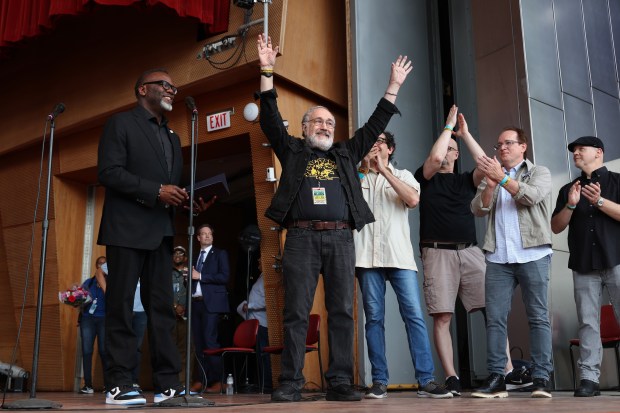
The music concluded with a celebration of the 55th anniversary of Chicago-based independent blues label Alligator Records, whose founder, Bruce Iglauer, was recognized with a proclamation by Mayor Brandon Johnson earlier in the evening. Iglauer, in turn, graciously brought onstage the Alligator staff, whom he said “made it seem I did all the work when I just had my feet up.”
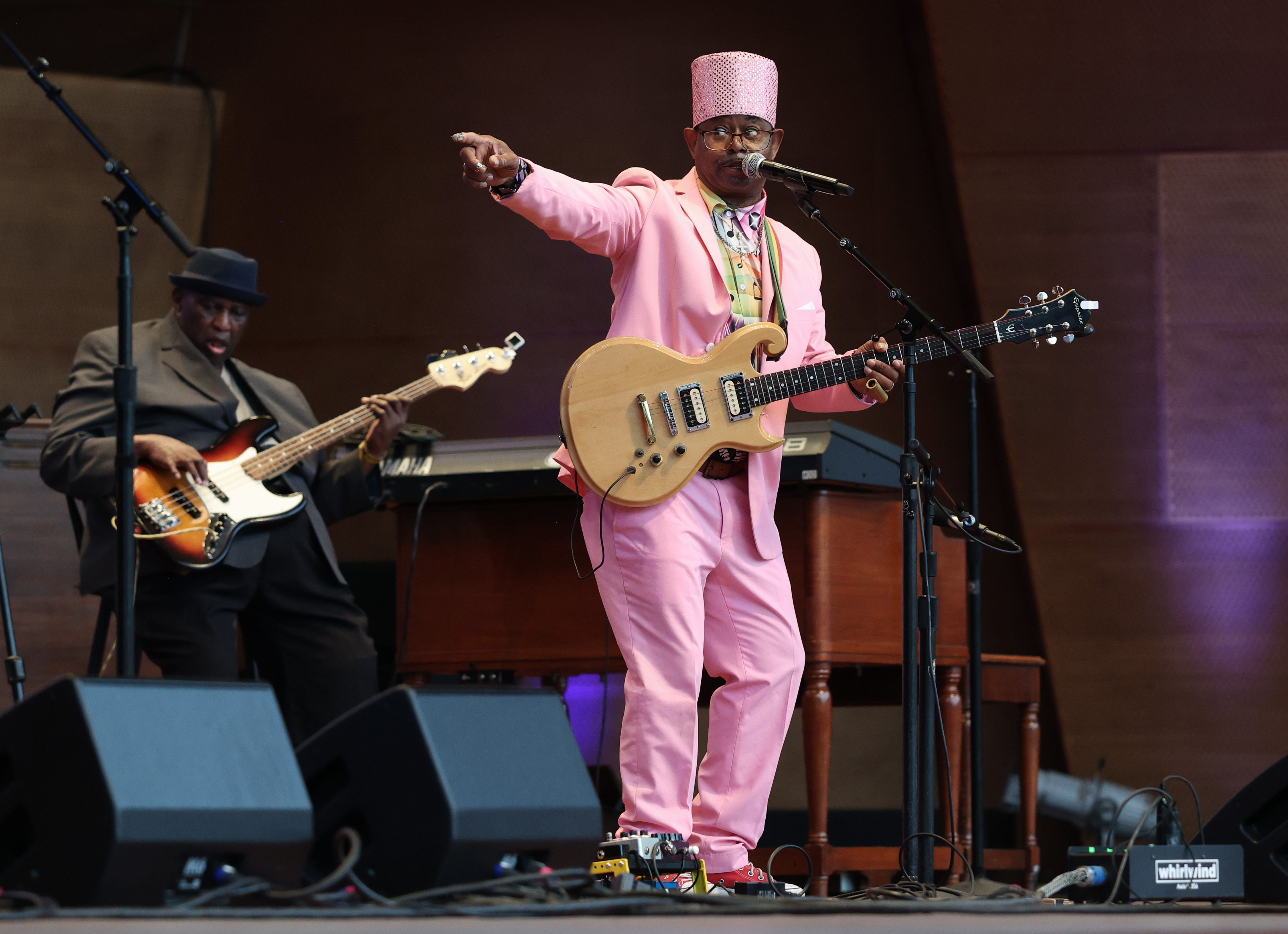
Leading off the Alligator artists, Lil’ Ed & the Blues Imperials picked up the tempo with their forceful performance. Dressed in a pink suit, matching fez and orange sneakers, band leader Ed Williams fueled the music and recalled Elmore James with his scorching slide guitar runs.
Making his Blues Festival debut, Tinsley Ellis followed with an acoustic solo set that returned the festival to its low-key mood. Long known as an electric guitarist, Ellis made his resonator guitar ring and sting while he sang gruffly. His songs evoked Delta blues tradition, a link Ellis made explicit with a rendition of Son House’s “Death Letter Blues.”
Ronnie Baker Brooks, Toronzo Cannon and Nick Moss raised the temperature as they joined forces for the night’s last performance, playing grinding riffs and trading torrid solos. Williams, Ellis, and Brooks’ brother Wayne joined the guitar army for the inevitable jam on “Sweet Home Chicago,” a hit for the Brooks’ father, Lonnie Brooks.
Though the finale was predictable, Ronnie Baker Brooks made it fresh with his soulful singing and shout-outs to his dad and other past Chicago blues greats. As couples filled the dance area, the guitarists traded searing licks, and Brooks led the crowd in a sing-along, the sweat-soaked, booze-fueled blues had its moment, too.
Kevin McKeough is a freelance writer.