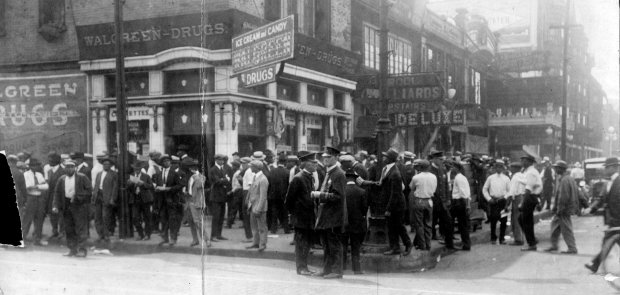

Here’s a look back at what happened in the Chicago area on June 7, according to the Tribune’s archives.
Is an important event missing from this date? Email us.
Front page flashback: June 7, 1942

1942: Stanley Johnston was an Australian American journalist who, as a correspondent during World War II, wrote a story for the Chicago Tribune that inadvertently revealed the extent of American code-breaking activities against the Imperial Japanese Navy (IJN).
The story resulted in efforts by the United States government to prosecute Johnston and other Tribune journalists, an effort that remains the only time the Espionage Act was used against journalists in the United States.
Weather records (from the National Weather Service, Chicago)
- High temperature: 100 degrees (1933)
- Low temperature: 44 degrees (1913)
- Precipitation: 2.29 inches (1916)
- Snowfall: Trace (1906)

1917: Lions International was founded at the LaSalle Hotel. Members of 42 business clubs assembled at the invitation of Melvin Jones, a 38-year-old Chicago salesman. Jones sought to create an international association dedicated to service beyond what individual organizations were doing locally.
The new group took the name of one of the invited groups: the Association of Lions Clubs. Jones approved of the name since it stood for “fidelity through the ages; he has only one mate.” Within three years, Lions became an international organization.

1976: Five people were injured — two seriously — after bombs planted by FALN (a Spanish acronym for the Armed Forces of National Liberation) went off about 11 p.m. at Chicago police headquarters at 11th and State streets, the First National Bank at Dearborn and Madison streets, the John Hancock Center and a bank across from City Hall.
The victims had just emerged from “Sherlock Holmes” at the Shubert Theater. Further injuries were avoided during a shift change at the police station, the Tribune reported, through actions of an officer who noticed a suspicious package after hearing reports of the other blasts and helped clear the area.
Over the next four years, FALN carried out 16 more bombings, including at a Holiday Inn, the Merchandise Mart, two armed forces recruiting offices, the County Building and the Great Lakes Naval training base outside North Chicago. Nobody was injured in any of those overnight attacks.

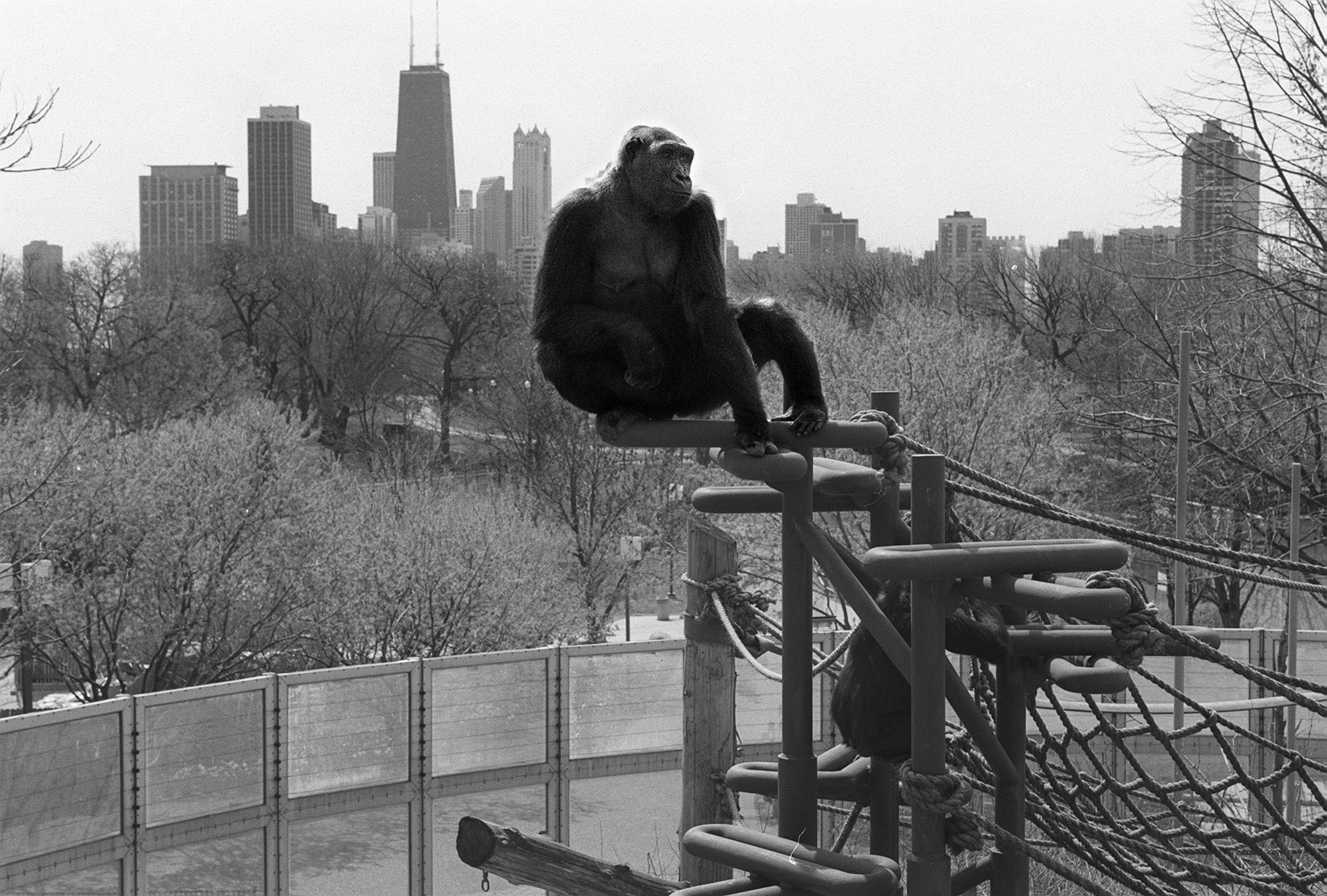
1976: The Great Ape House, which included six indoor habitats and a nursery plus an outdoor habitat, opened at Lincoln Park Zoo. The biggest improvement: no bars between animals and people. Just large, glass windows. And it “rained” at 11:30 a.m. and 2 p.m. to replicate the apes’ natural environment and keep foliage in the habitat watered.
Moving animals from the old Primate House to the new Great Ape House was recorded by filmmaker Dugan Rosalini, who compiled the footage into the one-hour documentary “Otto: Zoo Gorilla”. This project and the zoo’s hospital were part of the zoo’s $20 million building project, which was completed in 1982.
Want more vintage Chicago?
Subscribe to the free Vintage Chicago Tribune newsletter, join our Chicagoland history Facebook group, stay current with Today in Chicago History and follow us on Instagram for more from Chicago’s past.
Have an idea for Vintage Chicago Tribune? Share it with Kori Rumore and Marianne Mather at krumore@chicagotribune.com and mmather@chicagotribune.com