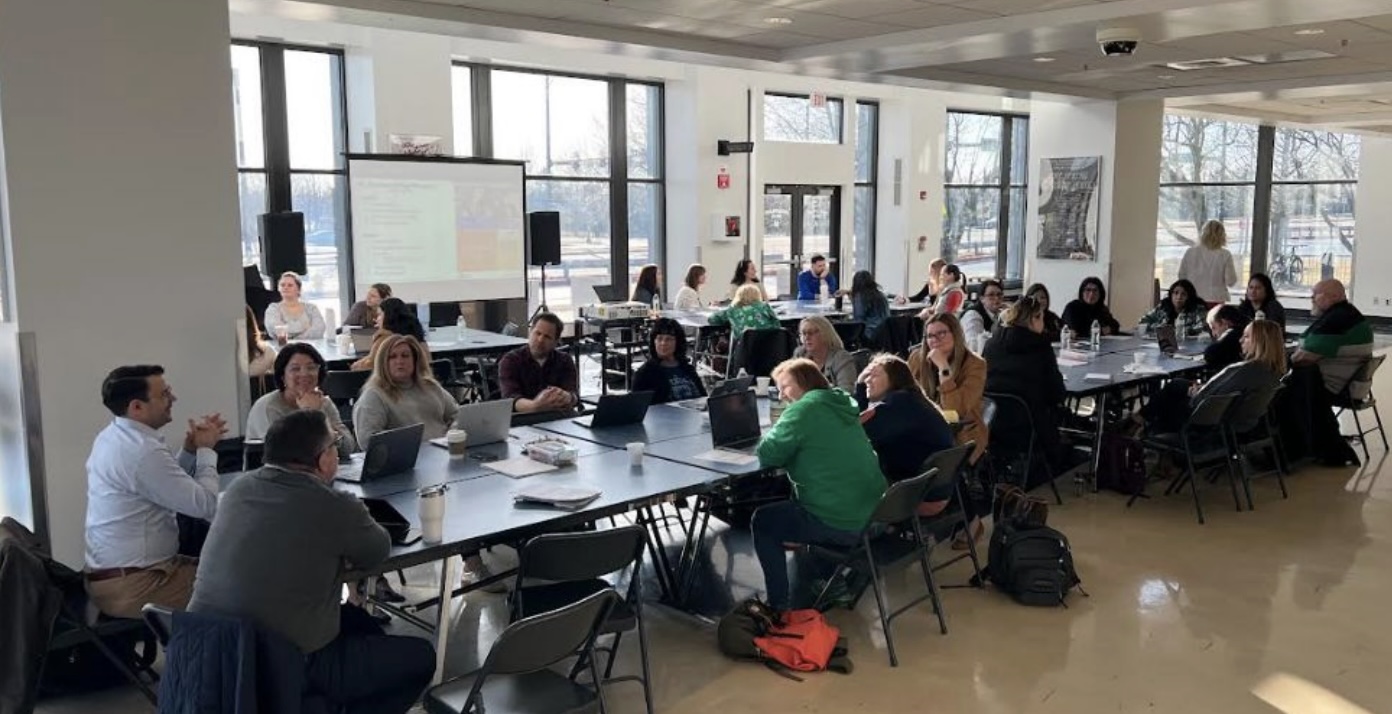

In some classrooms at Victor J. Andrew High School in Tinley Park, English speaking students sit next to students learning English for the first time as their second language. The classroom teacher is joined by a second teacher trained to help the students learning English.
In these classrooms, non-English speaking students learn the language faster than learning in classrooms separate from experienced English speakers, according to results of a program review, said Charles Ovando, assistant superintendent of student support and development for High School District 230.
The learning style, part of a larger method called “co-teaching,” is coming to some classrooms at Carl Sandburg High School in Orland Park and Amos Alonzo Stagg High School in Palos Hills this August after nearly two years of planning, said Ovando.
This change was prompted by a dramatic increase in the district’s population of students who do not speak English as their first language, he said.
“It’s a fair question to say, ‘is our program flexible and versatile enough to meet student needs now that we’ve seen this explosion and growth,'” Ovando said.
The percentage of English learner students in the school district increased from 3%, or about 210 students, in 2016 to 11.3%, or around 845 students, in 2025. The state also saw an increase, going from 10.5% of students learning English for the first time in 2016 to 17.5% in 2025.
The term English learners is defined by the Illinois State Board of Education as students who do not meet certain English proficiency standards and whose home language background is a language other than English.
Ovando said the growth of English learner students helped the district realize there was a need for consistency. He said support systems for English learners were different across the three schools due to each school having different numbers of these students
In 2025, English learner students made up 15.3% of Stagg High School, 10.1% of Sandburg High School and 8.3% of Andrew High School.
“What that means from a practical standpoint is if you go back five years, Andrew did not have enough EL students to provide certain types of co-teaching classrooms,” he said.
In 2024, the district launched a review of the English learning program by English learner teachers, lead teachers, an English learners coordinator, division chairs, Advanced Placement instruction staff and assistant superintendents. Ovando said said it had been at 10 to 12 years since the last program review.
The English learner students who sat in classes with other students performed better on their state-administered English language proficiency test, called the Assessing Comprehension and Communication in English State-to-State for English Language Learners.
Ovando said this does not equate to these students performing better in class content, just English proficiency.
“Kids tend to develop their English language more rapidly when they are with native English speaking peers more frequently,” he said.
He said more advanced English learner students will be put in larger classrooms of other English learners, as the teachers can support larger number of students when they are more advanced, but need more time to help less advanced students
The progression to general academic environments will be based on English proficiency levels, he said. He said the state goal of English learner programs is to help students develop English proficiency and also meet grade level standards.
“It’s kind of a tall order,” he said. “You’re trying to provide them the language supports they need in order to access the content at grade level, but at the same time, you’re trying to develop their English proficiency and their academic language abilities in each of the disciplines in English.”
He said the change will not change the education of non-English learners. If anything, he said, it would enrich these students’ learning environment by providing language diversity.
He said the school district spent the 2025 spring semester preparing to implement the classroom changes, which included infrastructure work and professional learning for teachers.
He said the district plans to review the curriculum of English learner classes and continue training teachers this summer.
“What we’re heading into next year, that is sort of a big first step,” he said. “To me, the outcomes of the program review are something that, like, it’s not over.”
awright@chicagotribune.com