
At first glance, the scenario of a smoke-filled airplane cabin with passengers ignoring the crew, while likely, didn’t compare with the reality happening on the ground.
A full-scale disaster exercise held at the Gary/Chicago International Airport Saturday morning saw several fewer emergency management departments than were scheduled to make it. Thursday’s tornado touchdowns in Merrillville, Kouts and several municipalities in between made sure of that.
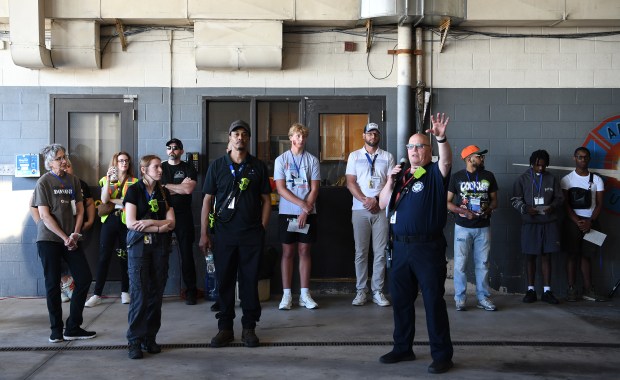
“This has been a challenging week,” Gary Fire Department Division Chief Mark Terry announced to the more than 100 firefighters, EMS workers and civilians volunteering as actors for the exercise conducted every three years per the Federal Aviation Administration. “Usually, we have eight to 10 ambulances here, but they’re still out assisting other departments. A GPTC bus will be sent in their place.”
If it sounds like the personnel were nervous they wouldn’t pass the exercise, the emergency personnel goofing around with each other while waiting for the event to start said otherwise.
The tornadoes’ extremity aside, personnel shortages are all part of the experience and while inconvenient, they don’t necessarily spell disaster, assured Kyle Kuebler, assistant fire chief for Kouts Fire Department and an evaluator for the exercise. He’s also director of the Porter County Regional Airport.
“Emergency situations are fluid, and there’s more than one way to achieve success,” Kuebler said. “The training that all these folks have is muscle memory, so what we’re testing is not only individual success, but departmental success and how we all work together.”
Saturday’s particular exercise, called the Part 139 Certification, is required for airports to have passenger service, even if there are no passenger airlines at Gary Airport currently, its executive director, Dan Vicari, said. Conducting it anyway will just make it easier when the time comes, he said.
“An airline who signs on here could conceivably be up and running in 60 to 90 days, so without (the Part 139), we wouldn’t be ready,” Vicari said. “This exercise takes months to prepare.”
The scenario given to the airport envisioned an Airbus 220 on its way to O’Hara International Airport calling the Gary Airport with a report of a smoke-filled cabin, according to the evaluator handbook. As the smoke continued, passengers became agitated and unbuckled their belts, it said.
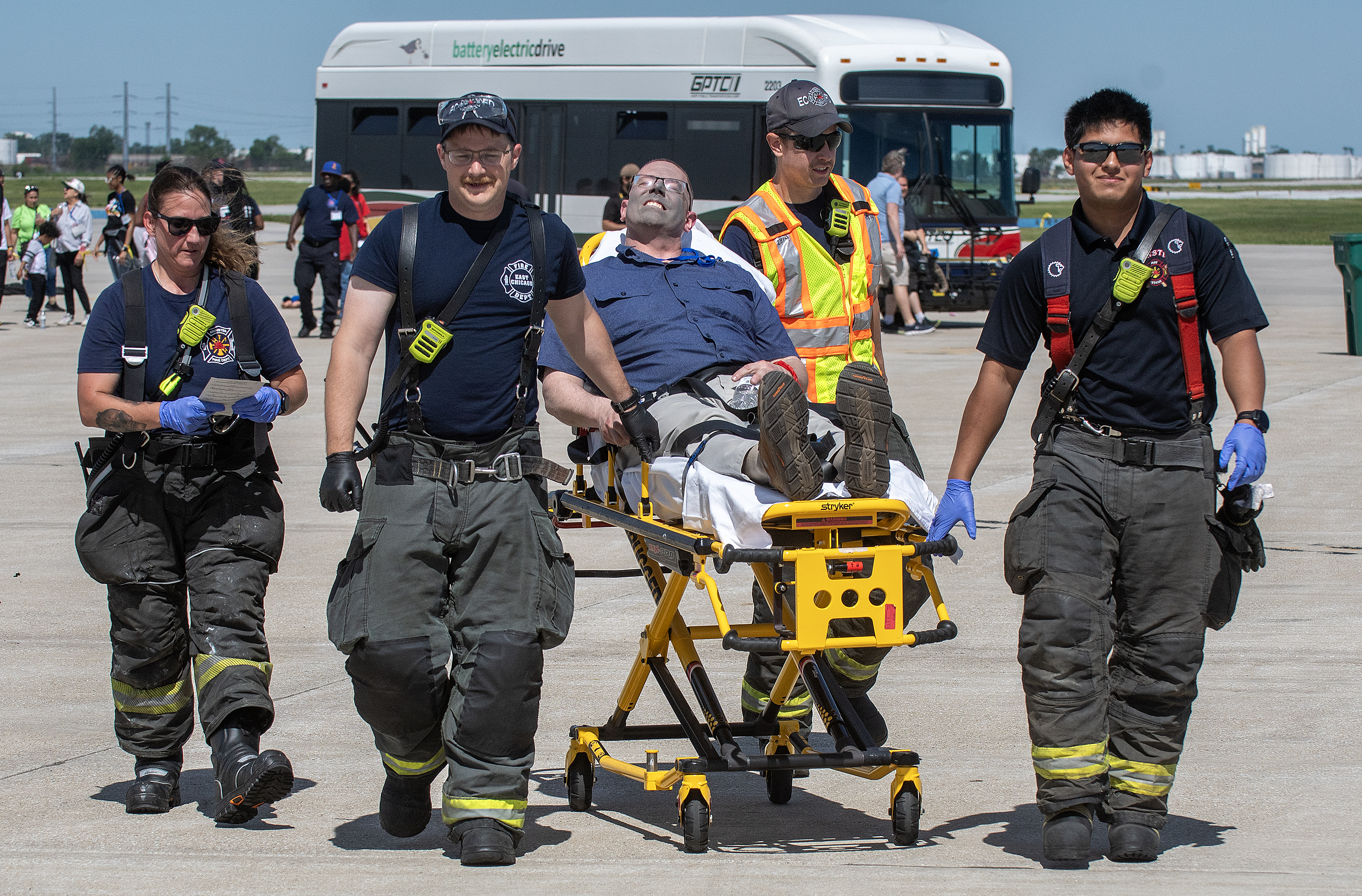
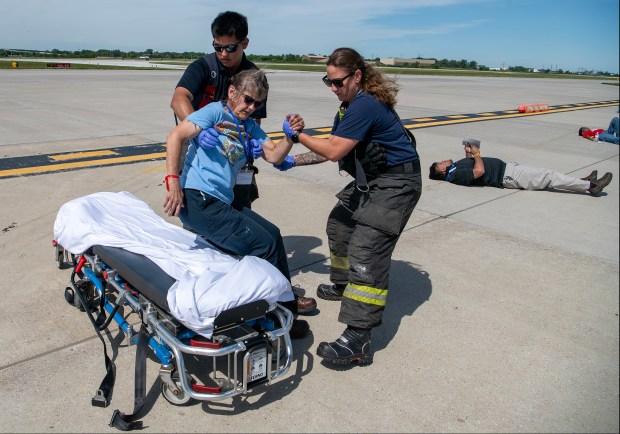
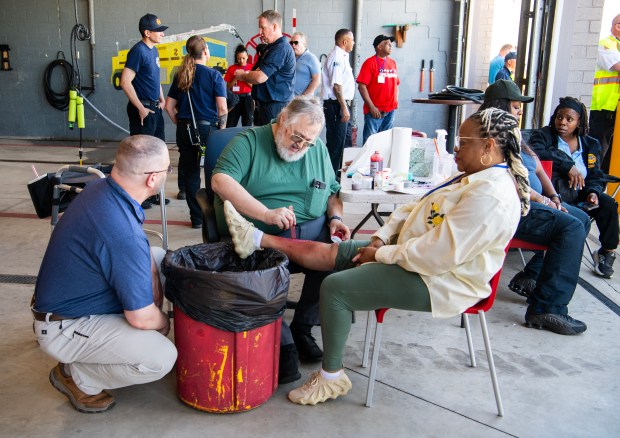
As the plane landed, the 56 passengers were thrown about the cabin and injured, as well as exposed to hazardous chemicals from the fire, the handbook said. It was the job of the EMS personnel, then, to evaluate and designate the passengers’ triage level, then get them to the decontamination station before sending them off in ambulances for further treatment.
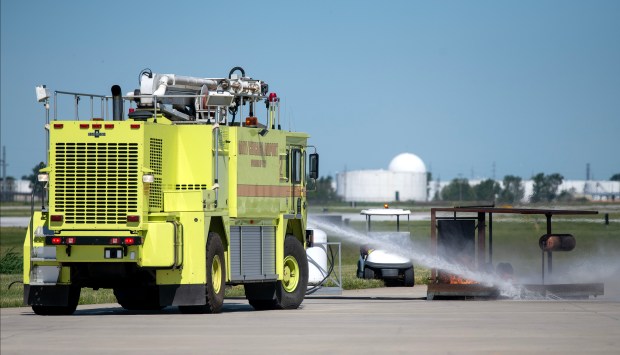
Firefighters, meanwhile, put out the fire from a makeshift engine that Gary Fire Department leaders crafted for the event. As all that was going on, administrators had to deal with an unsanctioned “social media news group” stationed on the de-icing pad.
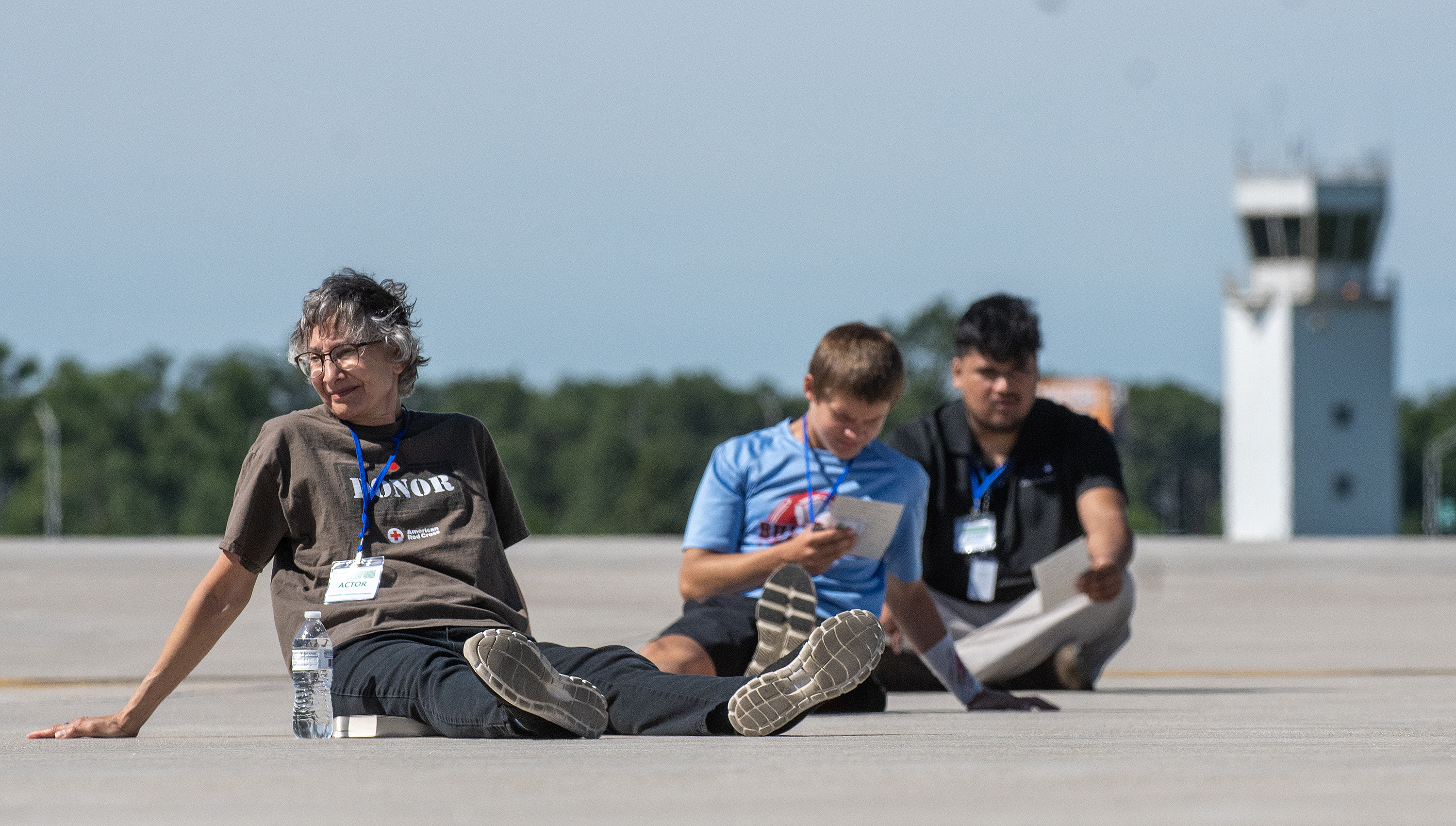
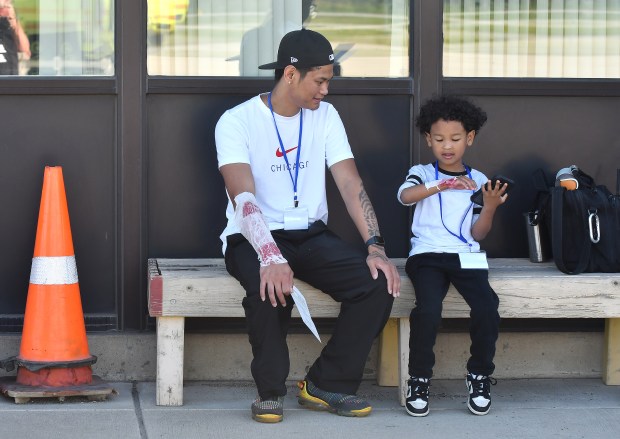
Volunteers who played the “56 souls,” as they’re called in firefighter parlance, partook in the exercise for varied reasons. Suvanno Chansiri, a volunteer firefighter with Munster, brought his six-year-old son, Sage, to be a part.
“Every time we have drills, he usually watches, so this is his first time,” Chansiri said of his shy little guy. “This is our first mass crisis drill, and I wanted to see how it feels to be in one. It’s a learning experience for me.”
Jackson Chambers, of Cedar Lake, said he was there for the acting.
“I saw the callout for this on (social media). I’m an actor, and this is an opportunity to improve my skills,” he said. “I just want to do a believable job.”
Crystal Angeles, of East Chicago, on the other hand, called the exercise a first step in reclaiming her life. As a person with long COVID, getting out had been all but impossible for her for the last five years.
“I have seizure flares, which make me dizzy, and it’s hard for me to be out of my house. My doctors finally determined what was going on, and I’m now on medicine that helps,” she said. “I’m slowly trying to get back out in the world, and I saw this opportunity, so I took it. It made me feel human again.”
Although she wasn’t completely without complaint.
“I was the only one acting out there, so I’m a bit upset,” she said, jokingly.
Michelle L. Quinn is a freelance reporter for the Post-Tribune.