
It is news to no one that the finances of Chicago Public Schools are strained at best. Recent CPS budget cycles suggest a deeper understanding of what is needed for us to move from reflexive judgment and stale blame-oriented political narratives to solutions.
A new analysis from my organization, the Civic Federation, takes a look at one of the deep-seated causes of CPS’ fiscal struggles: its extremely high debt load. CPS carries more than three times the average debt per capita of peer school districts, and the debt’s impact on operations is profound. CPS projects that it will have to spend almost $800 million of operating revenue in 2027 to service its debt. In other words, as much as 8% of the district’s budget gets spent on repaying debt. Responsible treatment of that debt is therefore fundamental to the district’s near-term capacities and long-term prospects.
Facts like these often serve as fodder for those inclined to reflexively castigate CPS leaders. That’s understandable but neither fair nor productive. Much of the debt is long-term, legacy obligations, including a tsunami of debt CPS took on when political gridlock in Springfield from 2015 to 2017 choked regular state funding. The legacy of that desperate borrowing lives on as about 25% of the projected $800 million annual debt service.
Unfair or not, the current leadership of the district must solve for what it has inherited. Many of the possible solutions are tied to two of the reasons CPS carries so much debt in the first place — an unsustainable number of school facilities and cyclical fiscal crises.
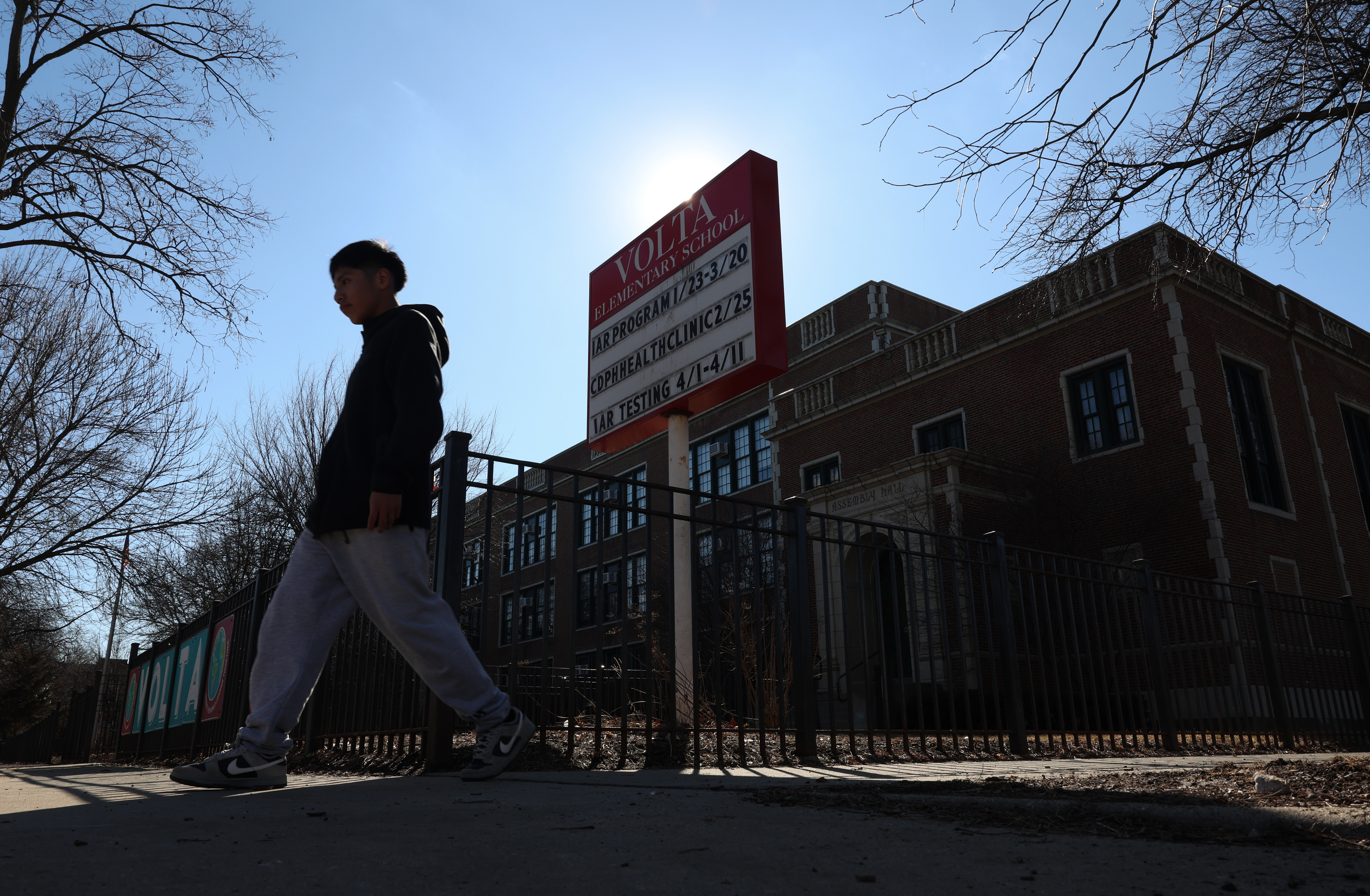
Let’s start with the facilities problem. The district takes out debt to pay for maintenance and renovation of school buildings. But because of its large, aging facilities footprint, these expenditures have become a bottomless pit. The district owns a whopping 803 buildings, with an average age of approximately 85 years. Just keeping these buildings operable is expensive, and the district struggles to meet even immediate building needs because capacity gets crowded out by legacy debt payments and operational revenue shortfalls. As a result, CPS faces a high cost for maintenance and repairs each year, and it pegs its backlog of long-term infrastructure needs at about $14 billion.
But CPS has, in some part, put itself in this position. It continues to maintain far more facilities than are needed for the number of public school students in Chicago. According to the district, it has space for up to 425,000 students. But this year, 133,000 of those seats — nearly 1 in 3 — went unfilled. This is because enrollment at CPS has been declining for decades and shows no sign of stopping. Yet, the district has not calibrated its facilities footprint to align with enrollment declines. Instead, CPS spends money to maintain aging facilities it simply does not need. It doesn’t matter how many students attend a school — a leak in a roof costs the same amount to fix regardless of whether the school enrolls 20 kids or 2,000, so spreading students out across more schools than necessary makes maintenance costs much higher.
Now let’s look at the second issue: CPS’ constant state of fiscal crisis. Here again, the district has contributed to the problem itself. During the pandemic, prior leadership used federal funding to vastly expand its staffing and spending, and it did so with no plan for how it would fund the expanded operations when the temporary funding expired. Now that the federal funding has ended, CPS’ costs are higher than its revenues, and enrollment continues to decline.
The district is legally obligated to pass a balanced budget, but it has few revenue levers to use, apart from raising property taxes to the maximum amount allowed by law each year. So, when it faces a deficit — which it does every year — CPS has no responsible choice but to make cuts. Backed into this corner, the district historically has used debt refinancing to cushion the blow of cuts that could otherwise directly affect the classroom. Last year, CPS frontloaded refinancing savings. While refinancing made money available for immediate operating purposes and did not make the district’s debt load any worse, it also did not help with the larger structural fiscal challenges, as almost every dollar of savings was concentrated in 2026.
CPS is mired in a deep financial hole. With high debt, no cash reserves, a junk credit rating and inequitable pension burdens relative to other Illinois schools, it is projecting an operating deficit of $732 million for the 2027 school year. The hard decisions needed to stabilize CPS this year must prioritize measures that will stabilize it in the years ahead; more short-term transactional fixes will only make matters worse in the coming years. The ultimate fix to CPS’ long-running fiscal straitjacket will inevitably require help from Springfield. But a reluctant and fiscally constrained Springfield will need to see that it is working with a fiscally responsible partner.
If the district is to avoid total fiscal collapse and secure help from the statehouse, the work to right-size its facilities, reduce its maintenance costs and lower its debt load must begin immediately. And above all, the district must not take on any debt for operating costs, even if pushed to by outside and routinely myopic political forces.
Balancing the 2027 budget should not come at the cost of educating our children today. But it must not come at the cost of educating our children’s children tomorrow.
The time has come for CPS to begin to address not just its immediate fiscal challenges but its structural ones as well.
Joe Ferguson is president of the Civic Federation.
Submit a letter, of no more than 400 words, to the editor here or email letters@chicagotribune.com.