

Stephen Sondheim was not loved by his mother. But in his final work, “Here We Are,” he wrote lyrically and pseudonymously of a dream wherein his mother appeared and told him to stop dreaming. He refutes her admonition in favor of the romantic love he had finally found: “It’s the end of the world. There is nothing but you. I’ve been looking for love all my life, I’ve no farther to go.”
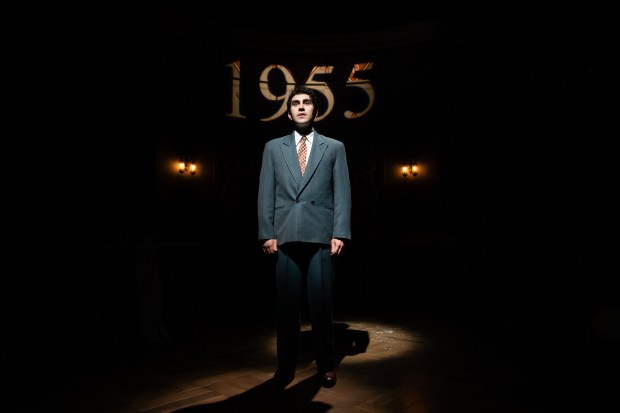
That may appear to have nothing to do with Tom Stoppard’s “Leopoldstadt,” an epic drama about a highly cultured Jewish family in Vienna between 1899, when they were flourishing in art, mathematics, science and music, and 1955, when they had been mostly wiped out by a Nazified Austria.
But it does.
“Leopoldstadt,” now in its Chicago premiere at Writers Theatre, was Stoppard’s last play, consciously so. Like Sondheim, a fellow genius who shared his fascination with puzzles, intellectual games and the relationship of matters of the heart with empiricism, Stoppard spent his career exploring these matters in “Rosencrantz and Guildenstern Are Dead,” “Arcadia,” “The Real Thing” and so many others — frequently giving sympathetic hearings to characters he did not like and ideas he did not sanction himself, because that is what he believed a playwright was morally bound to do. As in the plays of William Shakespeare, Stoppard’s authorial point of view was intentionally obfuscated.
But in his brilliant last play, Stoppard wrote, pseudonymously, about his own family tree — specifically his guilt at having not only escaped the Holocaust but having embraced his emigre mother’s determination that he live as an English boy, not necessarily denying his Jewish heritage but certainly not giving it emphasis. The play, which was first seen in London in 2020 and then on Broadway in 2022, where it rendered me speechless, was Stoppard’s “The Tempest,” the work in which he acknowledged the creed that August Wilson emphasized, 10 times over, that we all stand on the shoulders of our forebears. Our achievements, he was saying, not only never are our own, but invariably flow from the suffering and sacrifice of previous generations.
All of that leads me to say that “Leopoldstadt,” including this production of “Leopoldstadt,” is essential viewing for any Stoppard fan, for anyone Jewish, certainly, but also anyone looking at how one of the English language’s sexiest, smartest, shiniest writer-celebrities finally found his way home, writing how he wanted to exit, as he did last year.
He knew about the mortal coil from birth. Look at what he said in “Rosencrantz and Guildenstern: “Out we come, bloodied and squalling, with the knowledge that for all the points of the compass, there’s only one direction. And time is its only measure.” Decades later, he wrote the bookend. You don’t want to miss that.
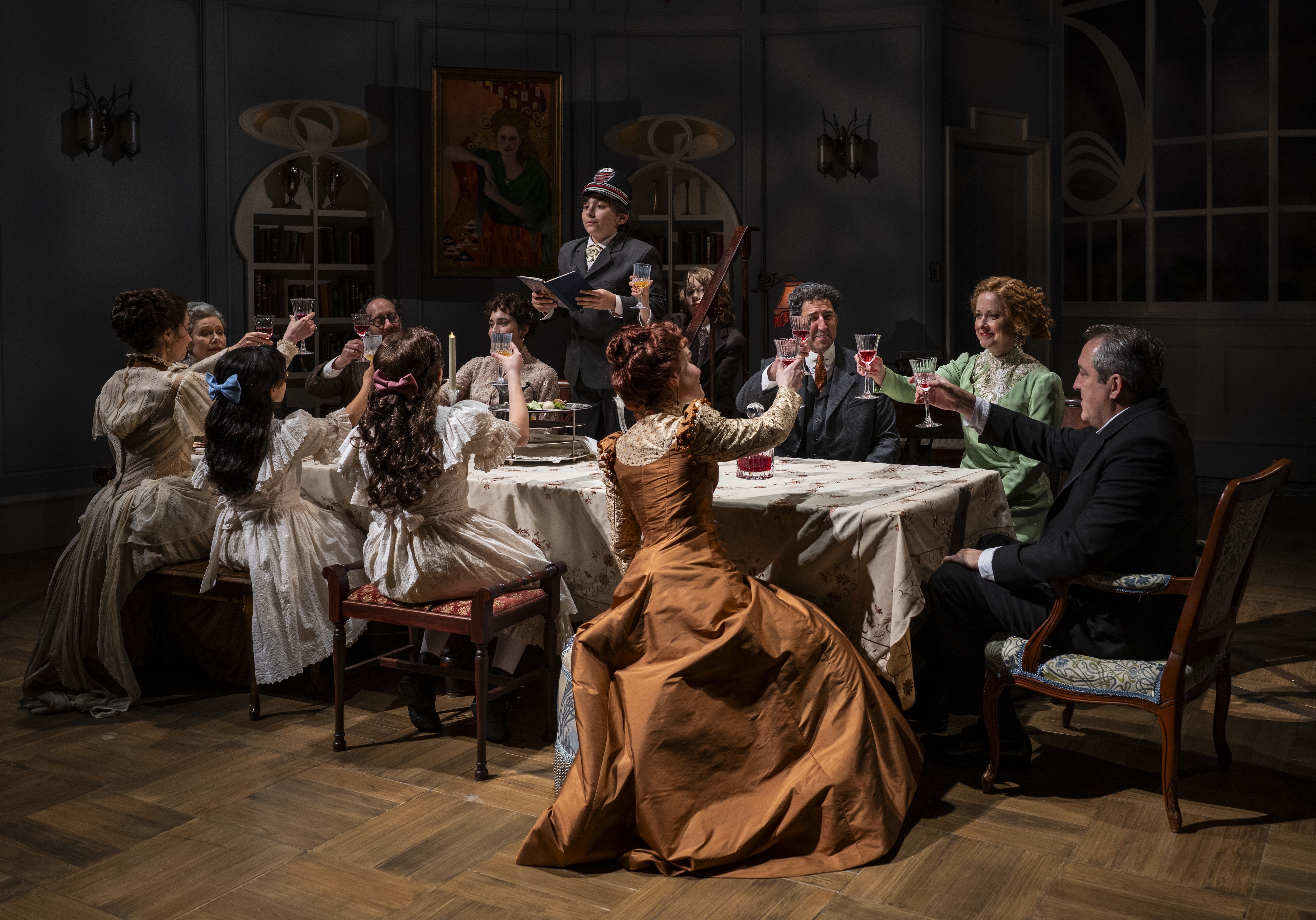
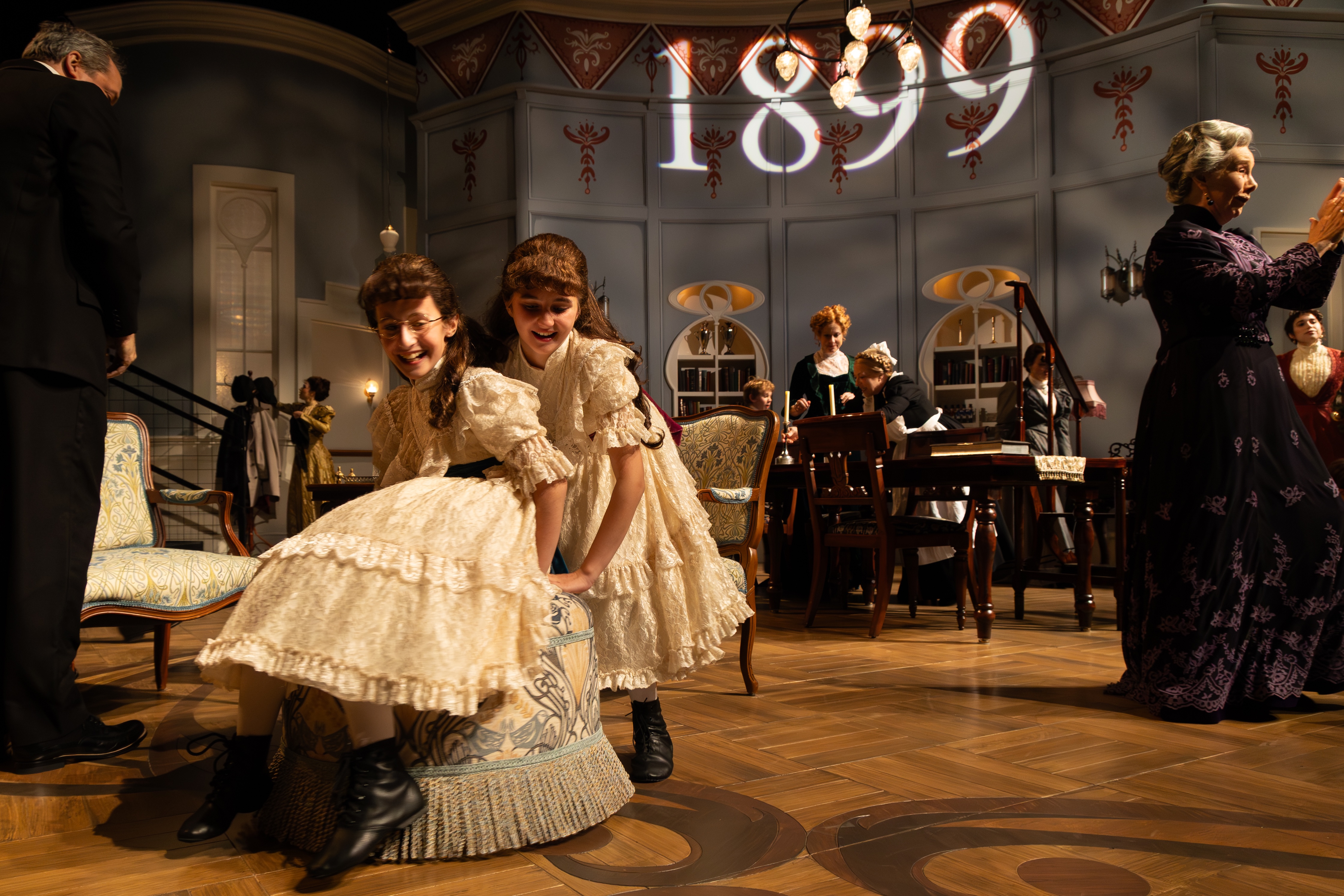
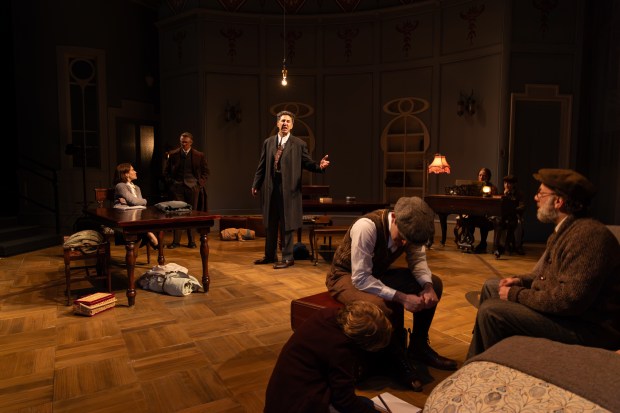
After some revisions approved by the playwright in recognition of the economic reality of nonprofit North American theaters, “Leopoldstadt” is being produced by Writers Theatre under Carey Perloff’s well-informed and experienced direction with a smaller cast, although 23 actors (including eight children) still represents a massive undertaking for a nonprofit Chicago theater. The ambition is laudable and has characterized this institution from the beginning.
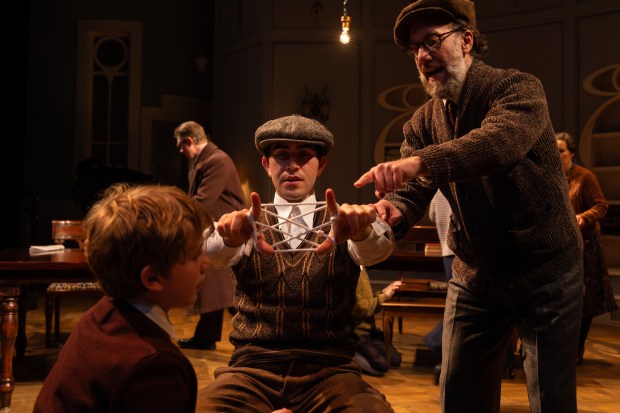
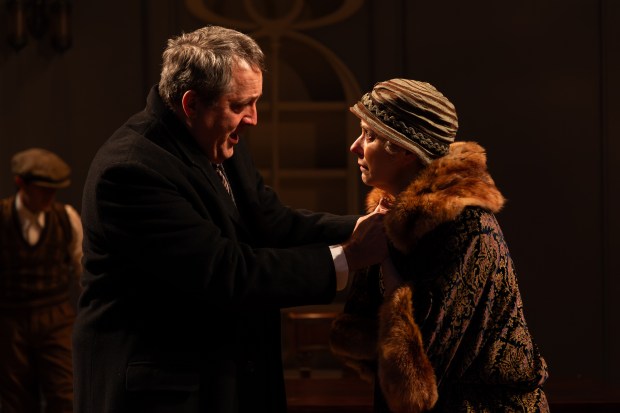
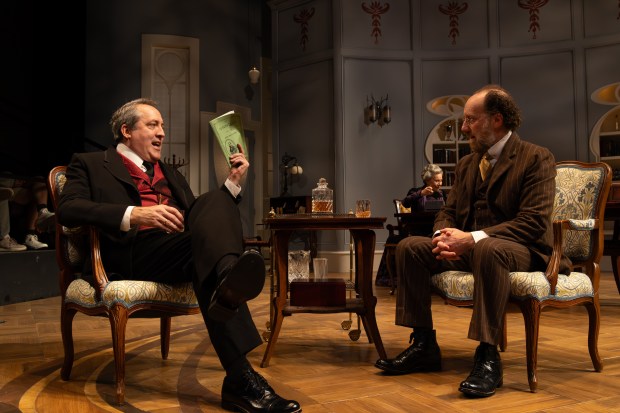
Herein, you’ll find a group of highly experienced Chicago actors, par excellence; the older performers in this production all understand what this play represents. Kate Fry, whose assignment here as Gretl requires a temporal transition from the coquettish and sensuous to a character rich with the moral authority of experience and an ability to judge the folly of others, is quite extraordinary. Joey Slotnick is exceptionally moving as an exemplar of Jewish achievement and Jewish mentorship and, while Sean Fortunato has many fine performances under his belt, there is something about the insecurity and uncertainty — drawn from an acute sense of foreboding — with which he imbues the character of Ernst that makes this, for my money, the best performance of a career I’ve almost entirely witnessed. Ian Barford, who plays the verbose and focused Hermann, drives the play as a Jewish entrepreneur who understands the need to plan ahead, and Barbara Robertson, the matriarch of the family and the evening, stands tall here.
The storytelling unfolds with a sure hand on Ken MacDonald’s serviceable set (he has worked on this play elsewhere and I did not feel it entirely fit this space) and with Alex Jaeger’s banquet of costumes. Don’t worry about keeping track of everyone. You will.
But notwithstanding my overall enthusiastic recommendation, I had some significant disappointments here, especially in the crucial last scene, which I did not think worked well, mostly because Sam Bell-Gurwitz did not appear yet to have grasped the gravitas of the authorial character, Leo, he was playing nor the emotional complexity of the revelations unspooling there as a young man confronts his past for the first time.
Perloff should not have let Leo’s defense of his English upbringing be played for laughs. Leo means and feels it, as did Stoppard, who brokered into a formidable career, even though both come to see it as a warm coat, put on. I found Justin Albinder overly theatrical as the Holocaust survivor, Nathan, even though this talented actor is highly effective in a previous scene. What was needed here, in this most important moment, was the kind of simple truth you see in what Jessie Fisher is doing as Rosa, who knows: everything gets stripped away from all of us in the end, as we arrive at what matters. And you don’t have to be old to experience that revelation, either. Not when your family was wiped out in the Holocaust. Not when you were, or could have been, in a camp yourself.
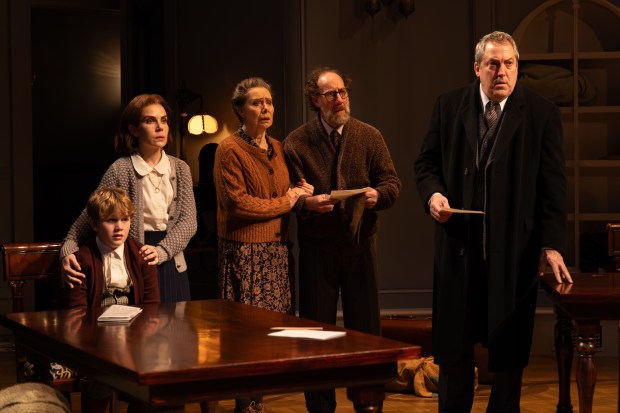
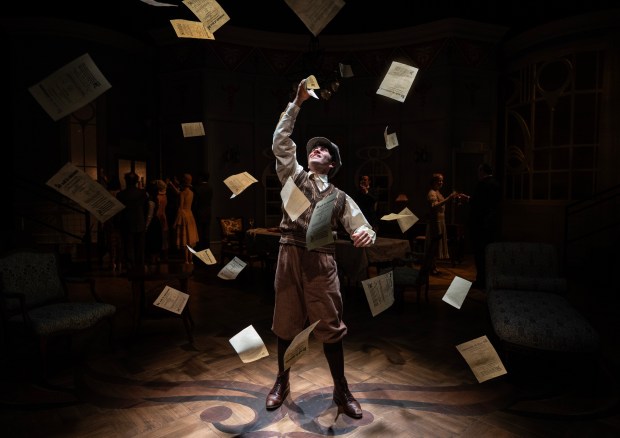
Indeed, I found some other scenes in this production to be overly cool to the touch, including a devastating moment when one character facilitates the death of another, an act of profound mercy and even profounder misery. It is rushed here as the show moves on; in the best Chicago theater, emotional subtext always is everything, and I’m a partisan. Not there yet, here.
Thinking about all of that, I was struck how probably none of this would have occurred to me in any other production of any other Stoppard play; I’d have been merely caught up in so skilled and fluid a staging of such a complex story with its rush of of life and energy and creativity and then the coming of antisemitic hate unfolding with a slow-enough burn that millions were caught in the cruelty of its flames.
But then, as I said, “Leopoldstadt” is different.
Chris Jones is a Tribune critic
cjones5@chicagotribune.com
Review: “Leopoldstadt” (3.5 stars)
When: Through Aug. 9
Where: Writers Theatre, 325 Tudor Court, Glencoe
Running time: 2 hours, 45 minutes
Tickets: $35-$95 at 847-242-6000 and writerstheatre.org