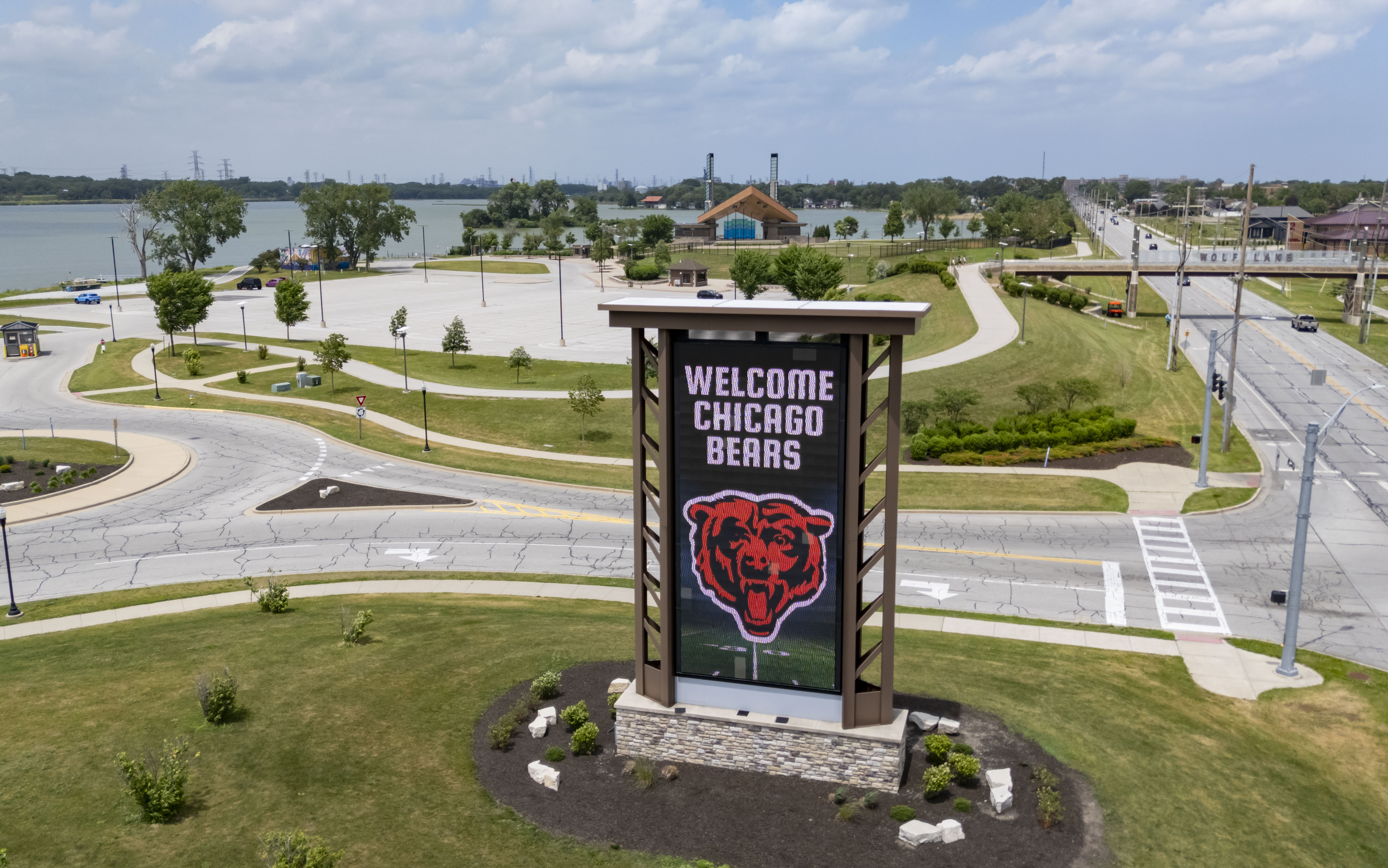

While some in the south suburbs recognize potential benefits to their communities as the Chicago Bears plan for a new stadium in Hammond, many continue to express support for the team staying in Illinois.
That includes Calumet City Mayor Thaddeus Jones, who last month called the potential Hammond stadium as a lifeline for his plans at the long-struggling River Oaks shopping center.
“Just imagine how much traffic we’ll get once this development goes up,” Jones said the proposed entertainment district at the mall site. “If the Bears go to Indiana, the stadium is going to be built five minutes away from Calumet City.”
But Jones said he opposes to the Bears relocating to Indiana and doesn’t believe the team “can afford that reputational damage.”
“I want them to stay in Illinois because they need to pay taxes in Illinois,” said Jones, who is also a state representative. “I want them to stay in Illinois because all of their Chicago Bears fans … are in Illinois supporting the Bears. So I want them, whatever they’re going to do and build, I want that to be in Illinois.”
Jones said he hopes to draft a resolution in support of the Bears staying in Illinois to present at an upcoming City Council meeting. He also endorsed the Illinois General Assembly holding a special session this summer to help keep the football team in state.
Lynwood Mayor Jada Curry, president of the South Suburban Mayors and Managers Association, expressed similar views, saying what’s good for the state is good for its municipalities.
“I can’t comment on a what if,” Curry said. “What I can tell you is that I am very much pro-Illinois. I want to see businesses thrive in the state of Illinois, I want to see businesses thrive in Lynwood, and so it would be very difficult for me to want to get behind a business that’s going across the border.”

Curry said as Lynwood shares a border with Indiana, convincing business owners to set up shop on the western side is already a “daily fight,” considering Cook County’s comparatively high property taxes.
“Any business that I talk to always has the option of crossing over and considering the tax break,” she said.
But Southland Development Authority CEO Bo Kemp said south suburban officials should be prepared to capitalize on increased traffic through their areas if the team moves to Hammond.
On his podcast two months ago, Kemp discussed with Olympia Fields-based architect Edward Peck potential paths forward for the Bears and the tradeoffs of stadium locations under consideration.
He said the five miles surrounding a new stadium would be prime for development, as the thousands of people traveling to watch football or concerts will need places to stay, eat and shop.

“Figuring out how to make the experience of getting to the stadium, spending time at the stadium, feeling that the stadium is part of your home is key,” Kemp said. “For better or for worse, this is a chance to showcase your community.”
Kemp and Peck said to encourage travelers to stop by on their way to or from Hammond, neighboring municipalities should focus efforts on making their infrastructure inviting. That includes adding attractive signage, street furniture and shrubbery.
“All those things matter, and this is a chance for a lot of people who go to these games, who have almost never spent any time in the south suburbs, to get a different impression,” Kemp said. “So spending some time and effort to be strategic about what that journey looks like for people actually is job number one.”
Without intentional planning, the reality of a stadium near, but not in, the south suburbs could prove more complicated, Peck said.
“If we don’t somehow tie Homewood with Hammond, or Blue Island with Hammond, we could easily be a drive-by community,” Peck said. “People could go to the stadium for a concert, go to the pub across the street and then get back to Chicago or the western suburbs.”
ostevens@chicagotribune.com