
Once upon a time, a drone was a male honey bee whose only job was to mate with queen bees. Or it was defined as a sluggard or noise.
The term has since flown above the original definitions and become ensconced in our vernacular. A day doesn’t go by when drones aren’t mentioned in the news.
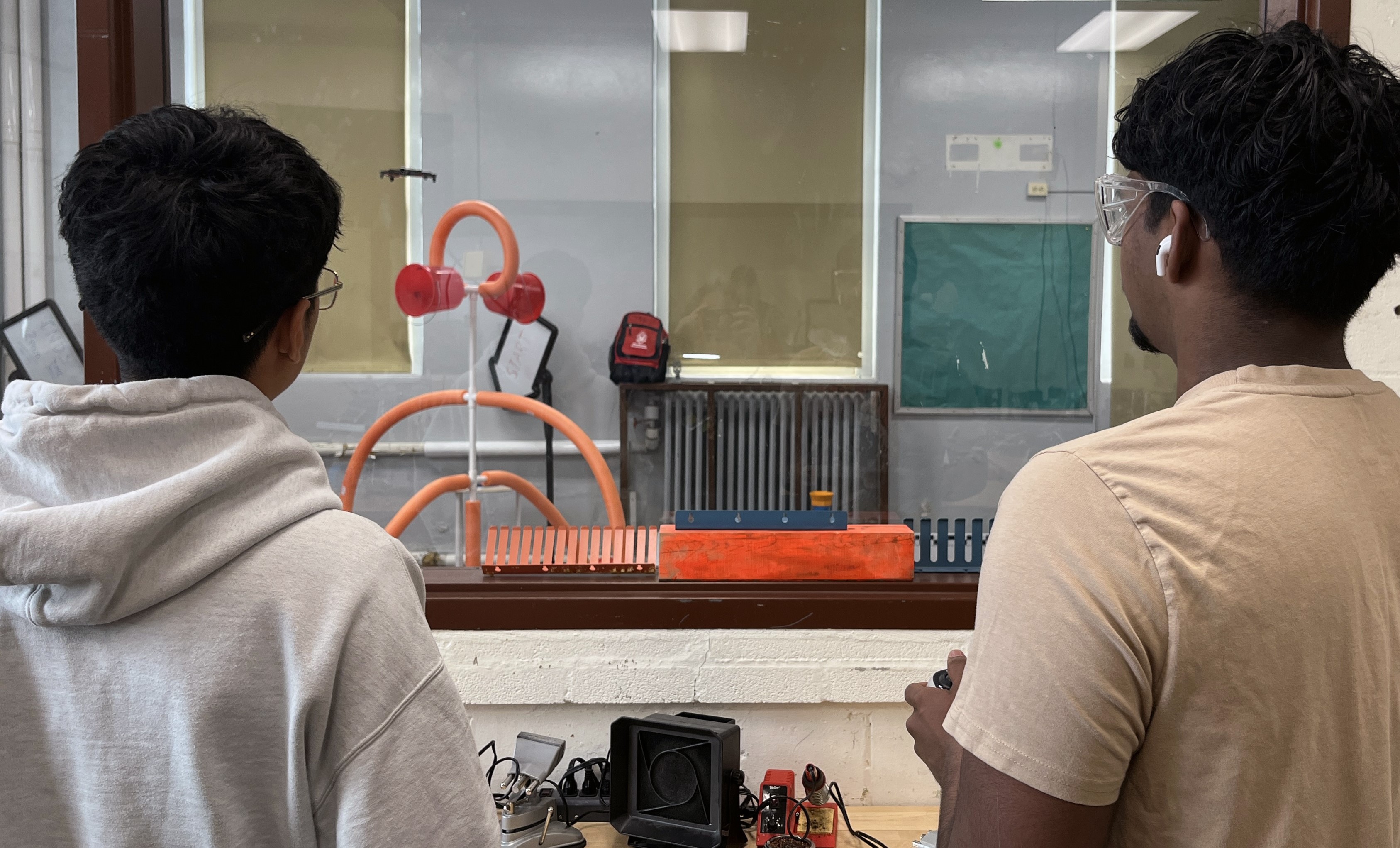
Today, drones are unmanned flying machines that can be found everywhere, including classrooms. Educators, like those at Waukegan High School, have taken notice and rapidly are including drone technology in career and technical education curriculum.
Waukegan High School is one of the few in Illinois to have students involved in learning drone engineering, an aspect highlighted by Steve Sadin’s front-page story in the April 9 News-Sun. The school has plans to increase its drone-learning offerings in coming semesters.
A couple state high schools in Chicagoland have programs centered on drone-flying certification. A license from the Federal Aviation Administration is need to in order to pilot drones.
Overall, drones, robotics and mechanical engineering have overtaken traditional high school classes of wood and metal shop, staples of “industrial arts” for those looking for an alternative to college-prep tracks. Which for American education is a step in the right direction as our students’ future is competition on a global stage.
Colleges and universities, too, have jumped on the drone bandwagon, with Dronethusiast, an industry journal, pointing to the University of North Dakota in Grand Forks as one of the first to offer an accredited degree in unmanned systems. Closer to home, Indiana State University in Terre Haute offers a major and minor in UMS technology. Others have drone career tracks in engineering and robotics sequences.
Less than a decade ago, drones were fragile toys and used by photographers for overhead images. Now, they are being used extensively for military applications, search-and- rescue missions, law enforcement surveillance, farming and business deliveries.
The future of drone usage is evolving. There are combat drones, tactical drones, quadcopters, micro-drones and nano-drones, some moving at speeds of more than 200 mph. The costs range from $500 to millions, depending on their applications.
The recent rescue of two Army crew members of an Apache helicopter downed by Iranian forces in the Gulf of Hormuz a few days ago by a Navy sea drone boat (considered an unmanned surface vessel) has expanded the use of self-maneuvering water-going vessels. They are equipped with cameras, sensors and navigational equipment that allow them to continue sailing over choppy water. Until the rescue of the helo’s crew, the Navy’s use of sea drones was kept under wraps.
There’s little debate that the Ukraine-Russo War, now in its fifth year, raised the bar in the use of drones in theaters of war. Drones have kept Ukraine in the fight against its larger opponent.
Ukraine, along with Iran, which has supplied Russia with its own drone force, has led the world in drone technology. They have been used on Ukraine battlefields for attacks and to bring the hurt of war to the Russian populace with long-range assaults by clusters of armed drones. Ukrainian drone attacks on Russian oil refineries have doubled since January, according to published reports, leading to interruptions in gasoline, diesel and jet fuel supplies.
When the Ukraine conflict began, drones provided supporting roles. No longer as Technological advances are increasing the capabilities of unmanned platforms.
They are robotic attack machines changing the face of tactics in combat zones and also being used to resupply troops, send in medical gear and lessen the risk to troops on battlefields. The race also is on for electronic-jamming devices to stop drones or detect them early.
The growing use of unmanned systems is a trend which continues. U.S. forces had to deal with drones launched from Iran into the Gulf of Hormuz during the Iranian air war.
With the success of drones on the battlefield, improving technology is a trend which will be continuing. Having drone engineering taught in a Waukegan High classroom may lead to the next step of having drone flight classes.
Applications for the machines are endless and a Waukegan student, learning the basics in high school and moving forward, could be in on what many see as the future of earthbound aeronautics. It’s an idea floating over local skies.
Charles Selle is a former News-Sun reporter, political editor and editor. sellenews@gmail.com. X @sellenews