

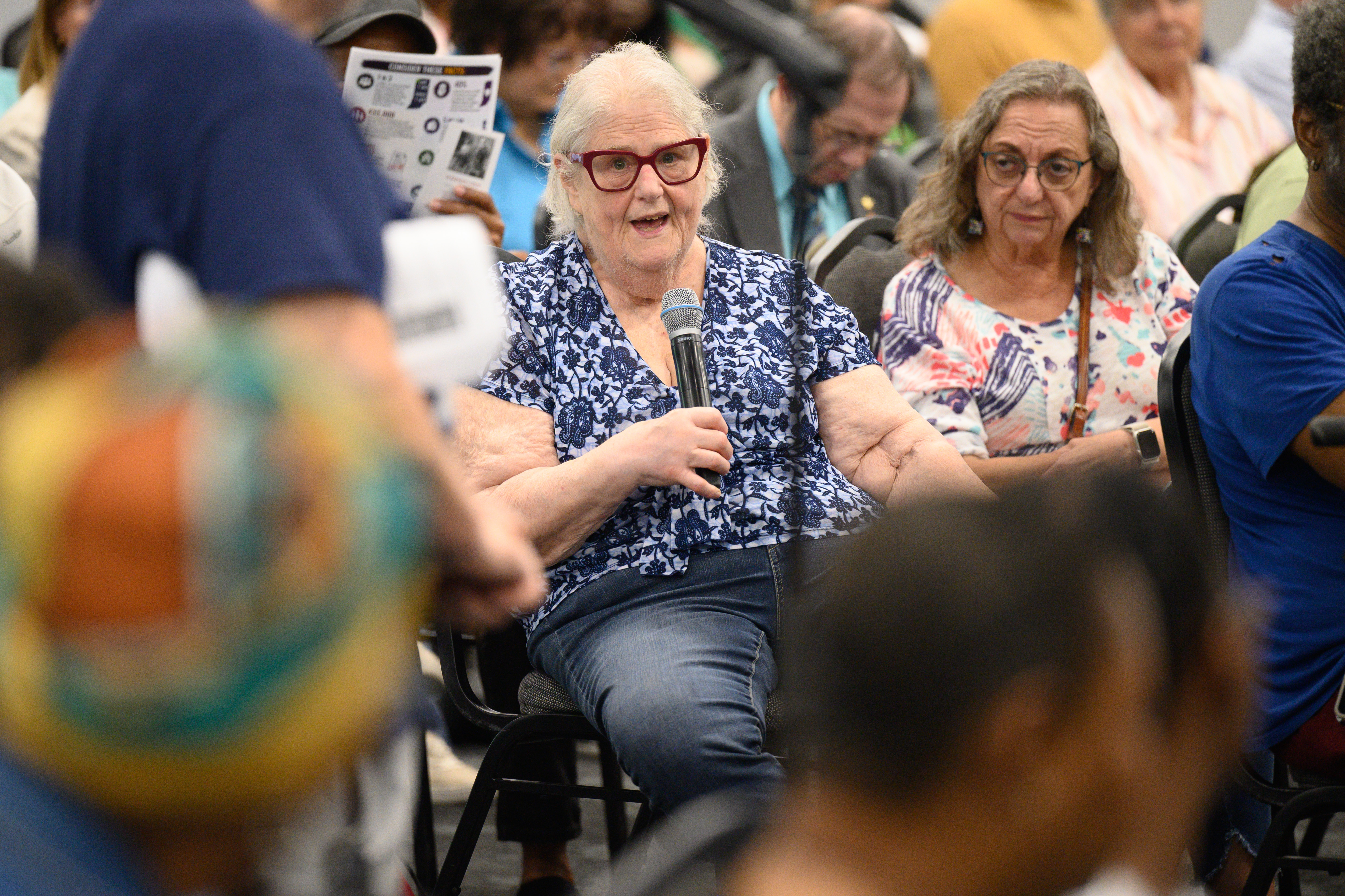

Northwest Indiana constituents want District 1 U.S. Rep. Frank J. Mrvan to “get a little spunk in his step” when it comes to healthcare.
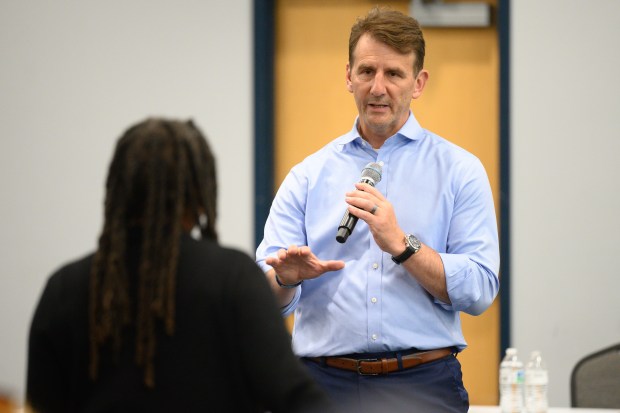
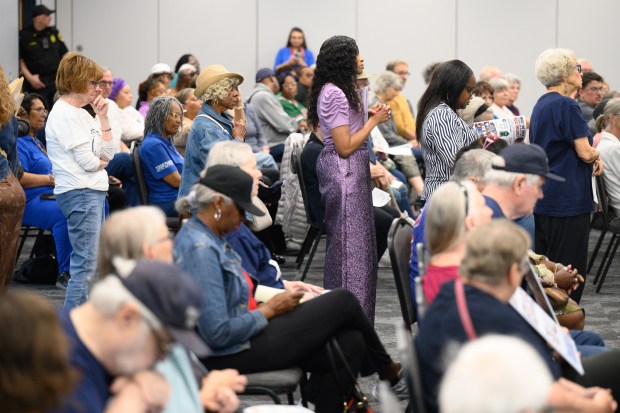
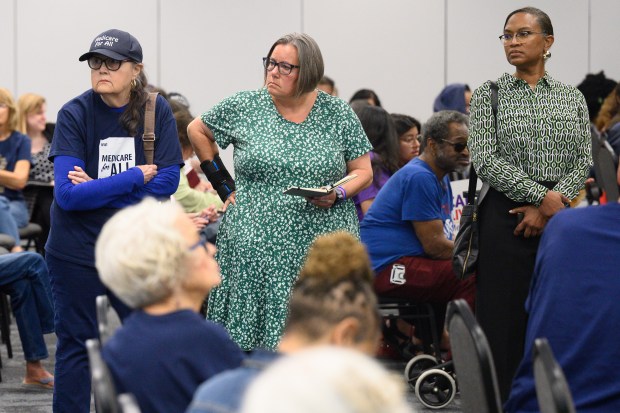
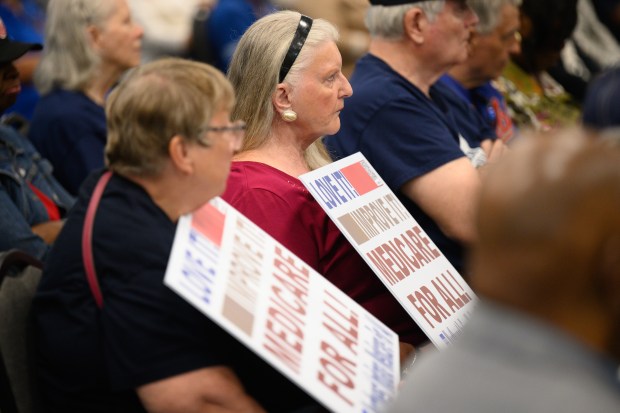
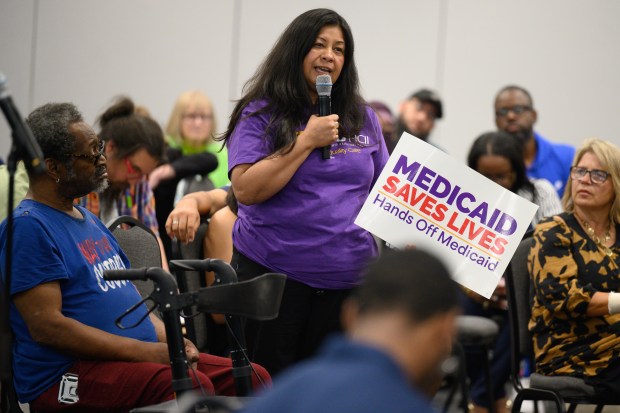
Mrvan, who held a listening session for healthcare concerns at the Dean and Barbara White Community Center Thursday night in conjunction with Merrillville-based disability group Everybody Counts, quantified for the nearly 300 residents who attended what they’re already experiencing: The current administration under President Donald Trump has gutted health-care spending by 34%, with more cuts expected, which means 35,000 to 40,000 Northwest Indiana residents will lose their healthcare this year.
Additionally, Medicare Advantage, or “Disadvantage,” as he called it, sees patients getting just about every treatment denied and doctors spending much of their time trying to get prior authorizations approved for them.
Mrvan, D-Highland, said he’s been part of efforts that saw insulin capped at $35 for many and a bill that capped the cost of 20 medicines; that number will increase to 30 and 40 medicines in the next few years. He was also part of efforts that allow federally qualified health centers, such as Northshore Health Centers, to get the meds they need and stopped a measure that would have gutted safety net hospitals, he said.
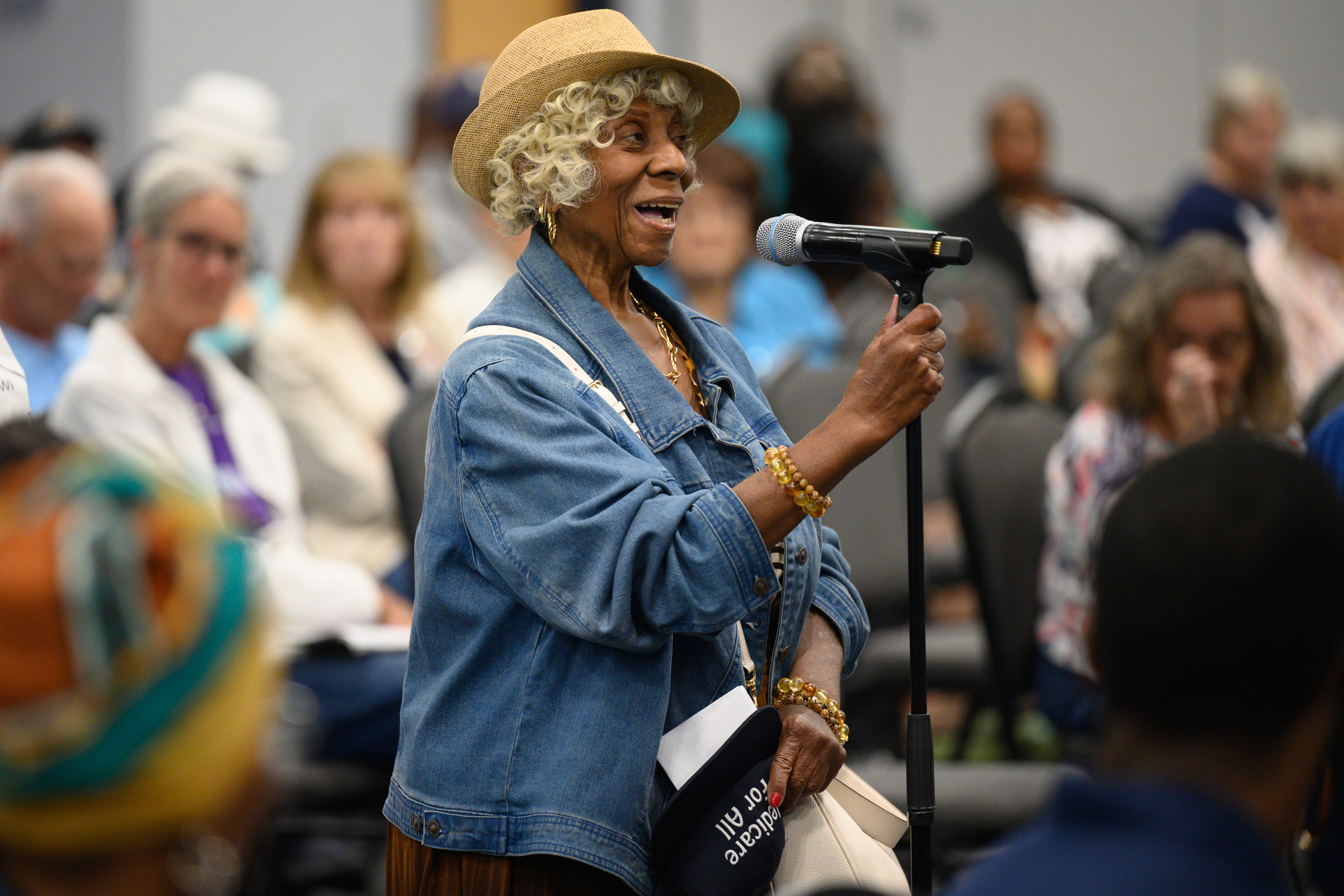
There is a bill with 111 sponsors, H.R. 3069, calling for Medicare for All, and Mrvan said he “has an open mind to it.” But healthcare is a “very contentious” issue with no easy solution, despite what people want to believe.
“The conditions for Medicare for All are now that that bill isn’t going anywhere,” he said. “As for the ACA (Affordable Care Act, also known as Obamacare), there are a lot of moving parts, and we need to find solutions that aren’t piecemeal anymore.
“The next majority (in the House and Senate) better have an answer, and they better have it quickly.”
The major point of the session was for Mrvan and his staff to hear residents’ stories so he could take them back to the House, he said, and the line of people extended out of the meeting room at one point.
Lin Kaatz Chary, of Gary, asked Mrvan what prevents him from signing on to Medicare for All.
“Again, the bill isn’t going anywhere, but there’s also arguments of single-payer and non-single-payer that need to be worked out,” he said. “But I’m open to be able to sign on to it.”
One woman, who identified herself as “Gigi” because that’s her 3-year-old grandson’s name for her, said he has a condition that causes him to choke when he eats. Doctors finally found twice-daily meds that worked for him, but when they went to pick up a refill, they were told their Medicaid would only pay for 15 days of the meds and that because the boy is on public insurance, she couldn’t pay for the other half.
“We had to blend all his food into baby food, and we were scared for a week,” she said. “Why do they do that?”
Mrvan said he wasn’t aware of the practice but said it’s more likely a guideline that can be overridden.
Another constituent, Beryl Fitzpatrick of Gary, said her copay is $900 for her oral cancer treatment. Having never smoked a day in her life, she said her doctors told her the cancer came from environmental factors.
“I think a temporary solution to this is restoring the ACA, so please take a leadership role,” she said.
Amy Turner LaDow, of Valparaiso, is a sixth-generation carrier of Huntington’s Disease, a condition that causes nerve cells in the brain to decay, according to the Mayo Clinic. While she isn’t in active illness, three of her sisters are, she said.
“I did all the right things: I worked for 40 years in high-tech, I bought long-term care insurance, and I bought life insurance,” LaDow said, sobbing. “Then I got laid off, and now we’re burning through our (retirement). Insurance doesn’t cover anything, and I can’t go to Chicago even though there are zero doctors who treat Huntington’s here.
“My father chose to leave this world (as his Huntington’s progressed) because he thought, ‘My family would be better off without me.'”
Kelli Jensen, justice director for the National Alliance on Mental Illness’s Indiana chapter, pointed out that 1 in 6 adults aged 19-64 and 3 in 8 children receive Medicaid benefits, as do 2 in 3 nursing home residents and 1 in 3 people with mental illness.
When Medicaid is cut, patients lose their continuity of care, and when it comes to people with mental illness, that often means law enforcement becomes the default line of defense, Jensen said.
When another woman told Mrvan that “we want to see you fighting,” he said he would.
“I scrap it up when I need to. When a bill comes up, I will advocate for it,” he said.
Michelle L. Quinn is a freelance reporter for the Post-Tribune.


