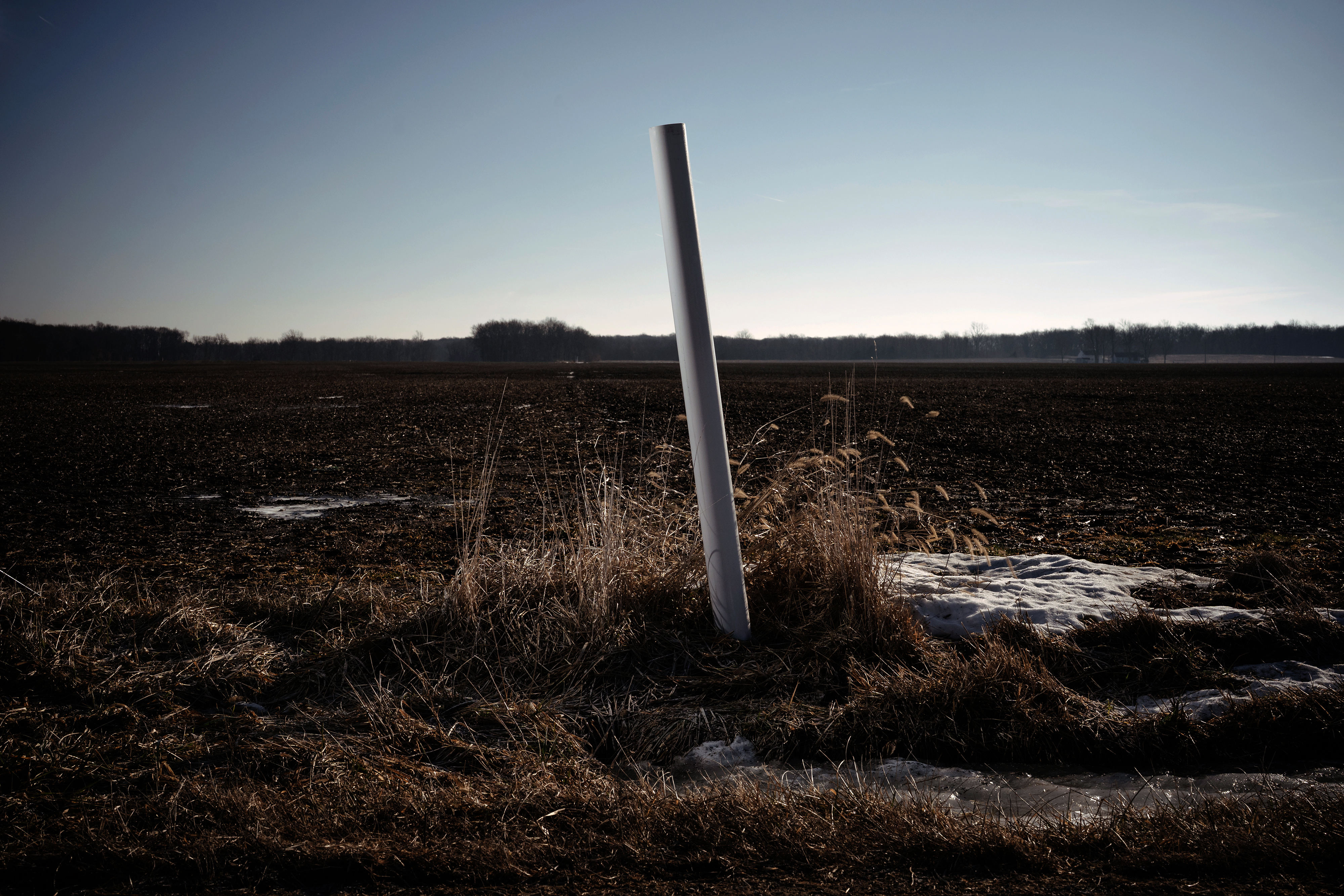


Thousands of abandoned oil and gas wells are strewn across southern Illinois, remnants of a distant past when the state was one of the nation’s top oil producers. They litter farm fields, hide in woods and abut waterways. Many are called “orphans” by the state, their owners dead or unidentified, their companies bankrupted by a notoriously volatile global industry punctuated with booms and busts.
Left unplugged, some of these wells leak toxic chemicals hundreds of feet below the surface, potentially contaminating groundwater, and spit climate-warming methane gas into the atmosphere. They allow an underground fluid called brine — several times saltier than seawater — to spill onto fertile farmlands, killing crops and leaving a virtually dead zone of soil that can take years to fix.
The Chicago Tribune is investigating how Illinois regulators have failed to stop the proliferation of abandoned oil and gas wells in the state. The series explores the ways in which oil operators have been able to easily evade their legal obligations to plug nonproducing wells, shifting millions of dollars in cleanup costs to taxpayers and exposing downstate communities to a host of environmental hazards, above and below ground.

At one time, Illinois was a top oil producer. Today, that legacy is a $160M problem.
While oil companies are responsible for mitigating environmental and public health risks by plugging oil and gas wells that have stopped producing, there are nearly 4,000 abandoned wells that are currently unplugged — holes, essentially, left behind for the Illinois Department of Natural Resources to close.
And for years, the state has fallen woefully short of the task, the Tribune has learned after reviewing hundreds of pages of public records and conducting more than two dozen interviews with southern Illinois farmers, oil industry representatives, environmental scientists and advocates. The paper’s three-month investigation found the state has mismanaged millions in operator fees designed to prevent orphan wells from becoming problems and has failed to document just how many abandoned wells exist. Read more here.

A mysterious company abandoned 603 oil wells, costing Illinois millions. Here’s how they did it.
A four-month Chicago Tribune investigation, drawing on hundreds of pages of previously unreleased public records and interviews with former state officials and oil operators, has revealed the startling ease with which Fireball Production Inc. was able to evade its legal responsibility for plugging wells that have stopped producing, exposing downstate communities to a host of contaminants — above and below ground — while saddling the state with millions in cleanup costs.
In Fireball’s case, state data show, the company ultimately abandoned 603 wells.
Its sudden and short-lived foray into Illinois’ oil business is estimated to have cost the state around $24 million. Read more here.

In Illinois, getting oil and gas operators to pay for abandoned wells can take decades
Nearly 200 oil wells in central and southern Illinois were once operated by Duncan Oil Co., which has been locked in a two-decades-long court case with the state over its repeated failures to plug leaking or unproductive wells.
The Illinois Department of Natural Resources and the Illinois attorney general’s office sued Duncan Oil Co., and the subsequent settlement agreement halted the attempted transfer of those wells from Duncan to Dix Oil Co. Both share the same mailing address in downstate Salem and are led by the same family.
The department touts the still-active case as an example of how it prevented abandoned oil wells from becoming the state’s responsibility to plug. Read more here.