
Asked what it’s like guiding the newly empowered, 21-member Board of Education — which tripled in size when it became half-appointed and half-elected — board President Sean Harden joked: “It was a cakewalk.”
The board overseeing Chicago Public Schools, the nation’s fourth-largest school district, was for decades a seven-member, appointed body and was largely regarded as a unified cabinet. But last year, the board began a two-year transition to an elected body.
Almost immediately, a divide emerged between members aligned with Mayor Brandon Johnson and his ally, the Chicago Teachers Union, and those who were not.
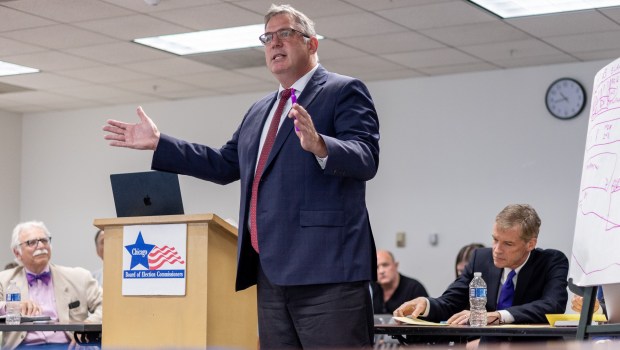
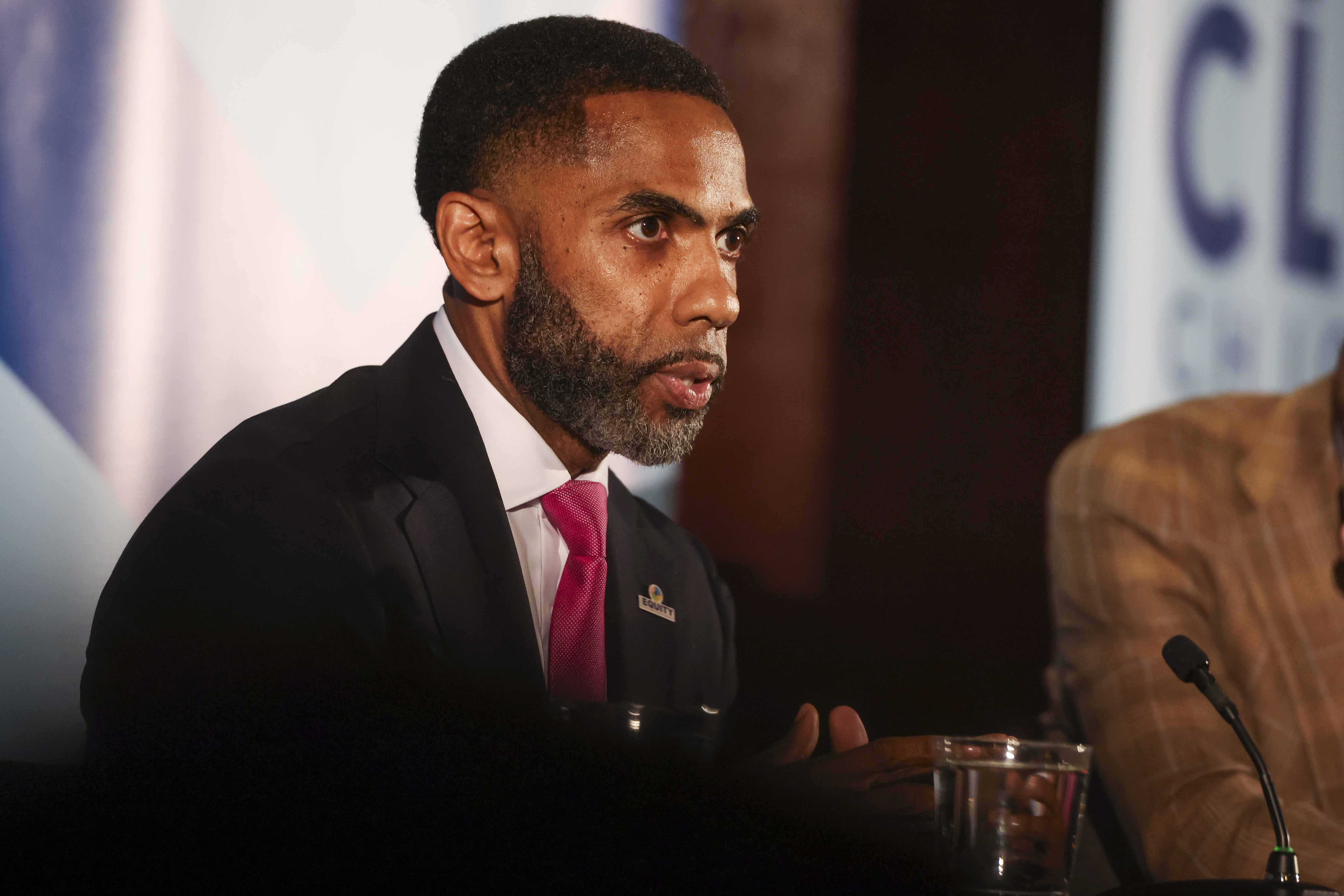
Harden, who was handpicked by Johnson, is typically more reserved in public meetings, but he did not mince words Tuesday before a packed audience at City Club of Chicago. He was joined by State Rep. Ann Williams, a Chicago Democrat who helped craft the legislation creating the elected school board.
“There isn’t a blueprint for how you do this, and we’re going to mess up, but as long as we fail quickly and learn from it, then we’ll be better off,” Harden said.
Progressives championed the elected model as a path to equity in a deeply segregated city still reeling from the aftermath of the mass school closures in 2013. The law establishing an elected board passed in summer 2021, after more than a decade of advocacy.
But the transition has at times been rocky. Last summer, for example, the board approved the district’s budget by a narrow margin, just one day before the state-mandated deadline. Members were split over the mayor’s push to include a disputed pension payment to the city and a short-term loan, both of which were ultimately left out of the final spending plan.

Harden said that it is difficult to reach consensus in part because of the board’s size. At 21 members, the board is among the largest in the country — most urban school districts have fewer than 10 members. Only New York City’s school board is comparable in size, though it governs three times as many students.
“If I had my preference, we would have a smaller board,” Harden said, though he noted he is “warming up” to 20 districts.
Williams, the state representative, defended the board’s expansion, noting that it allows community members to have more direct access to their board members. Previously, state legislators and aldermen served as informal liaisons to CPS because there was no alternative avenue for constituents to air their concerns, she argued.
“An issue as important as our schools, students and teachers needs to have that direct accountability,” Williams said.
Harden is the only sitting board member not running in November to keep his seat. A real estate developer, he joined the board during one of the district’s most turbulent periods in recent memory. He was appointed in December 2024, shortly after the entire previous board resigned amid a power struggle between the mayor and former CPS CEO Pedro Martinez. The new board, now led by Harden, voted to fire Martinez without cause a week after members were appointed.
Now, the board is learning to balance its managerial and governance responsibilities, Harden said. He said he believes the board should focus on “strictly governance” but acknowledged it has at times veered into management. Those decisions have played out publicly, such as when the board delayed charter school renewals or overruled personnel decisions.
“It’s important that we establish those guidelines, because once you cover outside those boundaries, the whole thing falls apart,” Harden said.

Williams also conceded that “democracy is messy” — but said that it is a reflection of how members are answering to diverse constituencies across the city. When the board was fully appointed, “nobody looked up” during public comment, she argued.
“They didn’t really care what you had to say. There was no representation. There was no accountability,” Williams said.
She added that the willingness of sitting board members to seek reelection, along with a slate of political newcomers vying for a seat, speaks to the significance of the elected body.
“At the end of the day, the democratically elected school board is a promise to the students of Chicago that we believe in you and that we are here for you,” Williams said.