
An Indiana prison is being built to accommodate firing squad executions as the state works to pass a law allowing for that execution method, which legal experts say is further compounded by federal pressures.
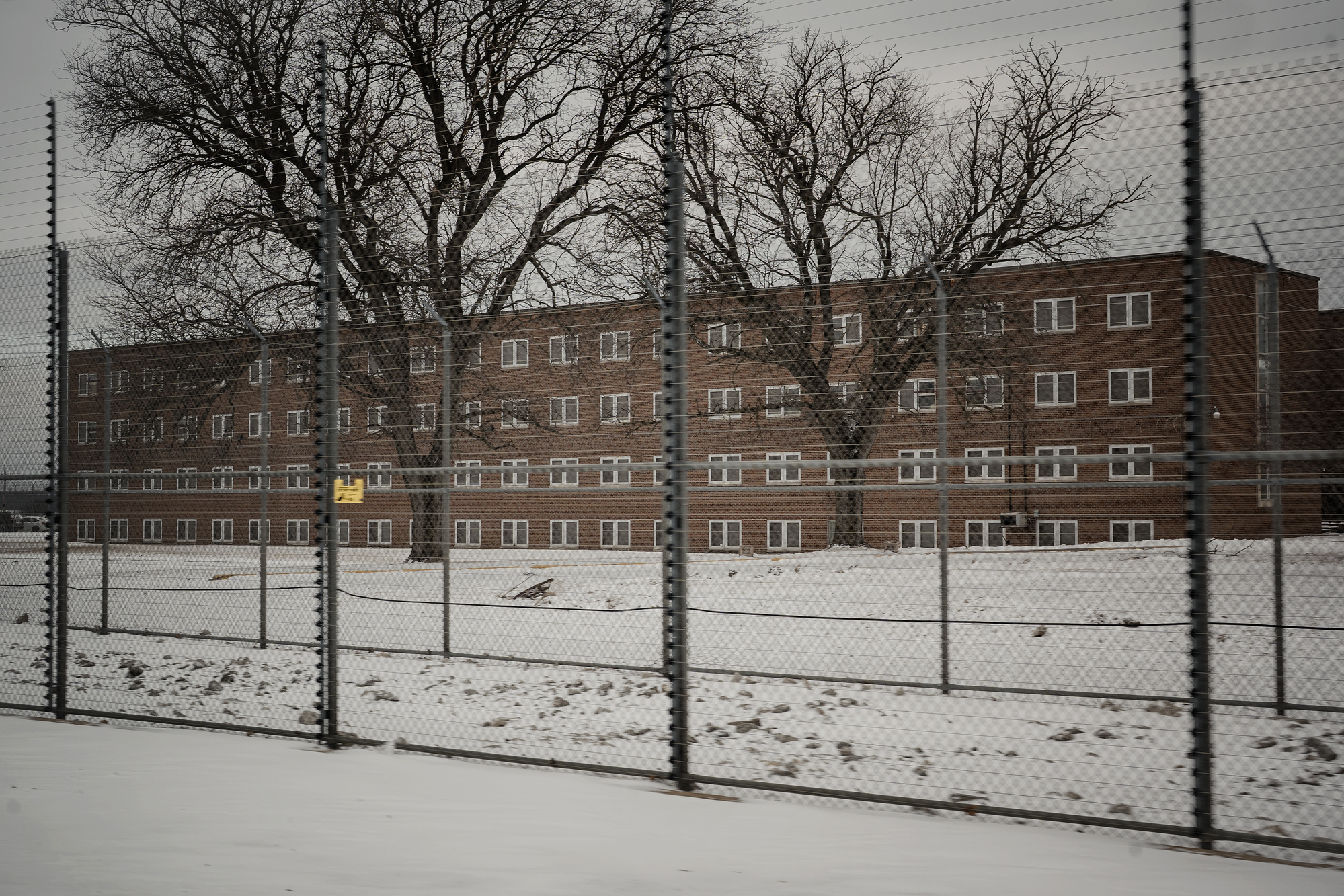
The Indiana Department of Correction told the Indiana Capital Chronicle that the new Westville Correctional Facility, now nearing completion on the grounds of the existing facility of the same name, is designed to accommodate both lethal injection and firing squad executions. Indiana law currently allows only lethal injection.
A DOC spokesperson declined to comment to the Post-Tribune.
In April, the Trump administration adopted firing squads as an authorized federal execution method and directed the Federal Bureau of Prisons to study whether the nation’s federal execution facility should remain centered in Indiana or expand to another state that already permits additional execution methods, according to a Department of Justice news release.
Two bills that would have legalized firing squads alongside lethal injection failed during the 2026 legislative session: Senate Bill 11 was heard in committee but never voted on and didn’t advance to the Senate floor, while House Bill 1119 didn’t have enough votes on the final vote by the House.
But Indiana lawmakers could bring forth similar bills next year.
Currently, all federal executions are carried out at the U.S. Penitentiary in Terre Haute, and execution methods tend to follow those authorized by the state where a death sentence is imposed or carried out.
Only five states — Idaho, Mississippi, Oklahoma, Utah and South Carolina — currently authorize the use of firing squads, while Florida, North Carolina and Tennessee allow firing squads if other methods are found unconstitutional, according to the Death Penalty Information Center.
Jody Madeira, a law professor at Indiana University Bloomington, said a recent U.S. Department of Justice report stated that it’s unclear if the Terre Haute prison will be able to continue to carry out federal executions because the state doesn’t allow for firing squad executions.
“Indiana authorities don’t want that business being taken away from the state because that’s jobs, that’s an investment by federal authorities in the State of Indiana,” Madeira said. “(The federal government) is hoping that Indiana will legalize death by firing squad. But if the state didn’t, then if Westville had these facilities then the federal government could still use them.”
But, even if the federal government were to authorize death by firing squad, it would likely be tied up in court as organizations and prisoners filed various lawsuits, Madeira said.
“Trump is not going to see it implemented in his term. It would be tied up. It’s going nowhere fast,” Madeira said.
State Rep. Jim Lucas, R-Seymour, proposed House Bill 1119 earlier this year that would’ve authorized firing squads as an option to carry out a death penalty alongside lethal injection. It failed in a 48-47 vote.
Lucas told the Indiana Capital Chronicle that he intends to bring the legislation back in the 2027 legislative session.
“I’m going to do my homework a little bit more and find out that sweet spot that other states have landed on, and that the courts have already proven is acceptable,” Lucas told the Indiana Capital Chronicle. “I know this is a touchy subject — it’s an issue for a lot of people. But we have to address it, and I want to be as respectful and tactful as possible.”
If the state doesn’t pass a firing squad bill in the 2027 session, Madeira said the law gets “messy.” Madeira said she believes a firing squad bill has a better chance of passing in the 2027 session given federal pressure and the Westville prison construction.
But, what’s more strange, is that the state is authorizing — and using taxpayer dollars — to build a prison facility that can’t be used under state law, Madeira said.
“It’s just a failure of governance. This is an administrative procedural decision making based on anticipatory executive prioritization or legislative decision making. It’s anticipatory, and it’s not supposed to work that way,” Madeira said.
While public support for the death penalty continues to decline, the federal government and some state governments have been pushing for the death penalty, and specifically, executions by firing squads, Madeira said. This push ultimately has little public support but uses taxpayer dollars, she said.
Abraham Bonowitz, the executive director of Death Penalty Action, said he has been outside the Indiana State Prison in Michigan City when the state resumed executions in late 2024. Bonowitz said it was “startling” that the state would build a prison to accommodate firing squad executions before passing a law allowing for the method.
“That kind of legislation, especially one would think in Indiana, should have no problem but yet it seems as if there are some moral qualms about the optics of that if nothing else,” Bonowitz said. “I do think it’s presumptuous and a little bit frightening that they are proactively building a facility for firing squad executions.”
Bonowitz said legal documents of a prison being built in Idaho shows that the building designers are asking state officials about noise levels and drainage for human waste in a room for firing squad deaths.
It cost the Idaho prison approximately $1 million to add the firing squad facility, so it’s possible Indiana is adding the firing squad facility now to avoid the cost of adding it later, Bonowitz said.
But, Bonowitz said Indiana doesn’t have many men on death row, so he didn’t understand the push for firing squad executions. Currently, there are five men on Indiana’s death row, but one of them has been ruled mentally incompetent.
Joseph Corcoran was executed in December 2024 for the 1997 killings of found men in Fort Wayne; Benjamin Ritchie and Roy Ward was executed in May 2025 for the 2000 shooting death of Beech Grove Police Officer William Toney; and Roy Ward was executed in October 2025 for the 2001 rape and murder of 15-year-old Stacy Payne in Spencer County.
Attorney General Todd Rokita is awaiting a decision from the Indiana Supreme Court on his request to set an execution date for death row inmate Jeffrey Weisheit, convicted in the 2010 killings of two Vanderburgh County children.