
Chicago employees and elected officials could soon be banned from using insider knowledge to place bets on online prediction markets like Kalshi and Polymarket.
The gambling-like markets that are soaring in popularity allow users to wager on a huge, diverse, growing number of questions, ranging from sports and elections outcomes to war ceasefires and even local policy: Will the Chicago Bears move? Will self-driving Waymo cars come to the city?
City leaders and staff must be clearly blocked from using their confidential information to place bets, argued the ban’s top proponent, Ald. Timmy Knudsen, 43rd.
“The work that we do within City Hall and within all of our offices is innately sensitive and often confidential,” Knudsen said. “We just need to be sure that people aren’t using any of that information for profit or for playing games.”
Aldermen advanced Knudsen’s measure in a unanimous voice vote Tuesday during a City Council Ethics Committee meeting. It will likely face a final vote next week.
Knudsen told the Tribune ahead of the Tuesday vote that city law already blocks elected officials and employees from using insider information to enrich themselves. City attorneys would argue prediction market bets are already against the law if a case went to court, he predicted.
But the emerging prediction markets are nonetheless a “little bit gray” because of a lack of federal regulation, he added. With his proposed ordinance, Knudsen hopes to draw a clear line.

“Why keep this gray, right? We need to ban it on its face,” he said. “The reason it wasn’t explicit is because this hasn’t existed until very recent time, so I think it’s a good clarifying ordinance, and we should be looking at the code all the time to clarify.”
Gov. JB Pritzker issued an executive order in April similarly barring state employees from placing bets based on nonpublic information obtained through their jobs.
On Tuesday morning, Polymarket users could buy predictions that the Democratic nominee, Pritzker, would be re-elected as governor for 94 cents to win a $1 payout. But shares predicting Pritzker would win the Democratic nomination for president in 2028 were faring far worse, at just one cent for a $1 payout.
On both sites, users can wager on who will win the city’s 2027 mayor election, plus take sides on whether the Bears will leave or Waymo will arrive in coming months.
The Illinois Gaming Board has sent cease-and-desist letters to prediction market platforms, including Kalshi and Polymarket, since the beginning of last year, arguing the businesses were engaged in illegal gambling.
Earlier this month, the federal government filed a lawsuit against Illinois, asserting that the federal Commodity Futures Trading Commission, not the state gaming board, has regulatory authority over those platforms.
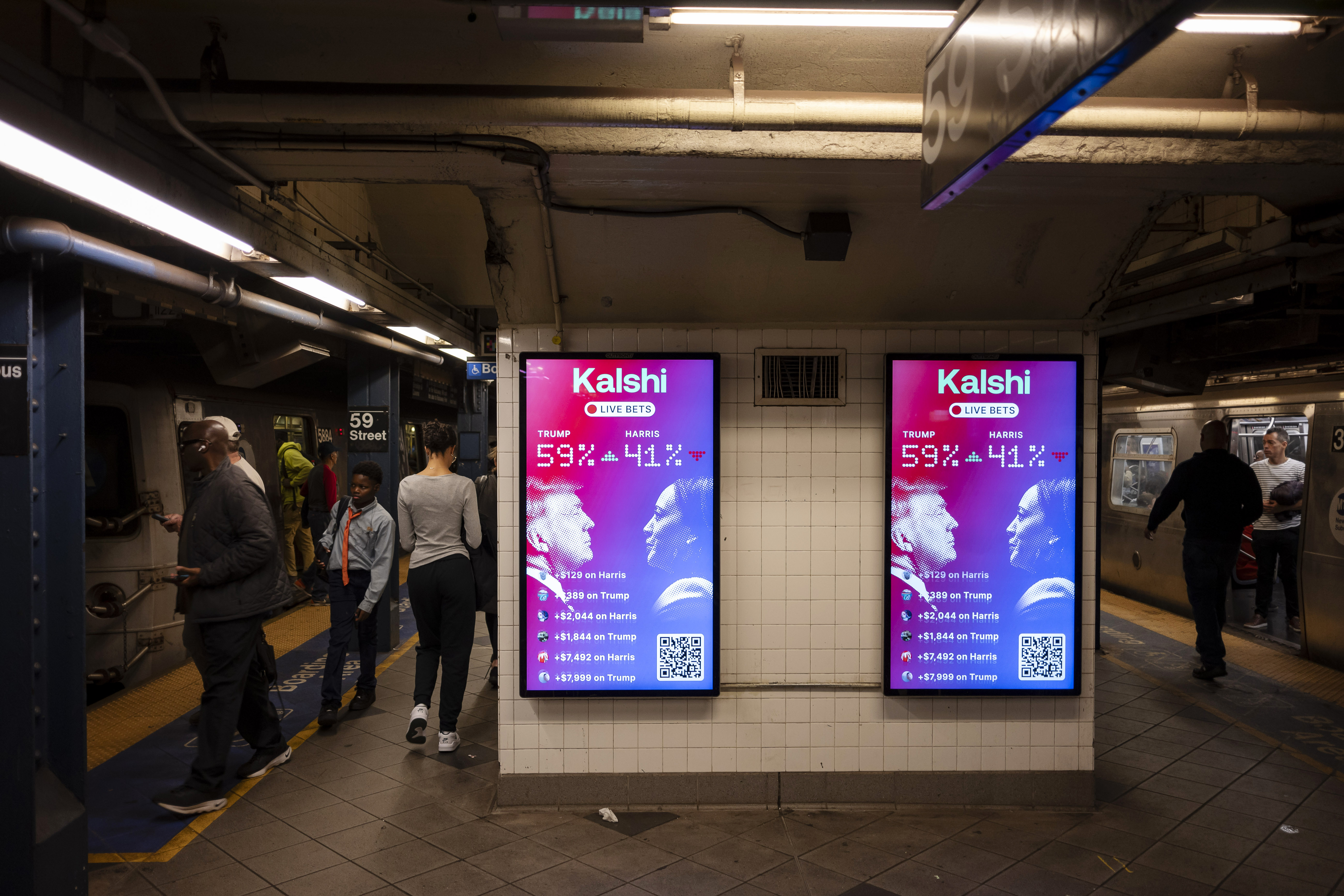
The often overtly political markets have suddenly become an almost unavoidable part of American life in the last year, with advertisements that dominate social media and television. Their seeming omnipresence was on Ald. Maria Hadden’s mind as aldermen considered the ordinance Tuesday.
“You can’t watch a sports game without something coming up, Kalshi dominates my TikTok feed,” Hadden, 49th, said. I’m just like, leave me alone.”
During the meeting, Knudsen pointed to potential examples of overstep. Nationally, an Army soldier has already been charged for commodities fraud for using nonpublic information to bet on the capture of Venezuelan President Nicolás Maduro, he said.
In Chicago, if an aldermanic staffer saw their ward’s boss come in looking swearing and upset days before an election, they might use that forewarning to wager, he said.
“We learn a lot and we see a lot that isn’t necessarily publicly available. You can skew that into a bet,” he said. “We learn many things first, and often we learn them first without even realizing that we have access to the information before the public. So it’s really a clarification, really just trying to create that guardrail.”
The markets have themselves cracked down on political insider trading. Kalshi announced in April that it had fined and suspended congressional candidates in Minnesota, Texas and Virginia for betting on their own elections.
Ald. Nick Sposato, 38th, ultimately supported the measure, but not before asking about its limits. He said he wants to do “everything he can” to keep the Bears in Chicago, before adding that he wouldn’t raise taxes to do so, and questioned whether wagering on them staying is a violation.
And he asked why it would be a bad thing to bet on his own chances of winning reelection.
“If I have an opportunity to bet on myself in this election, I’m betting the house on me,” he said.