

Here’s a look back at what happened in the Chicago area on July 8, according to the Tribune’s archives.
Is an important event missing from this date? Email us.
Flashback: July 8, 1989

1989: Nirvana played Club Dreamerz on Milwaukee Avenue in support of the band’s debut album “Bleach.” The show was one of more than 10,000 recorded by Aadam Jacobs.
A 1973 Fender Maverick guitar that lead singer Kurt Cobain played during the concert sold for almost $500,000 during a 2022 auction.
Weather records (from the National Weather Service, Chicago)
- High temperature: 99 degrees (1955)
- Low temperature: 48 degrees (1984)
- Precipitation: 2.41 inches (1951)
- Snowfall: Trace (1911)

1896: William Jennings Bryan stepped onto the podium at the Democratic National Convention inside the Chicago Coliseum at 63rd Street and Stony Island Avenue, and demonstrated that reformers could profit from working within the system rather than fighting it.
Stretching his arms wide, he mimed Jesus’ crucifixion.
Chicago’s history with hosting Democratic and Republican conventions dates back to 1860
“You shall not press down upon the brow of labor this crown of thorns!” he thundered. “You shall not crucify mankind upon a cross of gold!”
Bryan played third-party politics to his advantage. He won the nomination but lost the presidential election to William McKinley.

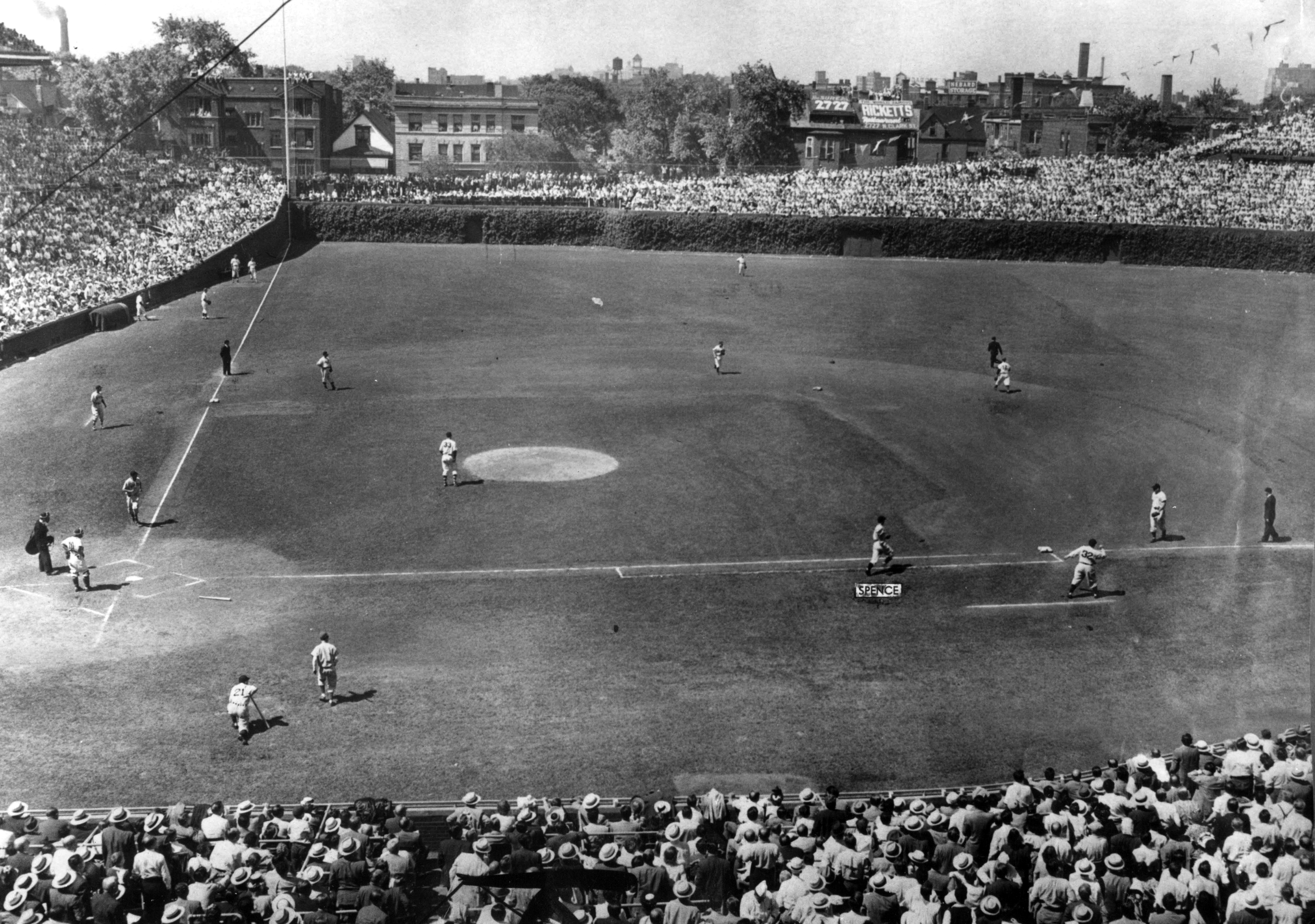
1947: American League 2, National League 1
Wrigley Field’s first All-Star Game was a low-scoring affair that was eventually decided by the sharp baserunning of the Boston Braves’ Bobby Doerr.
Johnny Mize’s fourth-inning home run off Spec Shea sent the NL in front 1-0. The AL got that run back when Luke Appling singled in the sixth, went to third on a Ted Williams single, and scored while Joe DiMaggio was grounding into a double play.
A look back at when Chicago ballparks have hosted All-Star Games as Wrigley Field prepares for 2027
With the game tied 1-1 in the seventh inning, Doerr singled, stole second and advanced to third after pitcher Johnny Sain’s pickoff throw sailed into the outfield.
Pinch-hitter Stan Spence then singled Doerr home for the deciding run. It was the AL’s 10th victory in the 14-game series.
More than 41,000 fans gathered on the North Side and contributed $105,314.90 (or roughly $1.5 million in today’s dollars) to the players’ pension fund.

1978: The Rolling Stones headlined at Soldier Field for the first time. The stadium was filled on a steamy summer day with 80,000 fans, with opening acts Southside Johnny and the Asbury Jukes, Peter Tosh and Journey, featuring new vocalist Steve Perry.
The Rolling Stones in Chicago: A timeline of the band’s 55-year fascination with the city’s blues
The Stones’ set list included most of the songs on the quintet’s latest release, “Some Girls.” Later that night Jagger dropped in on a Lefty Dizz set at Kingston Mines.
Want more vintage Chicago?
Subscribe to the free Vintage Chicago Tribune newsletter, join our Chicagoland history Facebook group, stay current with Today in Chicago History and follow us on Instagram for more from Chicago’s past.
Have an idea for Vintage Chicago Tribune? Share it with Kori Rumore and Marianne Mather at krumore@chicagotribune.com and mmather@chicagotribune.com


