

In the past year, two major fact-finding reports about police accountability in Illinois have been released, both reaching the same conclusion that law enforcement agencies in Illinois are falling short on delivering equitable, accountable and transparent policing — all essential elements to effective public safety.
One of us is a co-chair of the Massey Commission, a citizens’ commission created after the police murder of Sonya Massey in the Springfield area. The other is a program manager with the Illinois Justice Project. We were directly involved in the reports and were present for difficult but productive conversations between police and community members. We encourage all leaders in this state to use the findings as the catalyst for transformative policing reform that makes communities safer and the work of front-line officers more effective.
When there were widespread demands to reform policing and strengthen police accountability in 2021, Illinois responded by passing the SAFE-T Act, one of the most comprehensive police accountability statutes in the country. Legislative leaders, the attorney general, advocates for police accountability and law enforcement collaborated to address the lack of quality police training and accountability in use of force with reforms such as requiring body-worn cameras and a process to decertify officers with patterns of misconduct.
In 2024, state Sens. Elgie Sims Jr. and Robert Peters and state Rep. Justin Slaughter, along with the Illinois Justice Project, posed a question that is rarely asked about legislation: After three years, were the policing provisions actually being implemented?
In April, a broad group of experts, advocates and researchers, led by law enforcement and community members, produced an in-depth answer. The findings of the Workgroup to Implement the SAFE-T Act Policing Provisions revealed that full implementation had not been achieved by any of the law’s policing provisions that the group examined.
Critically, the report addresses the concerns of law enforcement officials across the state, who sought clarification about how to implement the provisions. It also underscores community demands for more transparency and accountability from local officers. And it found that there was not a process in place to decertify officers; decertification prevents officers from getting hired by other agencies.
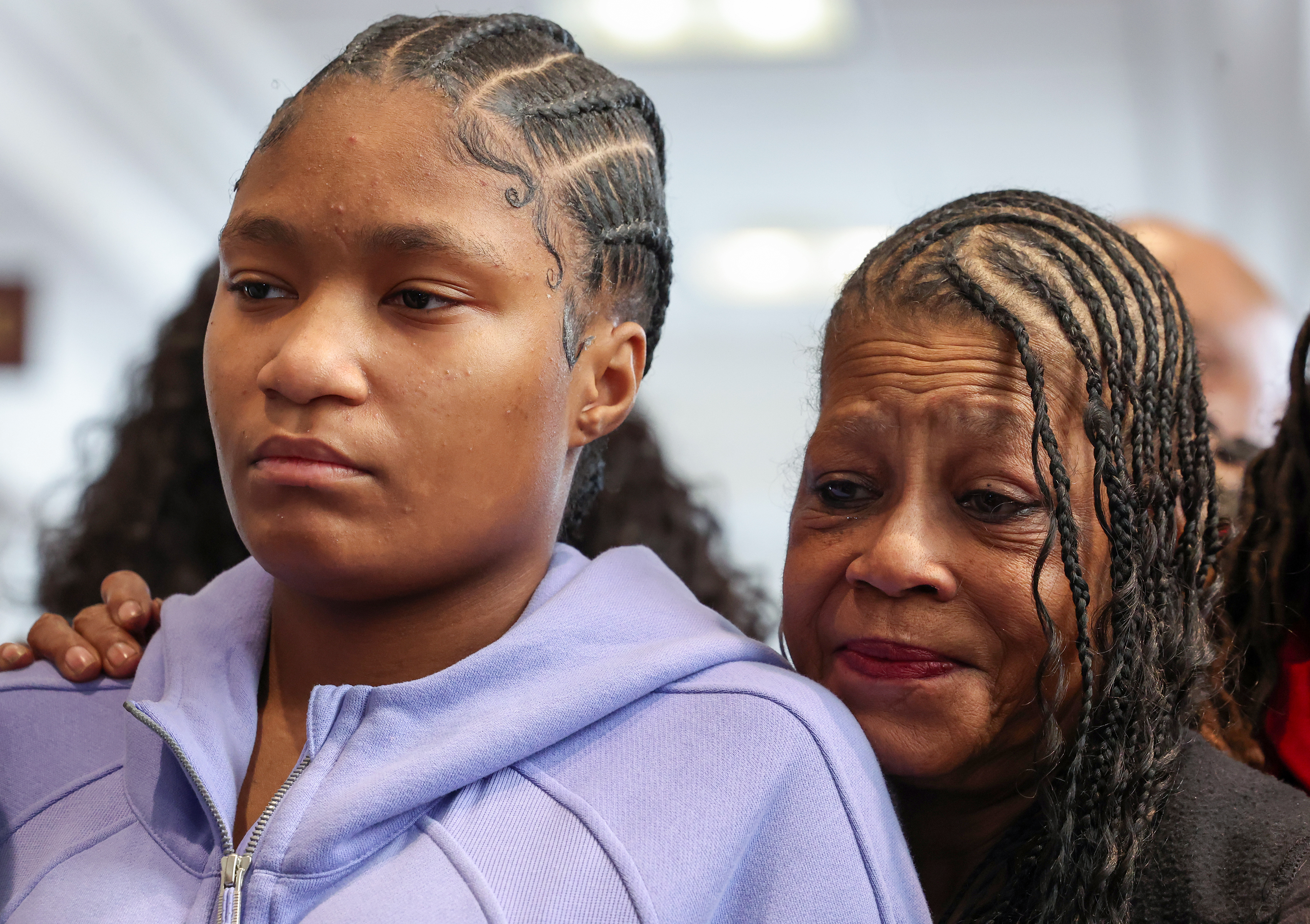
While the work group was doing its study, Massey, 36, an unarmed Black woman, mother and cherished community member experiencing a mental health crisis in Sangamon County, was murdered in her kitchen by then-Sangamon County sheriff’s Deputy Sean Grayson, who had failed to immediately activate his body-worn camera. Grayson was working for the sheriff’s office despite a lengthy misconduct record from previous work at other Illinois police departments. Massey’s death underscored the importance of the work group’s effort, and it led to the second and equally necessary examination of policing in Illinois: the Massey Commission.
Members of the Massey Commission, through valuable dialogue with the community, explored not only the failure of the law’s implementation but also the racial context in which it occurred. Specifically, they examined the “legacies of racial exclusion” and the failure to address the disparities in basic human needs between the races.
Where do these two efforts converge?
The reports expose the failings of our state to engage in serious reform or grapple with the racial and systemic inequities that manifest in law enforcement operations.
They also each include recommendations on how to make policing more effective and fair.
The Massey Commission makes important recommendations on policing but goes much deeper by exploring the systemic racism that has for too long affected police and community relations. The commission calls for expanding safe and equitable access to social services in Sangamon County to address systemic racism and mistrust in police.
In May, we saw a critical part of the Massey Commission’s work implemented with seven people appointed to the newly created Sangamon County Mental Health Board, which will evaluate community needs, set funding priorities and oversee the distribution of resources to local service providers.
Similarly, the recent report of the work group outlines, in 18 recommendations, how to meet the mandates of the law with enhanced reporting procedures, new body-worn camera protocols and directives on model use-of-force guidelines and training standards. Importantly, the work group has already helped establish the infrastructure required for fair and transparent decertification.
In addition, the governor’s office has already signed off on the overarching recommendation that agencies and leaders responsible for implementation meet twice a year to monitor the process.
None of this is easily accomplished, and sustaining this momentum will require the same political will that drove the passage of monumental police reforms five years ago.

Massey was shot two years ago this month. Under the recommendations outlined in the Massey Commission’s report, a qualified network of first responders trained to prioritize safety and care would go to her home if she called for help today. And under the reforms created by the SAFE-T Act, a functioning decertification process would have reduced the likelihood that one of the responding officers had been previously dismissed by law enforcement agencies because of misconduct.
The directions on how to guard against tragedies like this are laid out clearly in the two extraordinary reports. Can Illinois find the political will to follow them?
JoAnn D. Johnson is co-chair of the Sonya Massey Commission and is a retired 29-year colonel of the Illinois State Police. Donovan Williams is a program manager at the Illinois Justice Project.
Submit a letter, of no more than 400 words, to the editor here or email letters@chicagotribune.com.


