
The first thing a gardener often does when touring the yard is to find which plants are in bloom and enjoy the various colors and textures.
One warm summer day, however, I decided to use all five of my senses to relish the garden. I easily found something to see, touch, taste, smell and hear. It required walking more slowly, bending down or rising on my toes, and listening more intently.
The butterfly weed was in full bright orangey-red bloom, and the elderberry bushes were loaded with big balls of white flowers.
The spicebush, however, was done blooming and just green, but it still had something to offer. I crushed one of the leaves and inhaled what to me resembled the fragrance of allspice. Lightly pulling my fingernail across the twigs, I detected a rich, peppery smell. The berries are still tiny and green, so I’ll wait until they ripen to red to taste this edible fruit.
Another aromatic plant in my yard is bee balm. It blooms soft purplish later this summer, but a gentle rub on the leaves even now emits a minty smell. The leaves are among the softest in my garden, filled with more than 150 plant species. When touched, leaves and other parts of some other plants, however, can be prickly, even unpleasant.
Rattlesnake master, a native prairie plant, has long, thin, stiff leaves with barbs along the entire margin. To be sure, the rabbits roaming the garden won’t be adding the rattlesnake master to their diet any time soon.
When growing in the prairie, rattlesnake master’s spiny leaves deter other herbivores as well as some insects. The round, white, grape-sized blooms are prickly, too, but that doesn’t keep bees and other pollinators from finding nectar in hundreds of tiny flowers within.
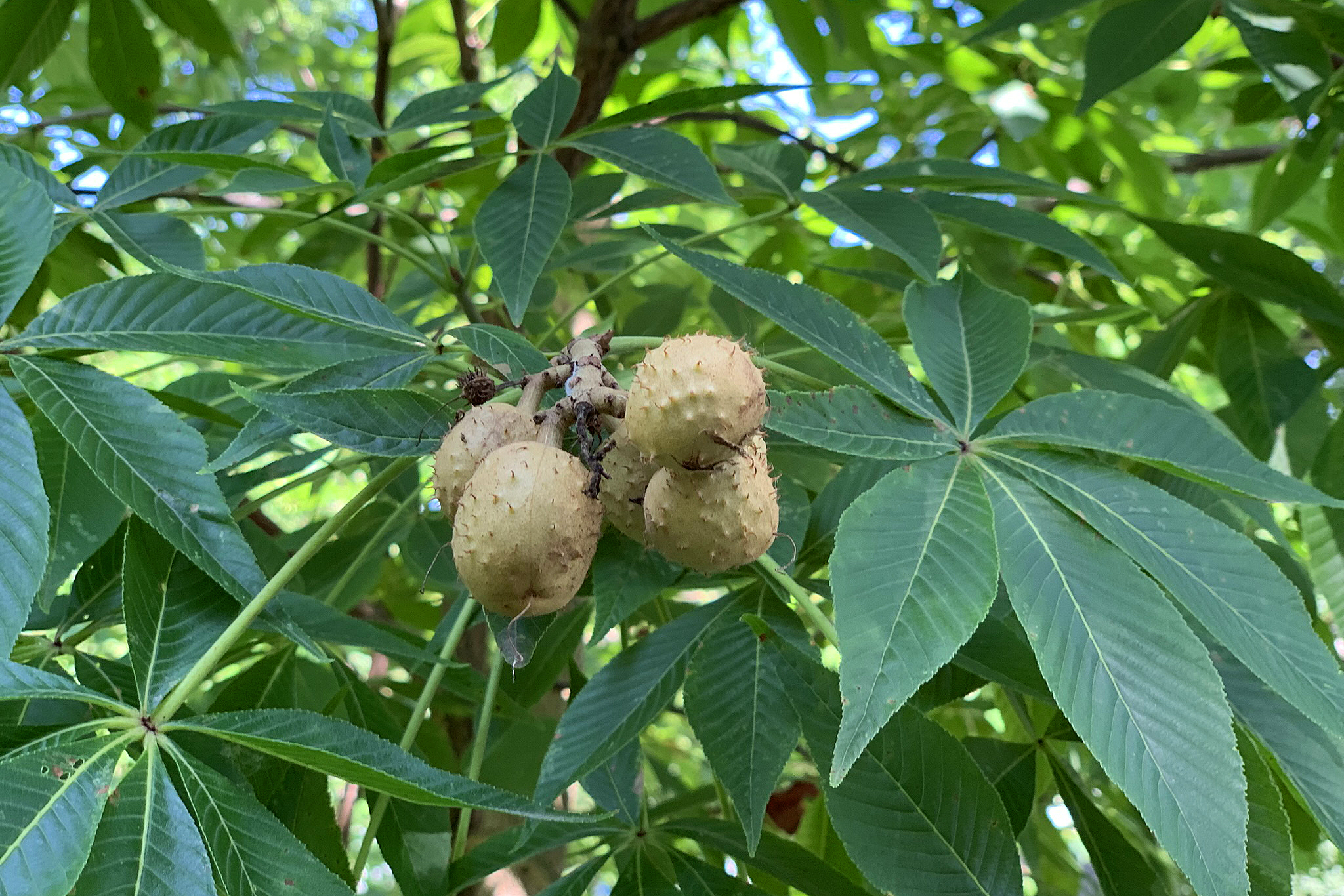
Another prickly finding in the garden is the fruit of the Ohio buckeye. In spring, the buckeye bloomed beautifully, and now greenish-brown, round fruit capsules are forming. These are also about the size of a grape and are rough to the touch with prickly centimeter-long stiff spikes.
When the capsules turn brown, they are ready to be split open to reveal the deep brown nut inside, a favorite of squirrels. I’ve put buckeye seeds in my pocket for good luck, but I never eat them. They are toxic! And that’s a reminder to not eat anything from your yard unless you’re sure it’s safe.

Native columbines, which feed hungry hummingbirds in spring, are long past blooming, but create a lovely sound like a rain stick when you shake the capsules where the flowers bloomed to release the tiny, black seeds. Insects crawl into the capsules to eat the seeds, and occasionally an earwig, not my favorite bug, has crawled out while I was shaking the plant to release the seeds.
Vegetable gardeners have plenty to taste, and I do have some lettuce and green peppers growing. But a wilder flavor can be found in the black raspberries growing here and there in my garden.
Some are still green, but those that are deep black and easily pulled off the plant are ready to eat. They are sweet and chewy because of the tiny seeds inside the fruit.
With raspberry sweetness lingering in my mouth, I feel the warmth of the sun on my arms, hear a black-and-yellow plumaged goldfinch singing “Perchickery” and smell summer’s hazy humidity.
Exploring all five senses is said to be good for the soul and your mental health, and that’s an important reason to get out in the garden and experience more than just the colorful blooms.
Sheryl DeVore has worked as a full-time and freelance reporter, editor and photographer for the Chicago Tribune and its subsidiaries. She’s the author of several books on nature and the environment, and co-author of a coming book on “Birds of the Midwest,” to be published by Timber Press in 2027. Send story ideas and thoughts to sheryldevorewriter@gmail.com.